Physical Address
304 North Cardinal St.
Dorchester Center, MA 02124
Physical Address
304 North Cardinal St.
Dorchester Center, MA 02124

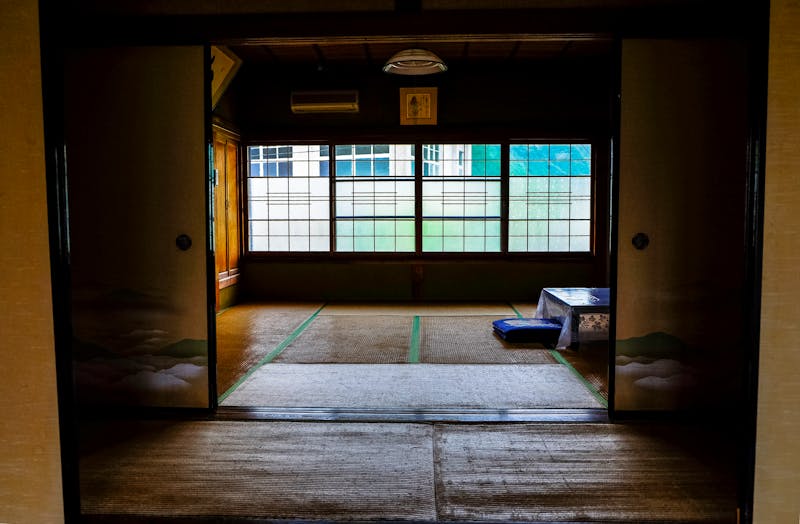
A ryokan night was the thing we almost cut from the itinerary to save money. We’d looked at the per-person prices, done the maths for four of us, winced, and started drafting an email to cancel the booking. Then we didn’t. And it turned out to be the night our kids still talk about months later — more than Disney, more than the shinkansen, more than the deer in Nara.
We arrived mid-afternoon to a woman in a kimono at the entrance who bowed and led us down a corridor of dark wood and paper screens. The kids were immediately silent, which never happens. She slid open a door and we were in a room with tatami floors, a low table, and a view of mountains through a window that took up the entire wall. No beds. No TV. No minibar. Just space and quiet and the faint smell of something woody. Our four-year-old whispered “is this our house now?” and we nearly said yes.
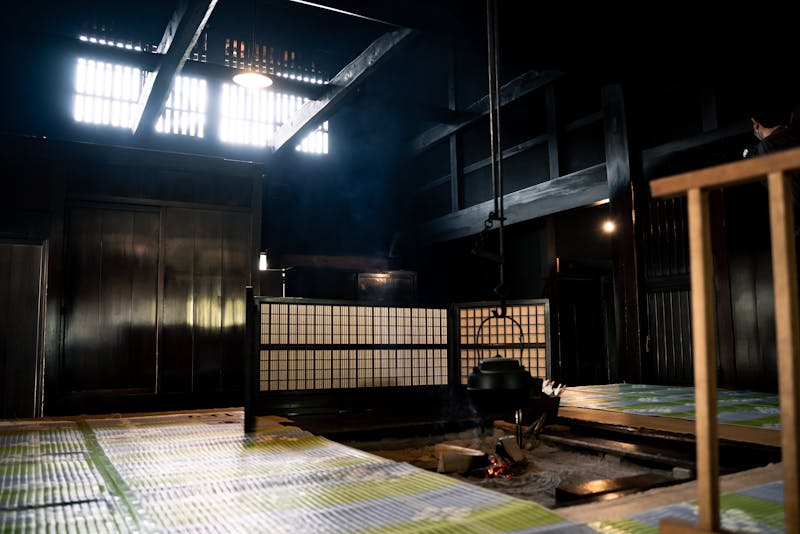
A ryokan is a traditional Japanese inn. Some have been running for hundreds of years. You take off your shoes at the entrance and put on slippers. Staff show you to your room — tatami mat flooring, sliding fusuma doors, a tokonoma alcove with a scroll and flowers. There might be a small balcony. There will be a tea set with Japanese sweets waiting.
There are no beds. In the evening while you’re eating dinner or soaking in the onsen, staff come and lay out futons directly on the tatami. Thick mattress on the bottom, duvet on top, buckwheat pillow. It’s more comfortable than it sounds — the tatami has a slight give that’s softer than a hard floor but firmer than a mattress. In the morning they pack it all away again and your room becomes a living space.
Everyone wears yukata — light cotton robes provided by the ryokan. They give you one each, including child sizes at family places. You wear them everywhere: to dinner, to the bath, walking around the gardens, to breakfast the next morning. Our eldest spent ten minutes getting hers tied perfectly and then refused to take it off for the rest of the stay. Our youngest just trailed his along the floor like a tiny emperor.
The pace is different from a hotel. You arrive, you change, you bathe, you eat, you sleep. There’s nowhere to rush to. Nothing to tick off a list. The whole point is to slow down, which after a week of Tokyo’s trains and Kyoto’s temples is exactly what everyone needs.
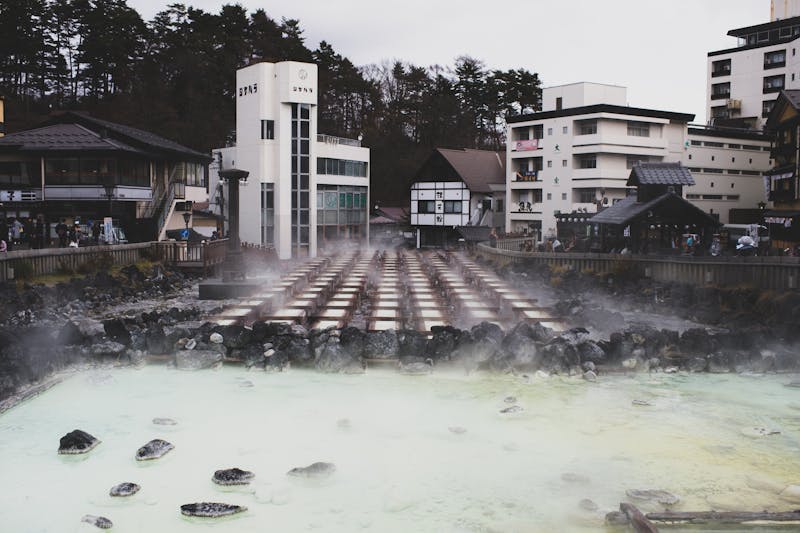
Most ryokans have an onsen — a hot spring bath fed by natural geothermal water. The communal ones are gender-separated and everyone bathes naked. That’s the part that makes people nervous. Let’s deal with it.
You wash first. Thoroughly. At shower stations with stools and handheld showerheads. Soap your whole body, rinse completely, then — and only then — you get in the bath. This is non-negotiable. Teach your kids before you go. The water is shared and cleanliness is the baseline expectation.
The bath itself is hot. 40-43°C usually. Adults adjust after a minute. Young kids sometimes can’t — they sit on the edge and dip their feet, or get in up to their waist for a few minutes and get out. That’s fine. Nobody expects a three-year-old to sit in hot water for twenty minutes.
For families who aren’t comfortable with communal bathing, the answer is a private onsen. Two options: kashikiri buro (a private bath you book by the hour, usually free or ¥1,000-2,000) or an in-room onsen (your own outdoor bath on your balcony, included in the room rate but more expensive rooms). We went with in-room. Being able to step out onto the balcony at any time, fill the stone bath, and sit in hot spring water looking at mountains while the kids played inside — that alone justified the cost.
Long hair must be tied up so it doesn’t touch the water. Bring a hair tie if you don’t have one. Tattoos are technically banned at many onsen but enforcement varies — private baths avoid the issue entirely.
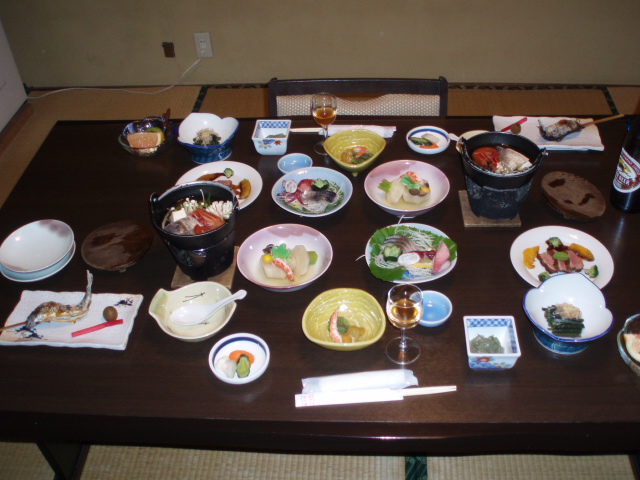
Dinner is the main event. Kaiseki is a multi-course meal — typically eight to twelve small dishes served in sequence over about 90 minutes. Each course arrives on a different plate or bowl, arranged with the kind of care that makes you feel like you should photograph it before eating it. Everyone does.
The dishes are seasonal. In autumn there might be mushroom soup, grilled sanma fish, persimmon with sesame. In spring, bamboo shoots, sakura mochi, sashimi arranged on a bed of cherry blossoms. The flavours are subtle, varied, and often unfamiliar to Western palates.
For adults this is usually the culinary highlight of a Japan trip. For kids it depends entirely on the kid. Adventurous eaters — the ones who’ll try anything once — will love it. They might not love everything but they’ll enjoy the theatre of it, the parade of different plates, the textures and colours.
Picky eaters will struggle. There’s no familiar fallback on a kaiseki menu. No plain pasta. No chicken nuggets. Nothing brown and fried.
Most family-friendly ryokans solve this by offering a children’s set meal: simpler food like grilled meat or fish, rice, fried shrimp, and vegetables. It costs less and arrives all at once rather than in courses. Ask when booking — some prepare it automatically for under-12s, others need advance notice.
Our backup strategy: we bought onigiri and snacks from a convenience store before arriving and kept them in the room. The four-year-old ate about half the kids’ kaiseki, declared he was “full of rice,” and we topped him up with a tuna mayo onigiri later. No drama. No hungry child at bedtime.
Breakfast is traditional Japanese: miso soup, grilled fish (usually salmon), rice, pickled vegetables, a small omelette, nori, and something fermented that you either love or leave. It arrives in a wooden tray with everything portioned neatly. Our kids ate the rice and omelette and ignored the pickles, which felt like a reasonable compromise.
Ryokans charge per person per night, including dinner and breakfast. Expect ¥15,000-30,000 per person at a mid-range place. Premium ryokans with private onsen and multi-course kaiseki run ¥30,000-60,000 per person.
For a family of four at a mid-range ryokan, one night is roughly ¥80,000-120,000. At a premium place, ¥150,000+.
That sounds enormous. But strip out what’s included — a kaiseki dinner that would cost ¥8,000-15,000 per person at a restaurant, plus a traditional Japanese breakfast worth ¥2,000-3,000 — and the accommodation portion is more comparable to a nice hotel. You’re paying for an experience that includes two meals, use of the onsen, and the room.
One or two nights is what most families do. We did one night in Hakone and wished we’d done two — one to arrive and settle in, one to actually enjoy it without the slight rush of checking out the next morning.
Hakone is the easiest from Tokyo — 90 minutes by train. Multiple ryokans with private onsen, mountain views, and proximity to the Open-Air Museum, pirate ships, and the Hakone loop. This is the obvious choice for families based in Tokyo and it works.
Kinosaki Onsen is a small town in Hyogo Prefecture built around seven public bathhouses. You get a pass at your ryokan and walk between them in your yukata and wooden geta sandals. The town is tiny — one main street, a willow-lined canal, and hot spring steam rising from vents in the pavement. Kids love the novelty of walking around in robes. Ryokans here are mid-range, ¥20,000-35,000 per person with meals.
Arashiyama near Kyoto has traditional ryokans overlooking the Oi River. The advantage here is waking up in Arashiyama before the day-trippers arrive and walking to the bamboo grove in near-silence.
Takayama in the Japanese Alps has some of the most affordable ryokans in Japan — ¥15,000-25,000 per person with meals. The mountain town atmosphere adds to it. Hida beef for dinner at a Takayama ryokan is a different level.
Not every ryokan is set up for families. Some are deliberately quiet adult retreats. Before booking, confirm:
Private onsen available. In-room is the gold standard for families. Bookable kashikiri buro is the next best. If neither is available and you’re not comfortable with communal naked bathing with your kids, pick a different ryokan.
Children’s meals offered. Ask specifically. “Do you have a kids’ kaiseki or children’s dinner option?” Some assume all guests eat the full kaiseki. Others have a kids’ option but only if you request it in advance.
Room size. A 10-tatami-mat room fits a family of four with futons laid out. Anything smaller and you’re stepping over each other. Some ryokans have larger rooms or suites — worth the upgrade if available.
Age restrictions. Upscale ryokans sometimes don’t allow children under 6 or 12. They don’t always advertise this clearly. Ask directly.
Mixed Japanese-Western rooms. Some ryokans offer rooms with both beds and a tatami area. Good compromise if someone in the family really can’t do floor sleeping.
Kids’ amenities. The best family ryokans provide child-sized yukata, slippers, toothbrushes, and sometimes toys or games. A nice touch that signals they’re used to having children.
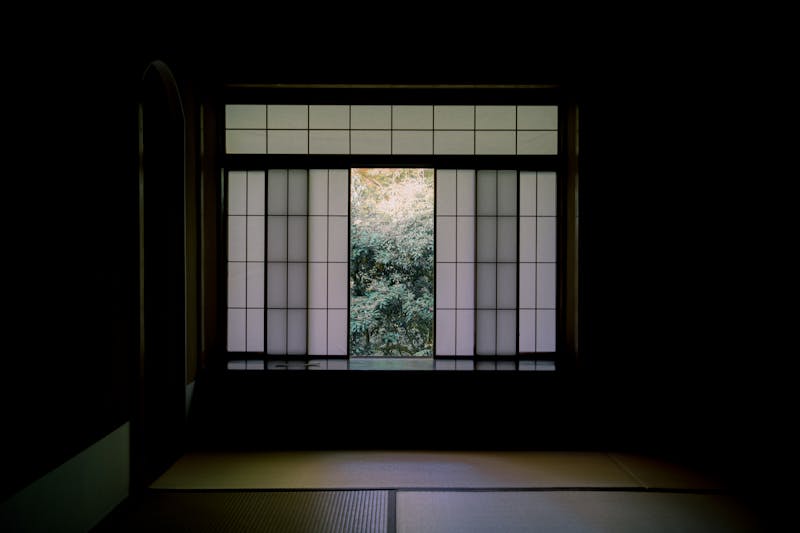
This sounds worse than it is. Futons on tatami are genuinely comfortable — firm but with enough cushion that you wake up without aches. The tatami itself smells faintly of fresh straw, which is a nice detail you don’t expect.
For families, floor sleeping is actually better than beds. Toddlers can’t roll off and hurt themselves. There’s no fighting over who gets which bed. You lay out the futons side by side and everyone sleeps in a row. Our youngest rolled off his futon and onto the tatami, which is a drop of about 10 centimetres. He didn’t even wake up.
If you hate firm surfaces, you might struggle. But one or two nights is a novelty, not a commitment, and most people are surprised by how well they sleep.
The schedule goes something like this:
Arrive mid-afternoon. Staff greet you, show you the room, serve tea and sweets. Change into yukata.
Late afternoon: onsen. Either the communal bath or your private one. Kids either come with you or stay in the room — the futons aren’t out yet so there’s space to play.
Evening: kaiseki dinner. Either in your room (some ryokans serve it on the low table in your room, which feels incredibly special) or in a dining room. Kids’ meals arrive with the first course.
After dinner: futons are laid out. More onsen if you want. The ryokan goes quiet. Most ryokans don’t have bars or late-night entertainment — the quiet is the point.
Morning: breakfast, pack up, onsen one more time if the schedule allows, and check out.
It’s slow. It’s simple. After days of train schedules and attraction queues and city noise, it’s exactly right.
Booking.com and Rakuten Travel both have decent ryokan selections. Filter by “private bath” and “family-friendly” if those options exist. Read reviews specifically from families — what works for a couple on an anniversary trip is not necessarily what works for a family with a three-year-old.
Book early. Good family ryokans in Hakone and Kinosaki fill up months ahead, especially for weekends, school holidays, and autumn colour season.
One night at a ryokan costs roughly what three nights at a business hotel costs. That’s a lot. We deliberated, we budgeted, we nearly cancelled.
We’re already planning our next one.
The kids don’t remember which hotel we stayed in in Tokyo. They remember the futons, the yukatas, the dinner that kept arriving in beautiful little dishes, the hot water on the balcony, and the mountains going pink at sunset. Those are the memories you’re paying for, and they’re worth every yen.