
Family travel · FAMILY TRAVEL
Nikko Day Trip for Families
Nikko was the day trip that surprised us the most. We’d read it was worth visiting, but honestly, we weren’t prepared for just how stunning the shrines would be, or how much our kids would love the monkey carvings. It’s about two hours from Tokyo, which is longer than some day trips, but the combination of UNESCO World Heritage shrines, a sacred bridge, and a waterfall surrounded by mountains made it absolutely worth the early start.
In This Article
Getting There From Tokyo
We took the Tobu Railway limited express from Asakusa Station, which took about two hours and cost around ¥2,800 per adult each way. You can also take the JR Shinkansen to Utsunomiya and transfer, which is covered by the JR Pass but takes roughly the same amount of time.
From Nikko Station, it’s a 20-minute walk uphill to the shrine area, or you can grab a local bus (¥310). We walked it on the way up and took the bus back down, which felt like a good compromise with tired kids.
Toshogu Shrine
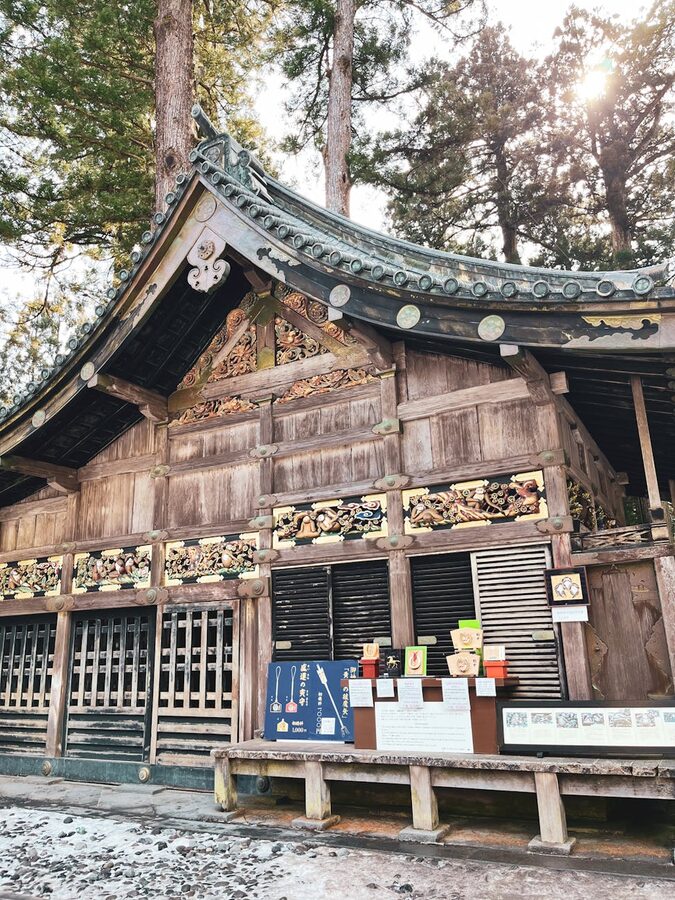
Toshogu is the most ornately decorated shrine in Japan, and it’s not even close. Every surface is carved, painted, or gilded. Our kids’ eyes went wide as soon as we walked through the main gate, which is covered in hundreds of intricate carvings of animals, flowers, and mythical creatures.
The star attraction for our two was finding the “see no evil, hear no evil, speak no evil” monkey carvings on the Sacred Stable building. They spent ages posing for photos copying each monkey. There’s also a sleeping cat carving (Nemuri Neko) above one of the gates that’s easy to miss — it’s small, but it’s one of the most famous carvings in Japan.
The combination ticket costs ¥1,600 for adults and ¥450 for children, and covers the main shrine buildings. Allow at least 90 minutes here. The grounds are set among towering cedar trees, and even on a busy day the atmosphere felt calm and removed from everything.
Shinkyo Bridge
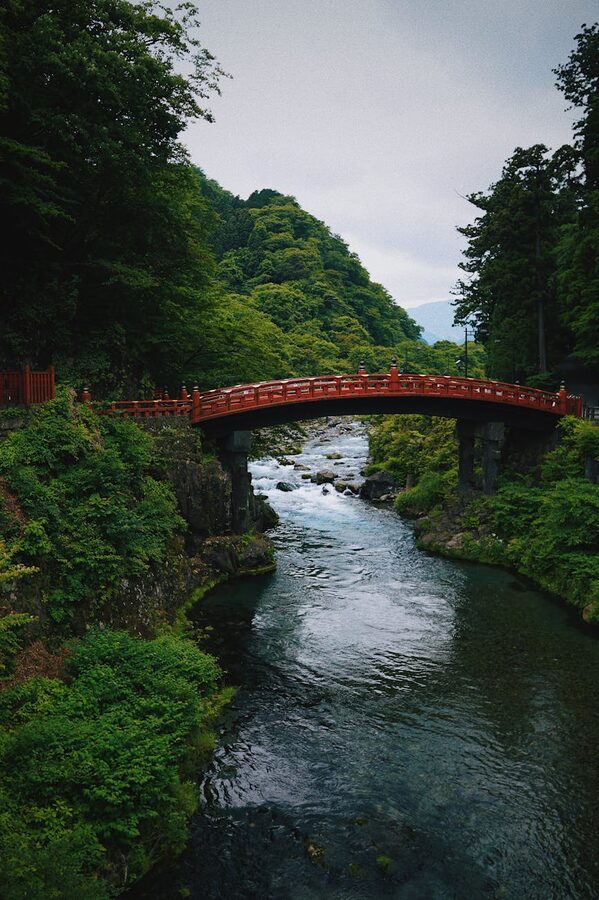
This bright red sacred bridge crosses the Daiya River at the entrance to the shrine area. You can cross it for ¥300, but honestly the best view is from the road beside it, which is free. We took photos from both angles and the kids preferred throwing leaves into the river below. The bridge looks particularly impressive in autumn when the surrounding trees turn orange and red.
Lake Chuzenji and Kegon Falls
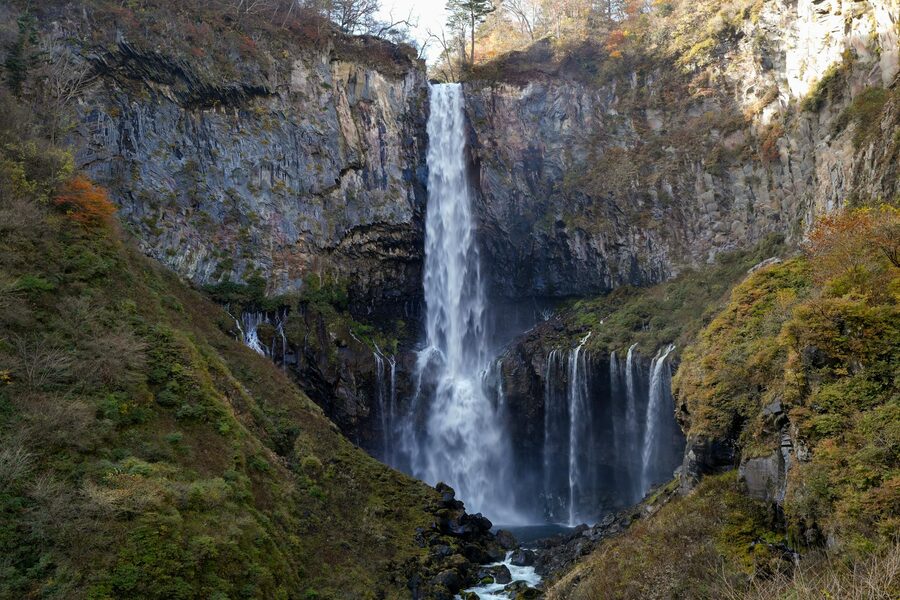
If you have a full day, the trip up to Lake Chuzenji and Kegon Falls is worth the extra effort. It’s about 40 minutes by bus from the shrine area, winding up a dramatic mountain road. Lake Chuzenji sits at 1,269 metres elevation, and on the day we visited the temperature was noticeably cooler than in town.
Kegon Falls drops 97 metres and there’s a paid elevator (¥570 adults, ¥340 children) that takes you down to an observation platform near the base. The sound and the spray were enough to keep our kids entertained for a good 20 minutes, and the view from below is far better than from above. We ate lunch at one of the small restaurants near the lake — nothing fancy, but a bowl of warm udon (¥800) hit the spot after a morning of walking.
Practical Tips
Nikko is a long day with young kids. We left Asakusa at 7:30am and got back around 6pm, and by the end everyone was exhausted. If your kids are under four, you might want to skip Lake Chuzenji and just focus on the shrine area, which is plenty on its own.
Wear proper shoes — the paths around the shrines are uneven stone, and the walk to Kegon Falls has some steps. We saw several people struggling in sandals.
Autumn (late October to mid-November) is the best time to visit for foliage, but it’s also the busiest. We went in early October and the leaves were just starting to turn, which was a nice sweet spot. If you’re planning your Japan itinerary, Nikko works well as a day trip from Tokyo before or after the main city sightseeing. It’s a completely different side of Japan — forested mountains, sacred shrines, and fresh mountain air.