Physical Address
304 North Cardinal St.
Dorchester Center, MA 02124
Physical Address
304 North Cardinal St.
Dorchester Center, MA 02124

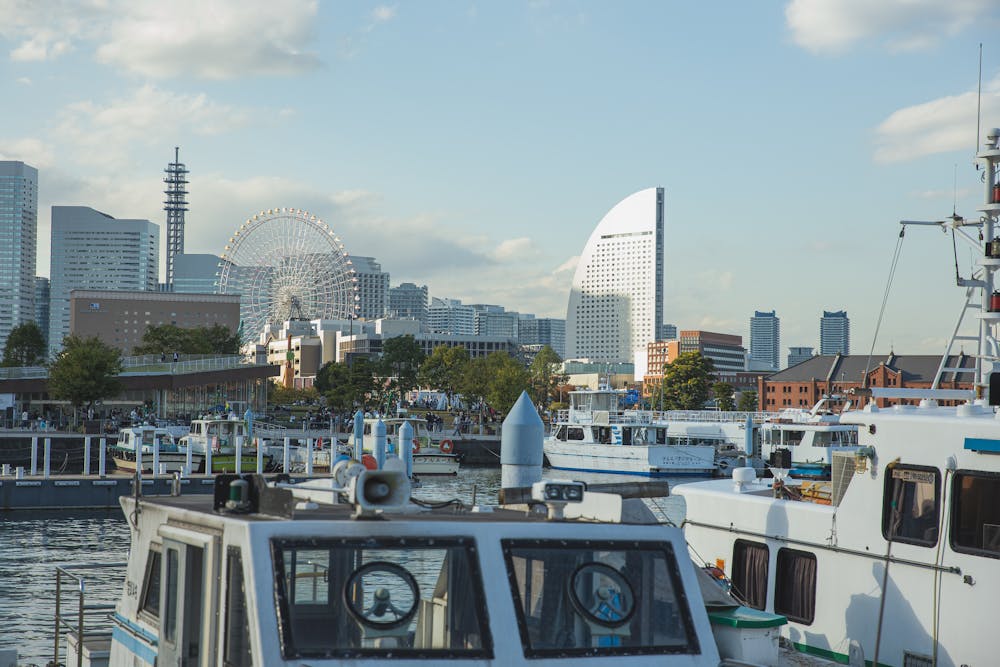
We almost skipped Yokohama. Our Tokyo itinerary was packed, the kids were starting to hit that mid-trip wall, and adding another destination felt like pushing our luck. Glad we ignored that instinct. Yokohama turned out to be the best day of our entire Japan trip—the one our kids still talk about months later.
Here’s the thing. Yokohama is only 30 minutes from central Tokyo by train. That’s it. Half an hour and you’re in a completely different city with a gorgeous harbor, flat waterfront paths that don’t punish stroller parents, and a lineup of kid-friendly attractions that honestly put most of Tokyo’s to shame. Bold statement. We stand by it.
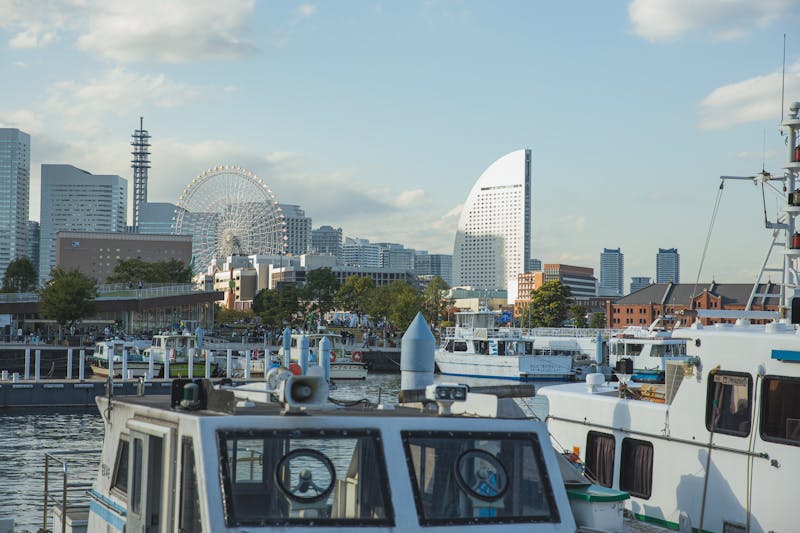
Tokyo is incredible but it’s relentless. The crowds, the stairs, the sheer sensory overload of Shibuya at rush hour with a three-year-old. Yokohama is the antidote. Wide sidewalks. Breathing room. Restaurants where you can actually get a table without waiting 45 minutes. Everything in the main tourist area—Minato Mirai—is walkable and connected, so you’re not burning half your energy on train transfers between attractions.
You can do this as a half-day trip if you’re tight on time. But a full day is better. Way better. There’s enough here to fill six or seven hours without rushing, and the pace just fits families in a way that Tokyo sometimes doesn’t.
If you’re still mapping out your Japan itinerary with kids, carve out a day for Yokohama. You won’t regret it.
Start here. Seriously, just start here.
The Cup Noodle Museum (officially Cupnoodles Museum Yokohama) is dedicated to instant ramen and its inventor, Momofuku Ando. Sounds weird for a family attraction, right? It’s not. It’s one of the best kid-focused museums we’ve visited anywhere in the world, and we don’t say that lightly.
The main event is the My Cupnoodles Factory on the third floor. Each person gets a blank cup and a table full of markers to design their own packaging. Our daughter spent 30 minutes on hers. Our son finished in about 90 seconds and drew what he claimed was a dragon but looked more like a potato with legs. Both approaches are valid. After decorating, you choose your soup base and four toppings, then watch the whole thing get sealed and shrink-wrapped right in front of you. The finished cup goes into an inflatable carrying case so it survives the trip home.
Cost? ¥500 per cup. For one of the most memorable souvenirs your kids will bring back from Japan.
Budget about two hours for the full museum. There’s an exhibition tracing the history of instant noodles from Ando’s backyard shed to a global phenomenon, plus a play area for younger kids themed like a noodle factory. One critical note: book tickets online before you go. This place fills up fast, especially on weekends and school holidays. Walk-ins are technically possible but risky. Don’t chance it.
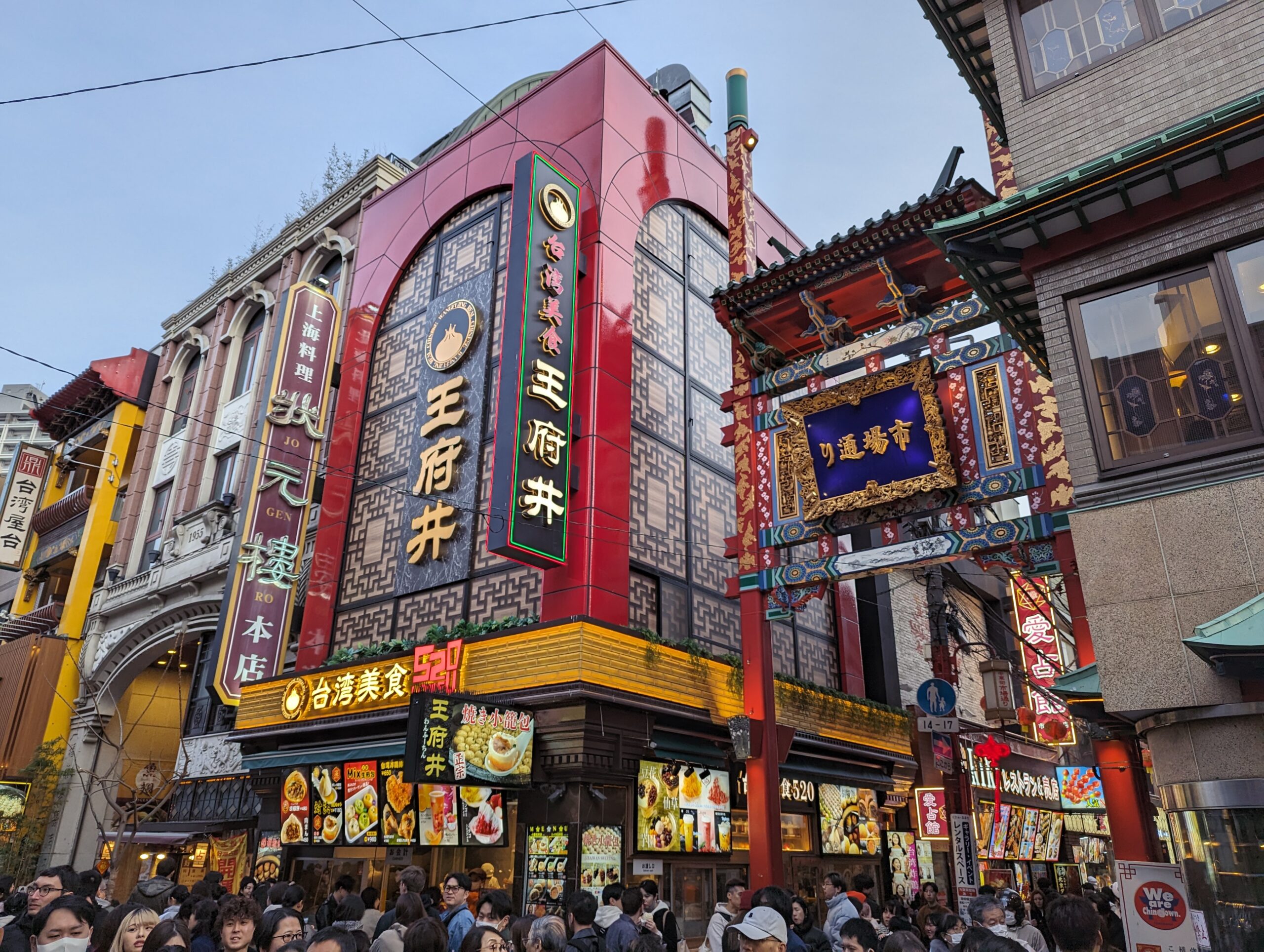
From the Cup Noodle Museum, Chinatown is about a 15-minute walk or a short train ride. It’s the largest Chinatown in Japan—not some token gate with two restaurants behind it, but a full neighborhood of over 500 shops and food stalls packed into a dense grid of streets.
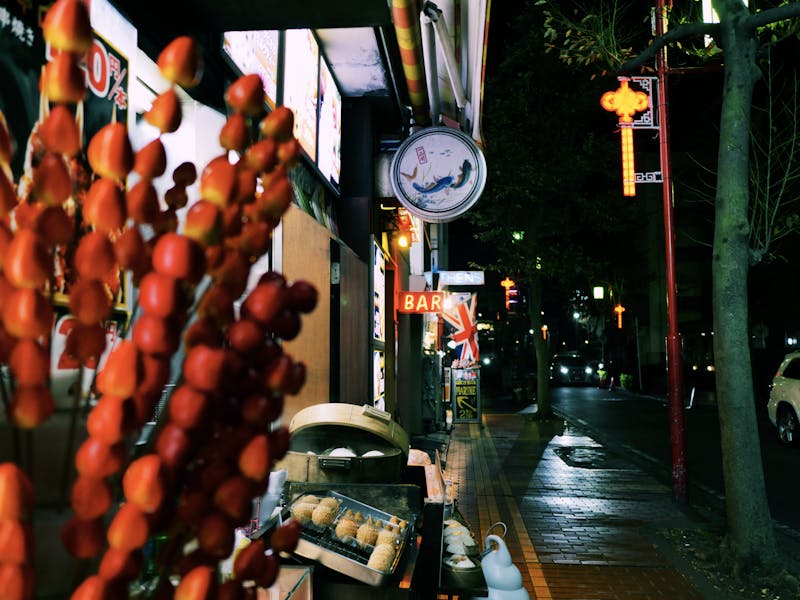
For kids, this is a walking food tour disguised as sightseeing. Steam buns are everywhere. Nikuman—big, soft pork buns that fit perfectly in small hands—run ¥300 to ¥500 depending on the filling and the stall. Pan-fried dumplings. Sesame balls. Mango pudding. Our strategy was zero strategy. We wandered, we pointed at things that looked good, we ate. Repeat until full. Took a while.
The ornate gates at each entrance are worth pausing at, and there’s a colorful temple called Kanteibyo right in the center that’s free to peek into. Don’t try to be systematic about Chinatown. The fun is in the randomness of it.
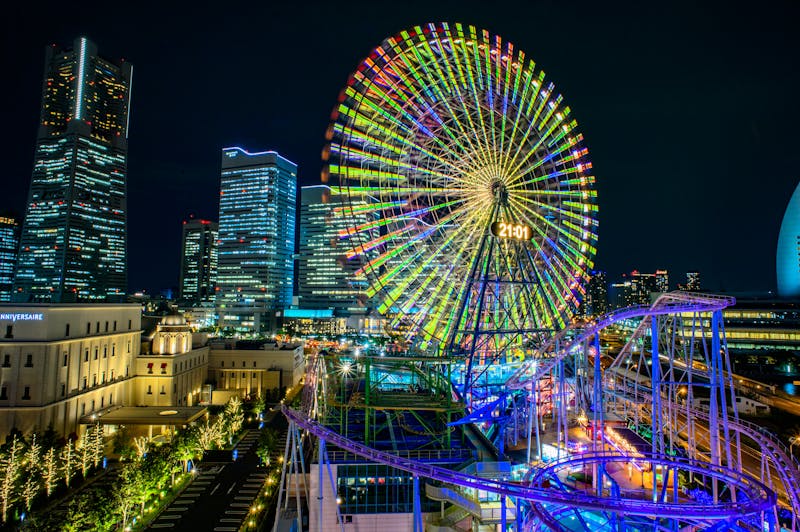
See that giant Ferris wheel dominating the Yokohama skyline? That’s Cosmoworld. And here’s why families should love it: there’s no entry fee. None. You walk in for free and pay per ride, anywhere from ¥300 to ¥800 each. If your kid only wants to do the Ferris wheel and one spinning ride, that’s all you pay for. Compare that to dropping $80 per person at a theme park only to discover your toddler is terrified of everything louder than a carousel.
The Ferris wheel itself is the star—one of the largest clock-style wheels in the world, with views across the harbor and city that are genuinely stunning. There are also kiddie coasters, a log flume, bumper cars, and arcade games. It’s compact and manageable. Nobody’s going to have a meltdown because they can’t find the right section of a 200-acre park. You can see the whole thing from the entrance.
Pro tip: come back in the evening if your schedule allows. The wheel lights up after dark and the whole waterfront transforms. Our kids were mesmerized.
This one requires a slight detour—it’s near Shin-Yokohama Station, not in the Minato Mirai area. Worth it? Absolutely.
The ground floor has some exhibits about ramen history, but the real draw is the basement. They’ve recreated an entire 1958 Tokyo streetscape down there. Dim lighting, retro storefronts, a painted twilight sky overhead, old-fashioned lampposts. It feels like stepping into a time machine. Our kids were completely taken with it before we even sat down to eat.
Lining this fake-but-gorgeous street are real ramen shops—satellite locations of famous restaurants from different regions across Japan. Tonkotsu from Kyushu. Miso from Hokkaido. Rich soy-based styles from Tokyo. Each bowl runs ¥900 to ¥1,000, and most places offer mini portions. The minis are brilliant for families because everyone can try two or three different styles without anyone exploding.
Entry is ¥380 for adults. Kids under 6 get in free. Under 12 is ¥100. For less than the price of a vending machine coffee, you get access to one of the coolest food halls in Japan. Hard to argue with that math.
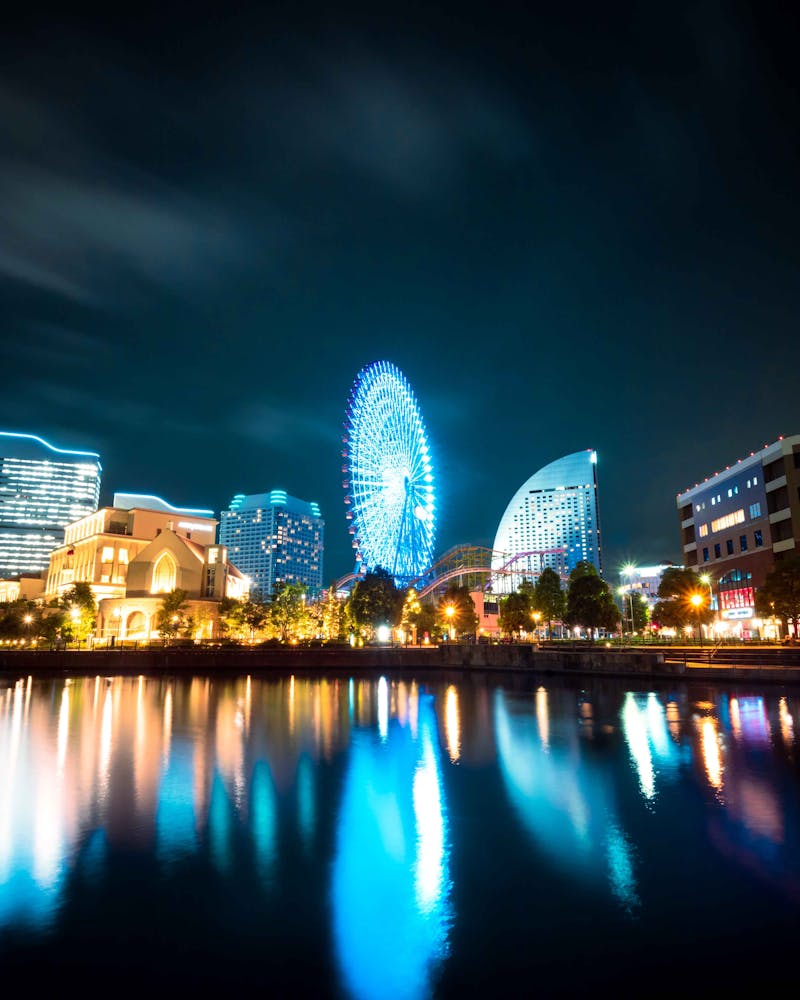
Minato Mirai is the thread connecting most of these attractions. It’s Yokohama’s modern harbor district—wide promenades, open plazas, views across the water to the Bay Bridge. The whole area was designed for walking, and it shows. Flat. Smooth. Stroller-friendly in a way that makes you want to write a thank-you letter to whoever planned it.
The Red Brick Warehouse (Akarenga Soko) sits right on the water and houses a mix of shops and cafes. Nothing you need to buy, but pleasant to wander through, and the open space between the two buildings usually has some kind of seasonal market or event happening. In winter there’s an ice rink. In summer, food festivals. Always something.
Honestly, some of our favorite moments in Yokohama happened right here on the waterfront. No museum, no attraction. Just walking along the harbor with ice cream, watching boats, letting the kids run on the wide-open promenade. After days of navigating Tokyo’s crowds, the space itself felt like a luxury.
Want to see Mt. Fuji from the 69th floor? The Yokohama Landmark Tower’s Sky Garden observation deck delivers—on clear days. Winter mornings give you the best odds. Summer is hazier and Fuji plays hide-and-seek behind the clouds more often than not.
Entry is ¥1,000 for adults and ¥500 for elementary-aged kids. The elevator to the top is one of the fastest in the world, which our children found significantly more thrilling than the actual view. Priorities are what they are.
Even without Fuji, the panorama across Yokohama’s harbor, the sprawl of Tokyo in the distance, and the Ferris wheel far below is impressive. Go early or late for the best light. Midday tends to wash everything out.
Half-day version: Train from Tokyo, Cup Noodle Museum, lunch in Chinatown, Cosmoworld Ferris wheel, back to Tokyo by mid-afternoon. Tight but doable.
Full-day version: Add the Ramen Museum, spend real time on the waterfront, hit the Landmark Tower around sunset. This is what we’d recommend. The relaxed pace is half the point of coming here.
Either way, start early. The Cup Noodle Museum opens at 10 AM and morning slots fill first, so having an early reservation means you’re done before the crowds build. From there, Chinatown is a natural lunch stop, and Minato Mirai fills the afternoon.
From Shibuya, the Tokyu Toyoko Line runs directly to Yokohama in about 30 minutes. From Shinjuku or Tokyo Station, the JR Shonan-Shinjuku Line or Tokaido Line work. All covered by the JR Pass if you have one, or just tap your IC card. No complicated transfers. One train, done.
Once you’re in Yokohama, the Minato Mirai Line connects Yokohama Station to the waterfront area in a few minutes. Or walk it—about 20 minutes along the harbor, and the route itself is part of the experience. We walked both directions and didn’t mind at all.
If you’re figuring out where to base yourself in Tokyo for day trips like this, our guide to where to stay in Tokyo with kids breaks down the best neighborhoods by family needs.
Yokohama is flat. Blissfully, mercifully flat. After wrestling a stroller through Tokyo’s subway stations, the step-free routes and smooth paths here feel like someone finally designed a city with parents in mind.
Coin lockers at Yokohama Station are plentiful and cheap. Stash your bags and explore light. Medium lockers fit a daypack no problem.
Restrooms are everywhere and clean. This is Japan. You already knew that.
The whole area is noticeably less crowded than central Tokyo, even on weekends. You can move at your own speed. You can sit down. You can breathe. These sound like small things until you’ve spent four days in Shinjuku with a toddler and suddenly they matter a lot.
One more thing. Yokohama at night is beautiful. If bedtime can flex a little, staying for sunset and the lit-up Ferris wheel is one of those unplanned moments that ends up being a trip highlight. Ours certainly was.