Physical Address
304 North Cardinal St.
Dorchester Center, MA 02124
Physical Address
304 North Cardinal St.
Dorchester Center, MA 02124
I pulled up a family resort in Orlando last month — four nights, two adults, three kids — and the total came to $4,200. Before food. Before park tickets. Before the inevitable gift shop meltdown where someone walks out with a $40 stuffed alligator. I closed the browser tab and sat there for a minute, genuinely annoyed.
But here’s the thing. Some of the best trips I’ve taken with my kids cost a fraction of that. And they weren’t sad little “budget” vacations where we sat in a motel room eating gas station snacks. They were real, actual, memorable trips — the kind where your kids still talk about that one night around the campfire or that weird museum they loved.
Cheap family vacations don’t have to feel cheap. You just have to know where to look — and more importantly, where NOT to look.
Most families overspend on vacations because they default to the same playbook: fly somewhere, stay at a hotel, eat out for every meal, buy tickets to something. That model costs $3,000-5,000 before anyone even has fun.
The affordable family vacations that actually work? They flip one or two of those assumptions. You drive instead of fly. You camp instead of hotel. You go somewhere where the main attractions are free. You cook half your meals. You don’t have to flip all of them — just one or two changes can cut your trip cost in half.
And honestly? The trips where my kids had the most fun weren’t the expensive ones. A $200-a-night beach house where they ran around barefoot all day beat a $500-a-night resort where they sat by the pool saying they were bored. Every single time.
Great Smoky Mountains National Park doesn’t charge any entrance fee at all. Zero. Free. The most-visited national park in the country and it costs nothing to get in. You can camp at Cades Cove for $30 a night, hike to waterfalls, spot black bears from the car, and your kids will be so tired by 8pm that bedtime is effortless.
Yellowstone costs $35 per vehicle for a 7-day pass, which works out to about $1.25 per person per day for a family of four staying a week. Where else can you watch geysers erupt, see bison herds, and hike through canyons for a dollar a day? Campgrounds run $20-35 per night. My kids still talk about the time a bison walked past our car close enough to touch (we didn’t).
Grand Canyon is the same $35 vehicle pass. Mather Campground on the South Rim is $18 per night and it’s walking distance to the rim. That means you can wake up, walk five minutes, and stare into a mile-deep canyon while eating a granola bar. Try doing that at Disney.
Every national park has free ranger-led programs for kids. Junior Ranger booklets are free (or a couple bucks), and when your kid finishes one and gets sworn in as a Junior Ranger, the look on their face is worth more than any theme park ticket.
| Expense | Cost |
|---|---|
| Campsite (6 nights) | $150-210 |
| Park entrance (with annual pass) | $80 |
| Gas (assuming 500-mile drive) | $120-180 |
| Groceries for the week | $250-350 |
| One restaurant meal out | $60-80 |
| Total | $660-900 |
Under a grand for a full week. Try finding that at any resort.
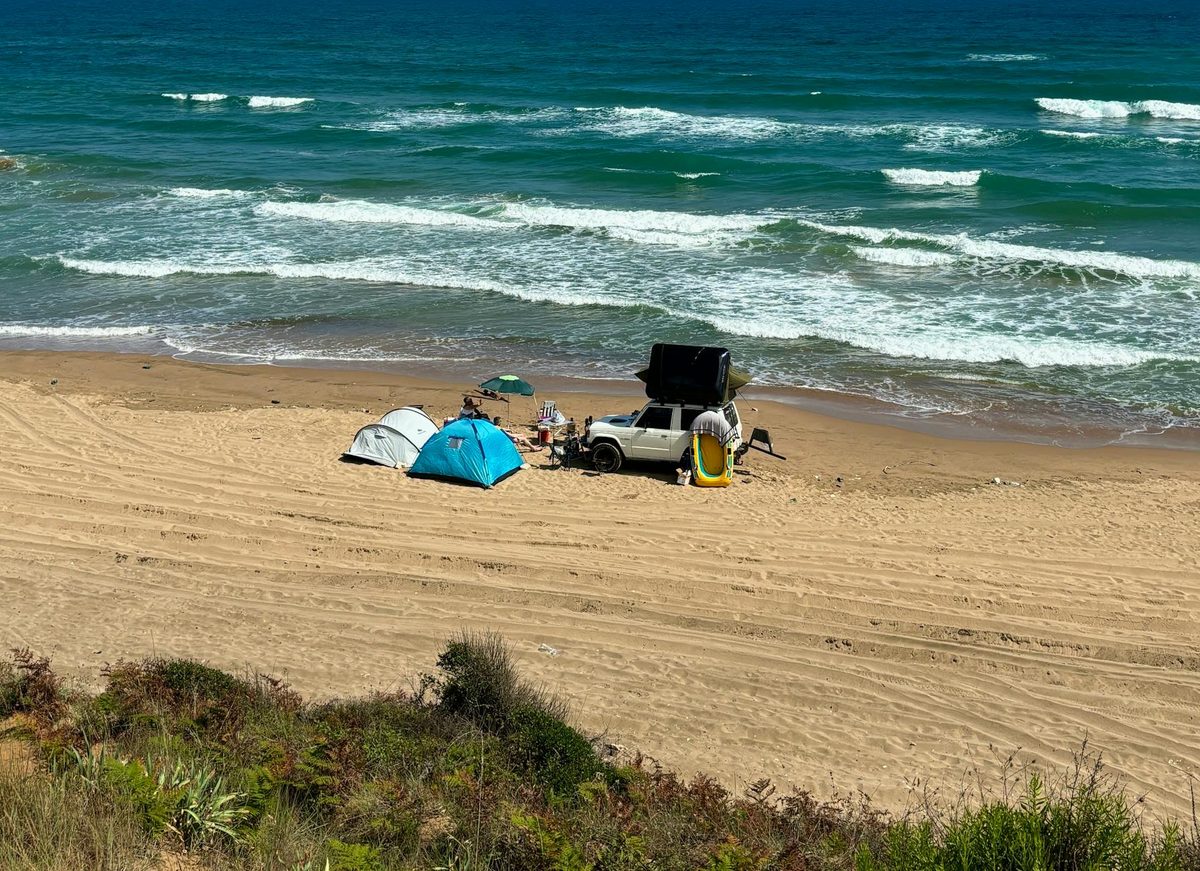
Gulf Islands National Seashore (Florida/Mississippi) has campgrounds where you’re basically sleeping on the beach. Fort Pickens Campground is $28 a night, and you can walk to white-sand beaches that look like they belong at a Caribbean resort. The water is warm, the sunsets are ridiculous, and there are no $18 margaritas anywhere in sight.
Assateague Island (Maryland) is where the wild horses are. Your kids will lose their minds watching wild ponies walk past the campsite. Oceanside camping runs $30 per night. The beach is gorgeous. And the whole “wild horses just wandering around” thing never gets old, even for teenagers who claim nothing impresses them.
Cape Hatteras National Seashore (North Carolina) has multiple campgrounds right on the Outer Banks — the same beaches where people pay $300+ per night for rental houses. Campsites are $28-35 per night. The fishing is great, the lighthouse is free to look at (small fee to climb it), and the whole stretch of barrier islands feels remote without actually being hard to reach.
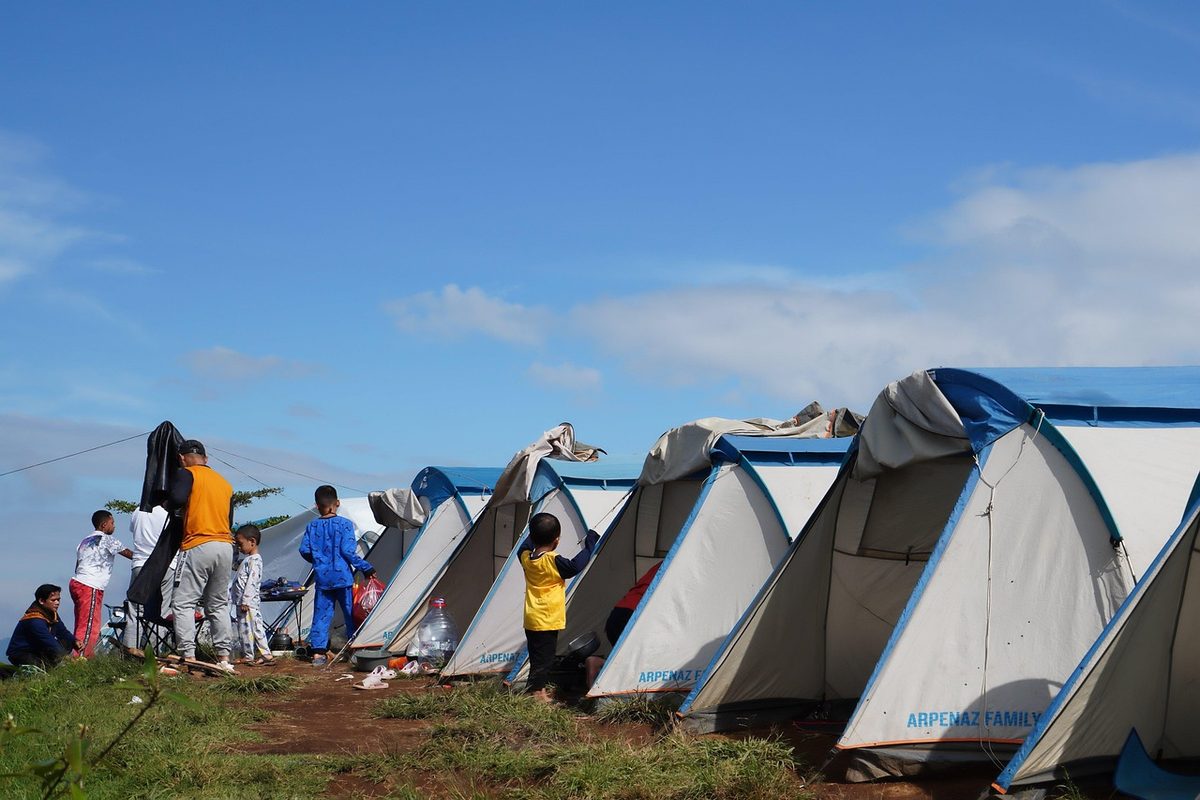
State park campgrounds usually have better amenities — flush toilets, hot showers, playgrounds, sometimes even swimming pools. The campsite fees run $20-40 per night depending on the state. And the biggest advantage? They’re closer. You probably have a solid state park within a two-hour drive of wherever you live.
Michigan’s state parks along Lake Michigan have campgrounds with Lake Michigan beach access. Sleeping Bear Dunes is there. Basically ocean-level beauty without the ocean-level prices.
Texas state parks like Garner State Park have river swimming, which is a lot more fun for kids than you’d think. And the camping fees are $15-25 per night.
Florida state parks — and this is the real sleeper pick — cost $24-30 per night and many of them have springs where the water is 72 degrees year-round. Ichetucknee Springs, Blue Spring, Rainbow Springs. Your kids can tube and swim in crystal-clear water and the whole day costs you basically nothing.
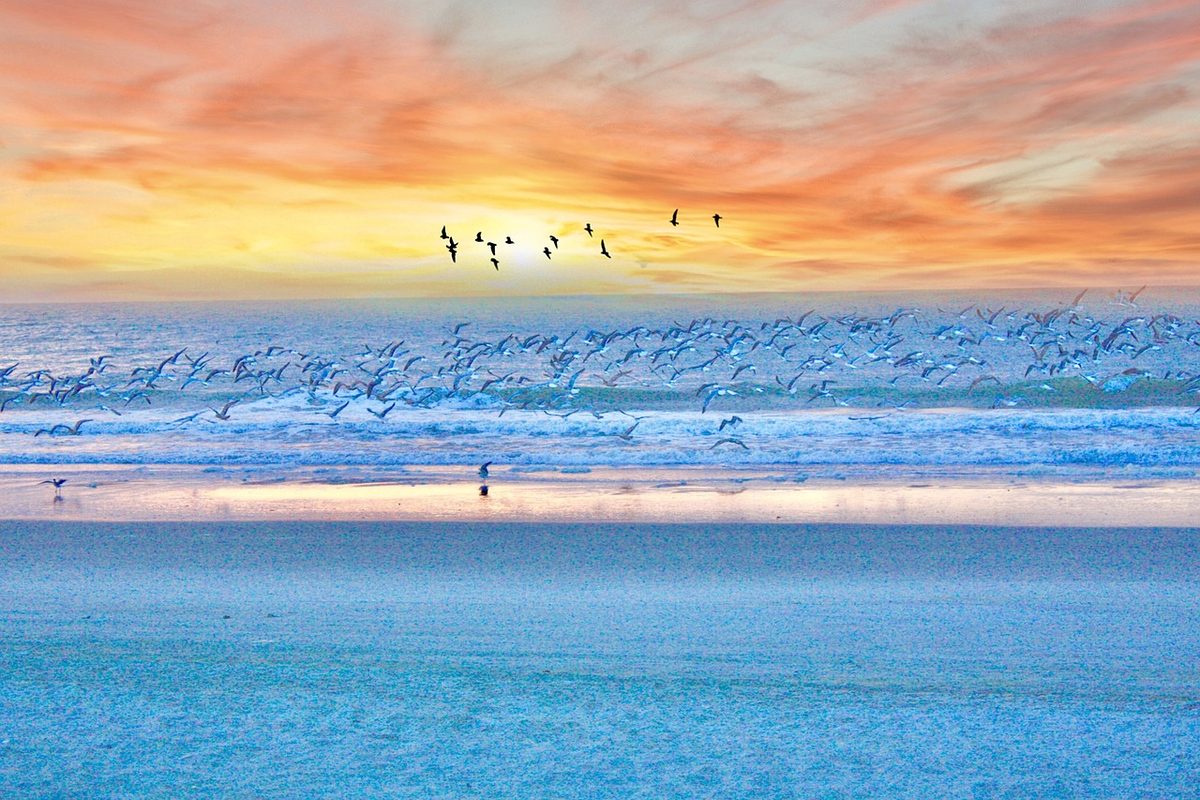
You can find hotels for $80-120 per night, many with pools and free breakfast. The beach itself is free and massive. The boardwalk has that slightly tacky beach-town charm that kids actually love — mini golf, arcades, those airbrushed t-shirt shops.
A family of four can eat at places like Angelo’s Steak and Pasta for under $50, including drinks. Seafood buffets run $15-20 per person. Is it fine dining? No. Is it the kind of meal where everyone leaves full and happy? Yes.
The main thing to watch out for: the tourist traps along the main drag. Skip the overpriced “attractions” like Ripley’s and Hollywood Wax Museum. Go to the free beach, hit a mini golf course ($8-12 per person), and spend the evening on the boardwalk. That’s the Myrtle Beach move.
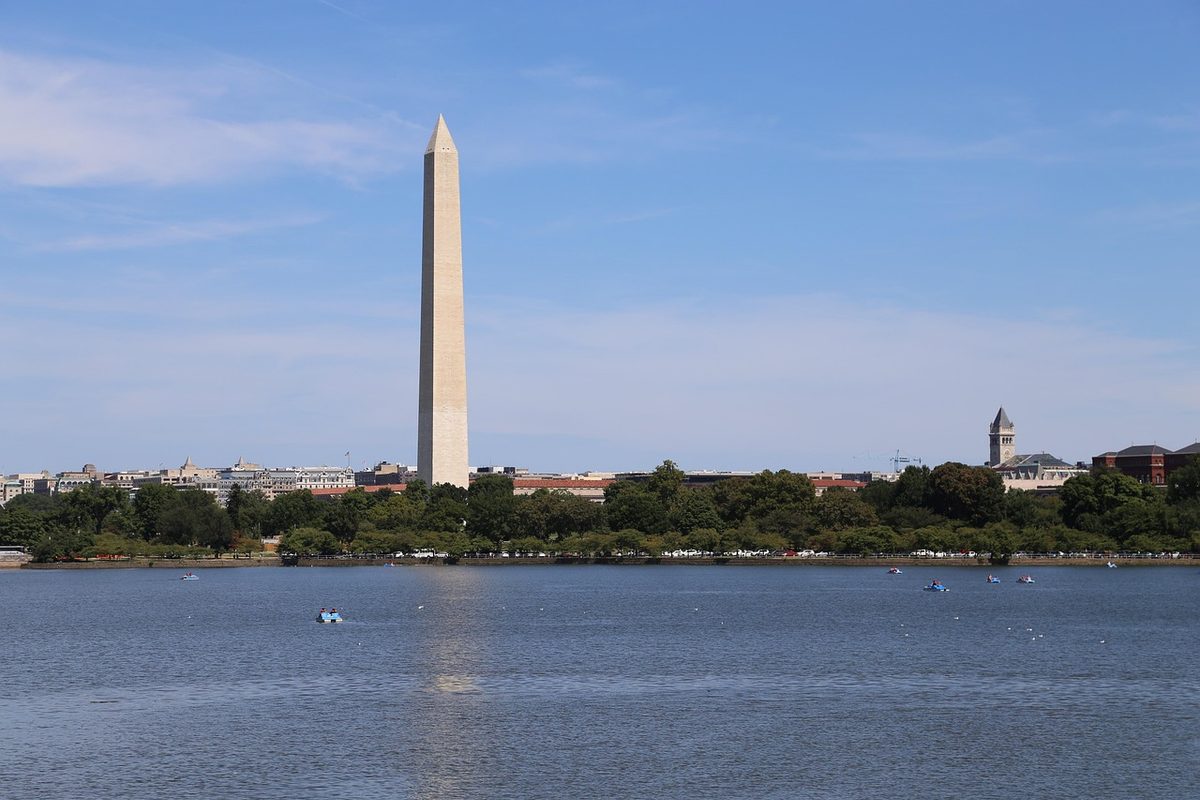
Every Smithsonian museum is free. That’s 21 museums. The Air and Space Museum, the Natural History Museum (the Hope Diamond is in there), the American History Museum, the National Zoo. All free. In any other city, you’d pay $25-40 per person per museum.
The monuments are free. The National Mall is free. The changing of the guard at Arlington National Cemetery is free. The Library of Congress is free and genuinely impressive even if your kids don’t care about books.
Here’s what you’ll actually spend for a week:
| Expense | Cost |
|---|---|
| Hotel in Arlington/Bethesda (6 nights) | $900-1,400 |
| Metro passes (family) | $150-200 |
| Food (mix of groceries and eating out) | $600-900 |
| One or two paid attractions (Spy Museum, etc.) | $100-200 |
| Total | $1,750-2,700 |
Stay across the river in Arlington or up in Bethesda. Hotels are significantly cheaper, parking is often free, and the Metro gets you into the city in 15 minutes. Walking DC is very doable — the Mall area is flat and most of the big stuff is clustered together.
The one downside: DC in summer is brutally hot and humid. July and August are miserable for walking around outside all day. Go in April (cherry blossoms), May, September, or October if you can swing it.
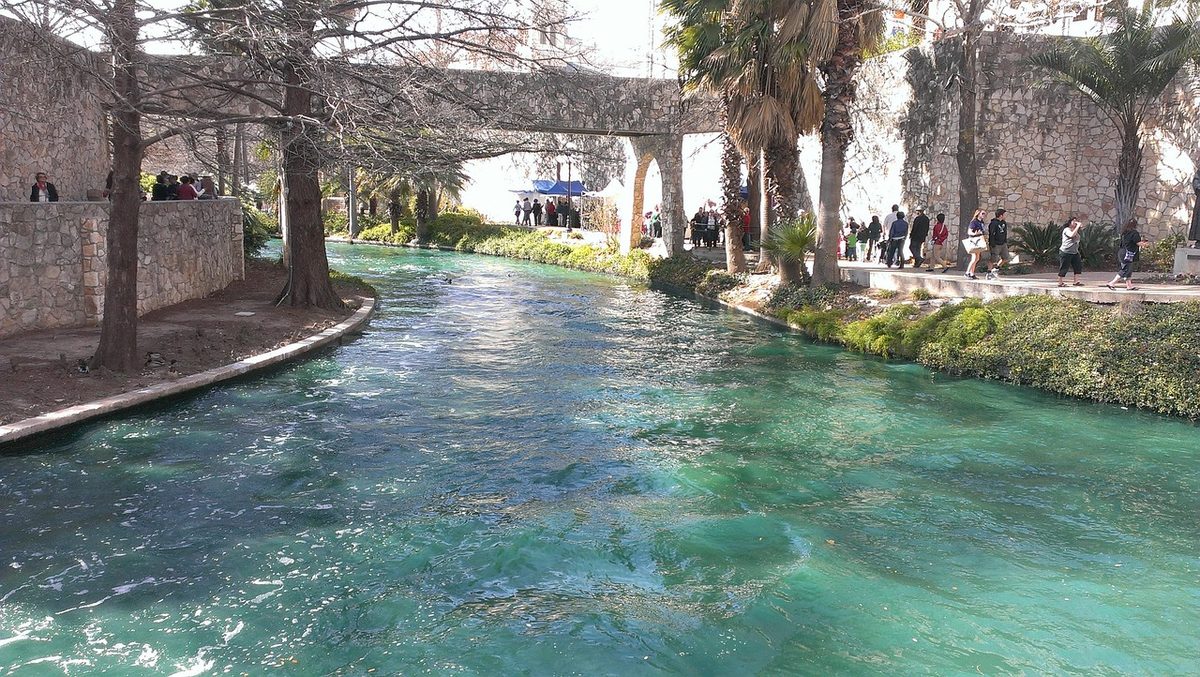
The River Walk is free. Just walking along the river, looking at the restaurants and the cypress trees and the bridges — it’s genuinely beautiful and your kids will like it more than you’d expect. The Alamo is free (timed entry tickets are free but you need to reserve them online). The San Antonio Missions — a UNESCO World Heritage Site — are free.
Hotels downtown run $100-150 per night. Food is cheap because it’s Texas: you can get excellent Tex-Mex for $8-12 a plate. Breakfast tacos are $2-3 each and they’re enormous.
The one paid attraction I’d actually recommend is the San Antonio Zoo ($35 for adults, $29 for kids). It’s legitimately one of the better zoos in the country and has enough shade that you won’t die in the Texas heat. The Natural Bridge Caverns ($26 per person) are worth it if your kids like caves.
Budget for a family of four, four nights: $1,200-1,800 total.
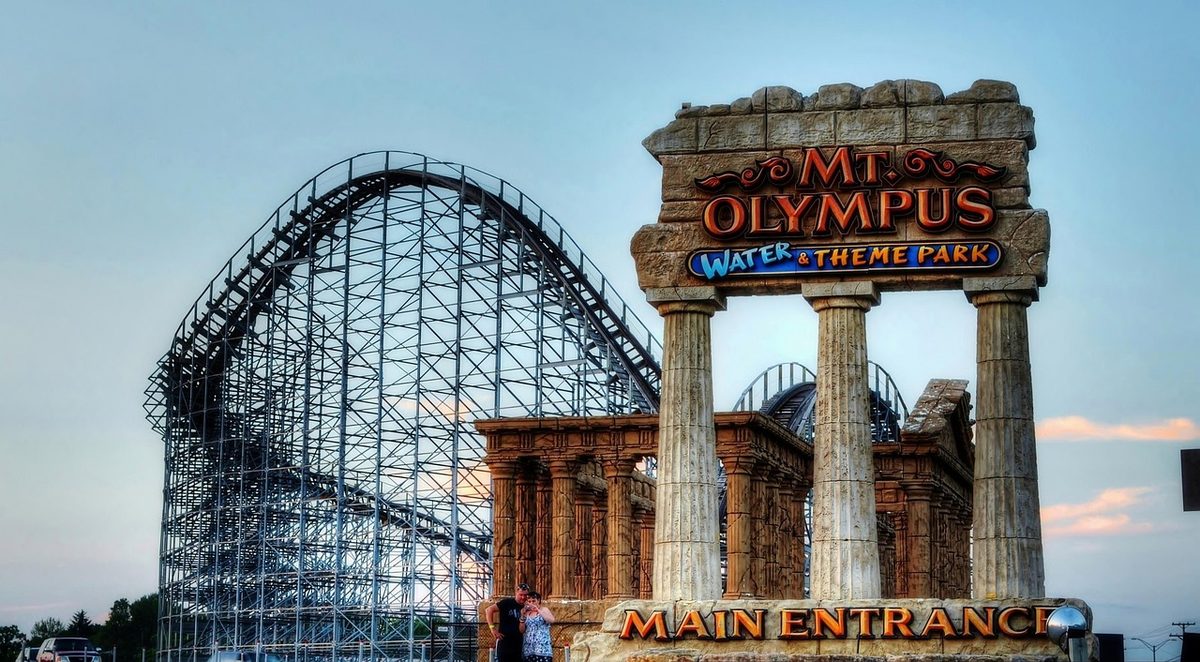
The big waterpark resorts (Kalahari, Wilderness Resort, Mt. Olympus) are the main draw. And yes, the full resort experience can get pricey — $200-350 per night. But here’s the move: book a budget motel in town ($70-100 per night) and buy day passes to the waterparks instead. Mt. Olympus day passes are around $40 per person and include both water and theme park rides.
Or skip the big parks entirely. The Upper and Lower Dells boat tours ($30-40 per person) are actually really cool — your kids will like the sandstone cliffs and the dog that jumps between the cliffs at Witches Gulch. There’s also mini golf, go-karts, and the kind of cheesy roadside attractions that kids between ages 5 and 12 genuinely love.
Off-season (September through May, excluding holidays) drops prices significantly. The indoor waterparks mean the Dells is actually a year-round destination, and a Wednesday night in February at Wilderness Resort is half the price of a Saturday in July.
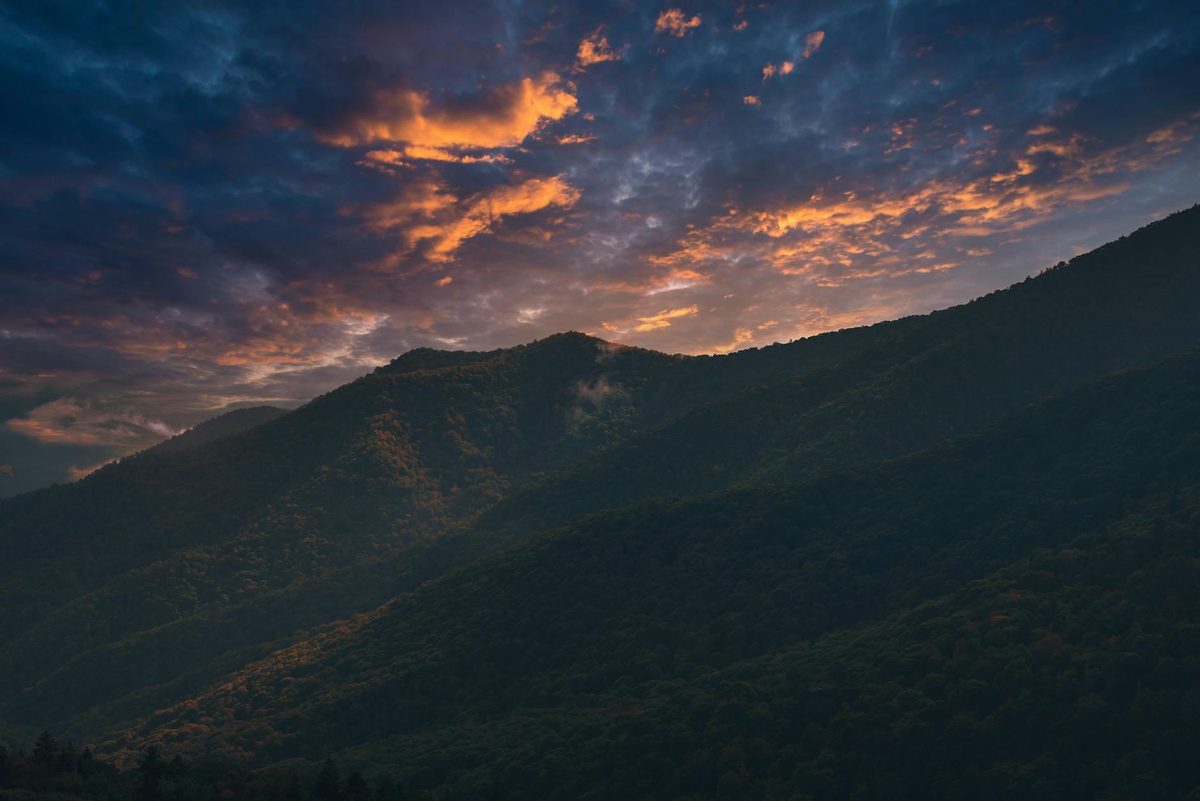
But if you’re not a camping family — or if one member of the family (possibly you, possibly your spouse) has strong opinions about sleeping on the ground — there’s a middle ground.
KOA campgrounds have cabins that run $80-150 per night. They have beds, electricity, and sometimes a small kitchen. You get the campfire-and-s’mores experience without actually sleeping on rocks. KOA pools and playgrounds keep younger kids entertained for hours, which is useful when you need to sit in a camp chair and drink coffee in peace.
Hipcamp is basically Airbnb for camping. You can find everything from a $20 tent site on someone’s farm to a $150-per-night glamping tent with a real bed. The cool thing about Hipcamp is the unique locations — a site next to a creek on a working ranch, or a platform tent overlooking a valley. Stuff you won’t find at a regular campground.
Glamping (the real stuff, like canvas tents with beds and furniture) runs $150-250 per night. That’s more than camping but way less than a hotel, and the experience is completely different. If you’ve never tried it, it’s worth doing once — it’s the kind of trip that converts non-campers.
For a family of four, round-trip flights cost $1,200-2,000 depending on the destination and time of year. Then add checked bags ($30-50 each way per bag), airport parking or rideshare ($50-100), and the car rental at your destination ($300-500 for a week).
Total cost of flying: $1,750-2,700.
Now look at driving. Gas for a 500-mile trip each way (1,000 miles total) costs about $120-180 in a typical SUV or minivan. That’s it. You already own the car. You don’t need a rental. You can stop for lunch at a random BBQ place in a small town. Your kids can bring whatever toys and blankets and pillows they want without worrying about bag fees.
Total cost of driving: $120-180.
The savings are $1,500-2,500 just on transportation. That’s not a rounding error — that’s practically an entire second vacation.
The breakeven point is roughly 8-10 hours of driving. Anything under that, driving is an obvious win. At 10-14 hours, it depends on how your kids handle car time. Beyond 14 hours, you’re probably better off flying unless you break it up into a multi-day road trip (which can be fun in itself — stop at weird roadside attractions, hit state parks along the way, make the drive part of the vacation).
I’ve read a lot of “budget travel tips” articles and most of them are either painfully obvious (“cook your own meals!”) or borderline delusional (“just travel hack your way to free flights!”). Here are the ones that actually move the needle for families:
Travel in September. I keep saying this because it’s the single biggest money-saver. September is the sweet spot — summer crowds are gone, kids are back in school (so every other family is NOT traveling), but the weather is still warm in most of the US. Hotels are 20-40% cheaper. Flights are cheaper. Campgrounds have availability. If your school district allows it, pulling kids out for a week in September is the best financial move you can make for vacation.
Use hotel points strategically. Most hotel loyalty programs are free to join. Even if you don’t travel often for work, putting regular spending on a co-branded credit card (Marriott Bonvoy, Hilton Honors, IHG) can rack up enough points for 2-3 free nights per year. That alone saves $300-600.
Pack breakfast and lunch. This sounds boring but hear me out. A box of cereal, some milk, fruit, and sandwich stuff costs maybe $25 at a grocery store and covers breakfast and lunch for 2-3 days for a family of four. Eating out for those same meals would cost $120-180. The savings are enormous, and honestly, my kids prefer cereal and sandwiches to restaurant food half the time anyway.
Hotel rooms with fridges and microwaves. This is non-negotiable for us. Being able to store milk, reheat leftovers, and keep snacks cold changes the entire food math of a trip. Residence Inn, Home2 Suites, and most extended-stay hotels have kitchenettes. They cost about the same as a regular hotel room.
Go where the entertainment is free. Beaches, national parks, state parks, hiking trails, city parks with splash pads. The most expensive family vacations are the ones where you’re paying admission to everything — theme parks, waterparks, museums, attractions. The cheapest are the ones where nature does the entertaining for free.
Skip souvenirs. This is controversial in my house but I’m standing by it. A $15 snow globe from the Grand Canyon gift shop will be in a landfill within two years. Take photos. Let your kids collect rocks or pinecones or shells (where it’s allowed). The memories are the souvenir.
Here’s what a week actually costs at each destination for a family of four, based on real prices. This assumes you’re driving (add $1,500-2,500 for flights).
| Destination | Lodging/Night | Daily Food | Activities | Weekly Total |
|---|---|---|---|---|
| National Park Camping | $25-35 | $50-70 | Free-$20 | $660-900 |
| Beach Camping (Gulf Coast) | $28-35 | $60-80 | Free-$30 | $700-950 |
| Washington DC | $150-230 | $100-150 | Mostly free | $1,750-2,700 |
| San Antonio | $100-150 | $80-120 | $30-60 | $1,200-1,800 |
| Myrtle Beach | $80-120 | $80-120 | $20-50 | $1,200-1,800 |
| Wisconsin Dells (budget) | $70-120 | $80-120 | $50-100 | $1,400-2,200 |
The camping options are clearly the cheapest — under a thousand dollars for a full week. But even the city destinations come in way under the typical resort vacation. A week in DC or San Antonio for $2,000 is a fraction of what you’d spend at Disney or an all-inclusive resort.
Not every “budget” destination is actually worth your money.
Branson, Missouri gets recommended constantly as a cheap family destination. And yes, the hotels are cheap. But every single thing to do costs money — shows, attractions, theme parks — and by the time you’ve bought tickets to three things, you’ve spent $400+ and you’re in… Branson. I’d rather camp in a national park for a quarter of the price and have ten times the experience.
Gatlinburg/Pigeon Forge (outside the Smokies) is the same problem. The town itself is an overpriced tourist trap — Ripley’s everything, pancake houses with 45-minute waits, go-kart tracks charging $12 per ride. But the Great Smoky Mountains are RIGHT THERE. Skip the town, camp in the park, and save hundreds.
Any “deal” resort that requires a timeshare presentation. Just don’t. Three hours of your vacation gone, the “deal” is never as good as advertised, and the sales pressure is intense. Your time with your family is worth more than saving $200 on a hotel room.
Here’s the framework I use every time:
Step 1: Pick your destination based on what’s free there, not what costs money. DC (free museums), national parks (free hiking), beaches (free beach). If the main attraction costs $50 per person, it’s not a budget destination — it’s a regular destination with cheap hotels.
Step 2: Figure out if you can drive. If it’s under 8 hours, drive. You just saved $1,500+.
Step 3: Find the cheapest acceptable lodging. Camping is cheapest. Then budget hotels with free breakfast and a pool. Then Airbnb/vacation rentals (which are only cheaper than hotels if you’re cooking most meals — otherwise they’re a wash).
Step 4: Plan your food strategy before you leave. Figure out which meals you’ll cook/pack and which you’ll eat out. Having a plan prevents the “I’m tired, let’s just eat at this restaurant” spiral that adds $300 to every trip.
Step 5: Set an activity budget and stick to it. We give ourselves $200-300 for the whole trip on paid activities. Once it’s gone, we do free stuff. This creates natural budgeting for the kids too — “Do you want to spend $40 on the waterpark today, or save it for something tomorrow?”
The best family vacations aren’t about spending the most money. They’re about picking the right spot, having a loose plan, and letting your kids run around until they’re exhausted. You can do that for $700 at a campground or $2,000 in a city. Both work. Both create memories.
The only vacation that feels cheap is the one where you’re stressed about money the whole time. So pick a budget you’re comfortable with, plan around it, and stop comparing your trip to whatever someone else posted on Instagram.