Physical Address
304 North Cardinal St.
Dorchester Center, MA 02124
Physical Address
304 North Cardinal St.
Dorchester Center, MA 02124
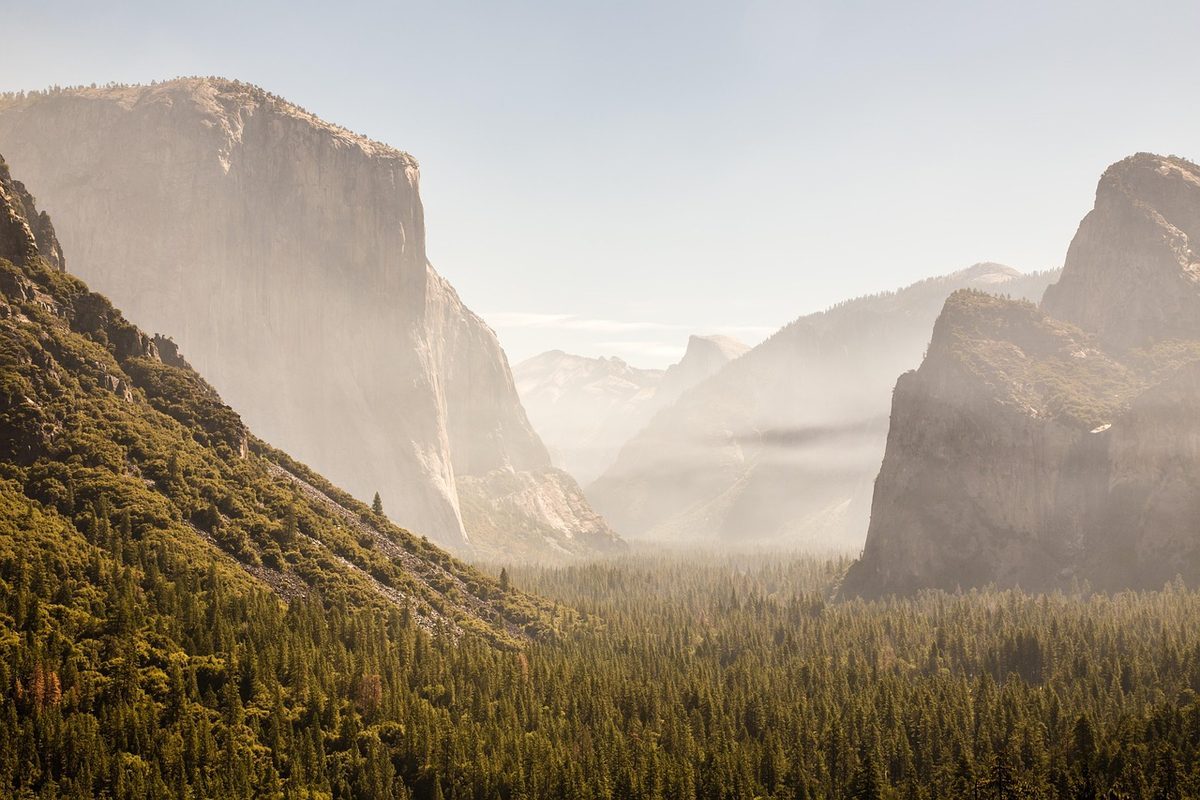
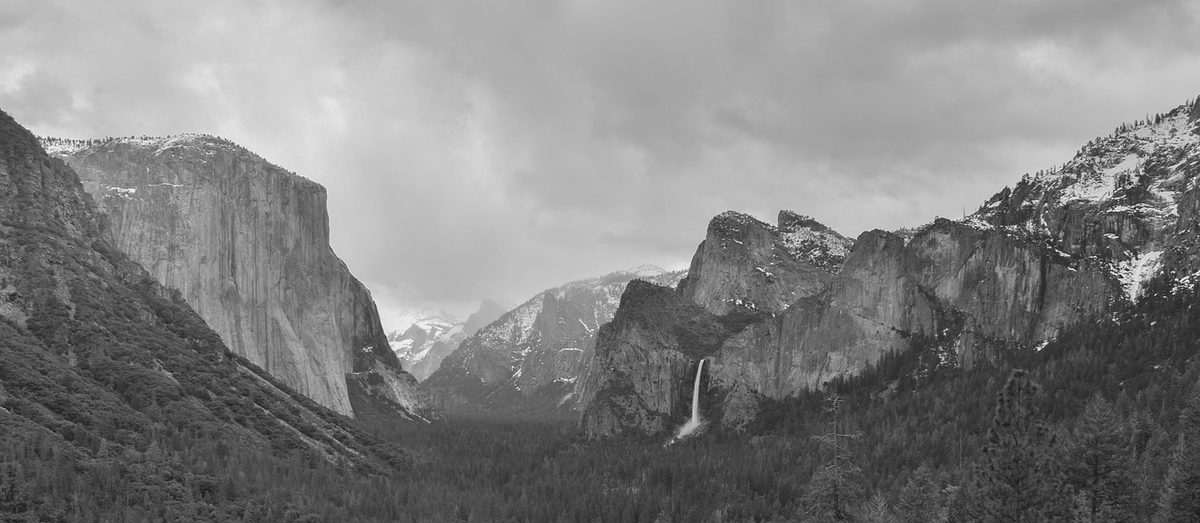
My seven-year-old stood at the edge of the Tunnel View overlook, mouth literally hanging open, and said “that’s not real.” I get it. The first time you see Yosemite Valley spread out below you — El Capitan on the left, Bridalveil Fall streaming down on the right, Half Dome anchoring everything in the distance — it does look fake. Like someone Photoshopped a desktop wallpaper and stuck it in California.
But it’s extremely real. And it’s way more doable with kids than most parents think.
I’d been putting off a Yosemite family vacation for years because I assumed it was all intense hiking and backcountry camping. Turns out a huge chunk of the best stuff is flat, paved, stroller-friendly, and right there in the valley. You don’t need to be a mountain goat family. You just need a car, some snacks, and maybe a stroller with decent wheels.
Here’s what surprised me most about Yosemite with kids: the valley floor is basically a giant, flat, paved loop with some of the most jaw-dropping scenery on the planet. The Valley Floor Loop is about 13 miles total if you walk the whole thing (don’t), but you can hop on and off the free shuttle bus and just do the sections you want.
The path is wide, paved, and stroller-friendly. My toddler rode in the stroller while the older kids biked rented bikes alongside. You’re surrounded by 3,000-foot granite walls the entire time. It’s absurd how beautiful it is for essentially walking on a sidewalk.
Rent bikes from Half Dome Village (formerly Curry Village) — they have kid bikes, trailers, and tag-alongs. About $12/hour or $34/day for adults. The bike paths are separated from car traffic in most places, so it actually feels safe with kids.
There are actually two Yosemite Falls trails, and the difference matters a lot when you’ve got kids in tow.
The Lower Yosemite Fall trail is a flat, paved, one-mile loop that takes you right to the base of the lower falls. Perfect for kids of any age. My three-year-old did it no problem. The mist at the base is incredible in spring — bring a rain jacket or just accept that everyone’s getting wet.
The Upper Yosemite Fall trail is a completely different animal. We’re talking 7.2 miles round trip with 2,700 feet of elevation gain. Steep switchbacks the whole way. Do NOT attempt this with young kids. I’ve seen families try and turn back miserable after 30 minutes. If your kids are strong hikers and at least 10 or 11, maybe. Otherwise, skip it.
Stick with Lower Falls. Trust me. The view is spectacular and nobody has a meltdown on the way back to the car.
This is one of those easy wins that every family should do. The walk to Mirror Lake is about two miles round trip on a flat, mostly paved path. In spring and early summer, the lake reflects Half Dome like a mirror — it’s the kind of thing you’ve seen on postcards your whole life.
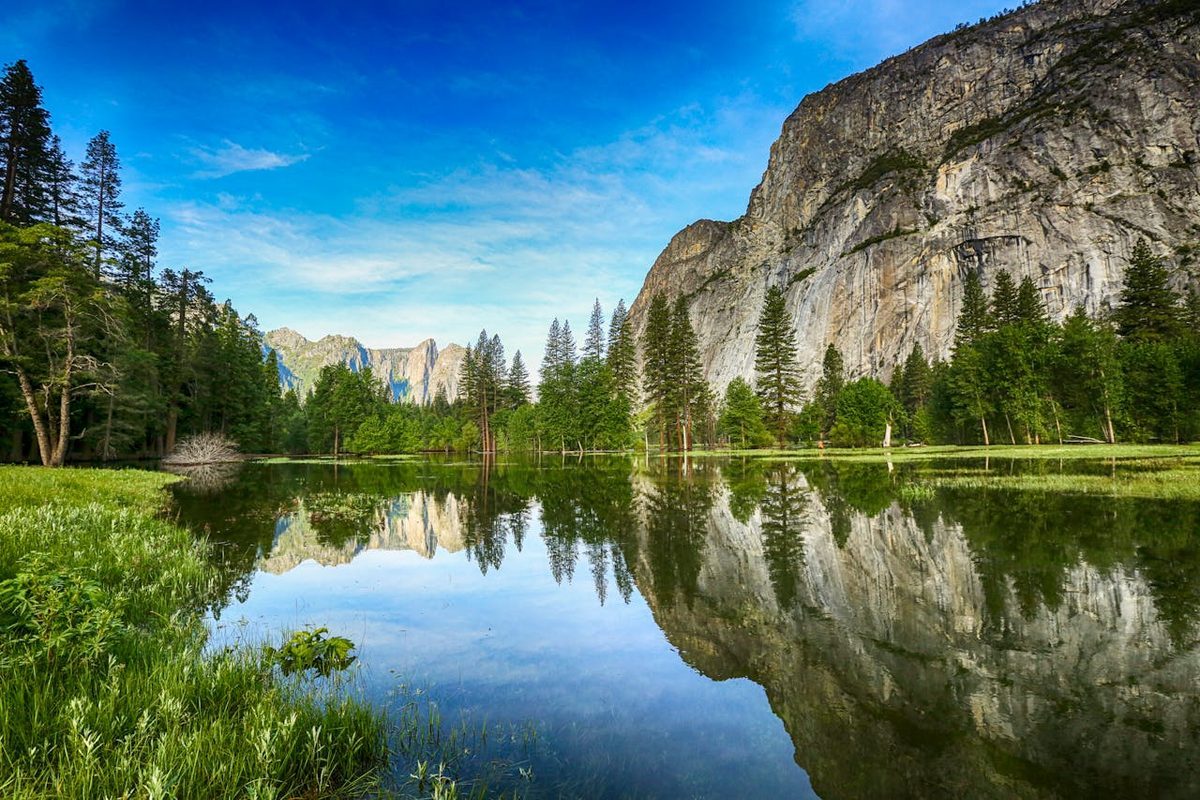
By late summer the lake mostly dries up into a meadow, which honestly my kids thought was cool too — they ran around in the sandy creek bed. But if you want the actual mirror effect, go in May or June.
The sandy beach area along the way is perfect for wading. My kids spent more time throwing rocks into the water than actually looking at the scenery, which tracks. Bring water shoes.
The walk to Bridalveil Fall is short — about half a mile round trip — but it’s uphill and a bit rocky in places. Totally manageable with kids over two, though I wouldn’t bring a regular stroller. The trail is not paved all the way.
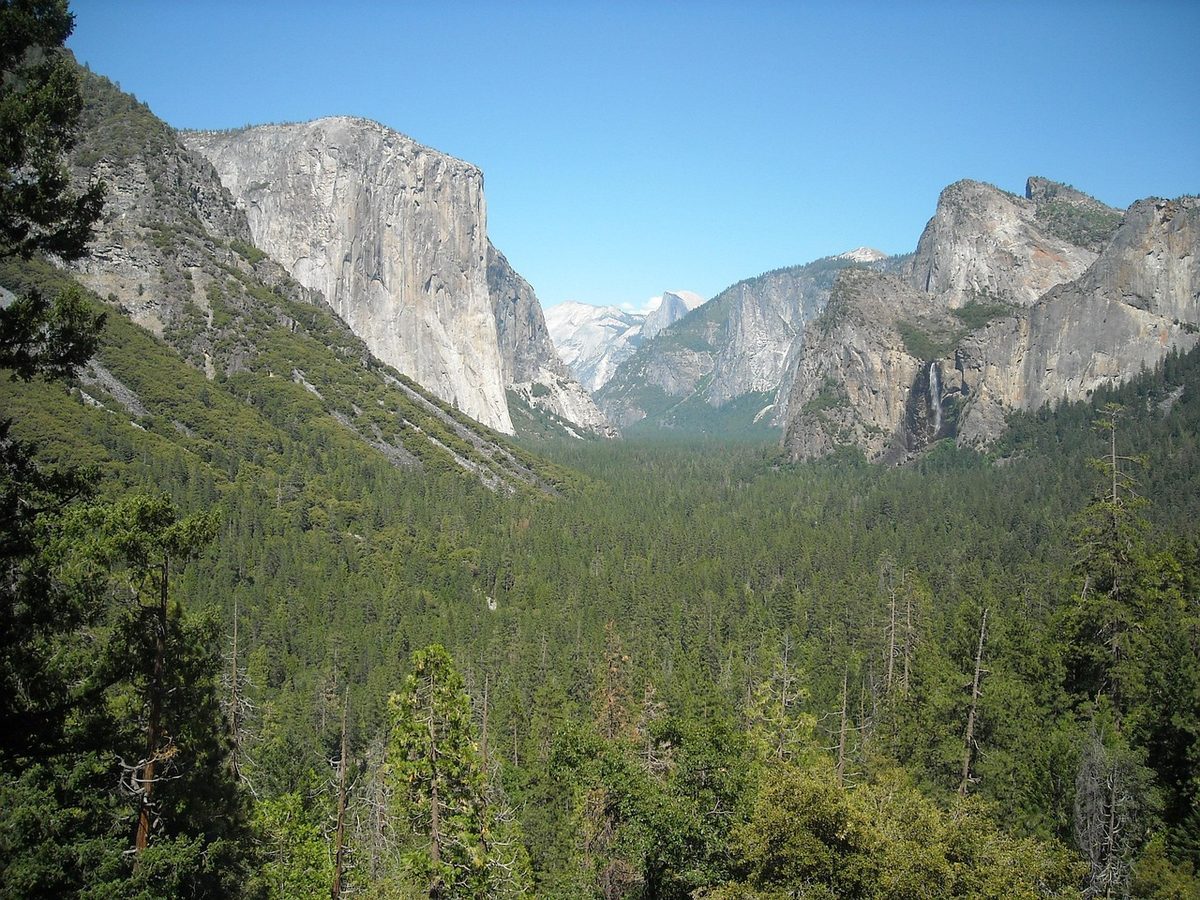
The real draw here is the mist. When the waterfall is running strong (spring through early summer), you get absolutely drenched just standing near the base. My kids treated it like a water park. Best free entertainment in the park. Rain jackets are smart but honestly just let them get wet — they’re going to anyway.
Parking fills up fast here. Get there before 9am or take the shuttle to stop 6.
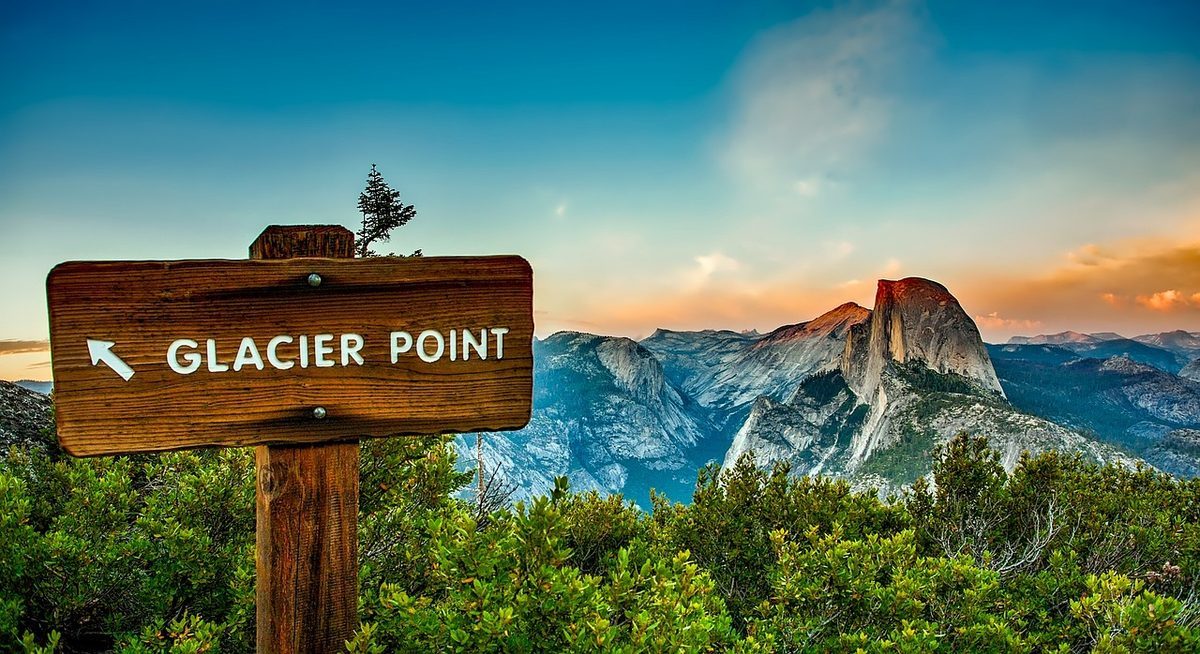
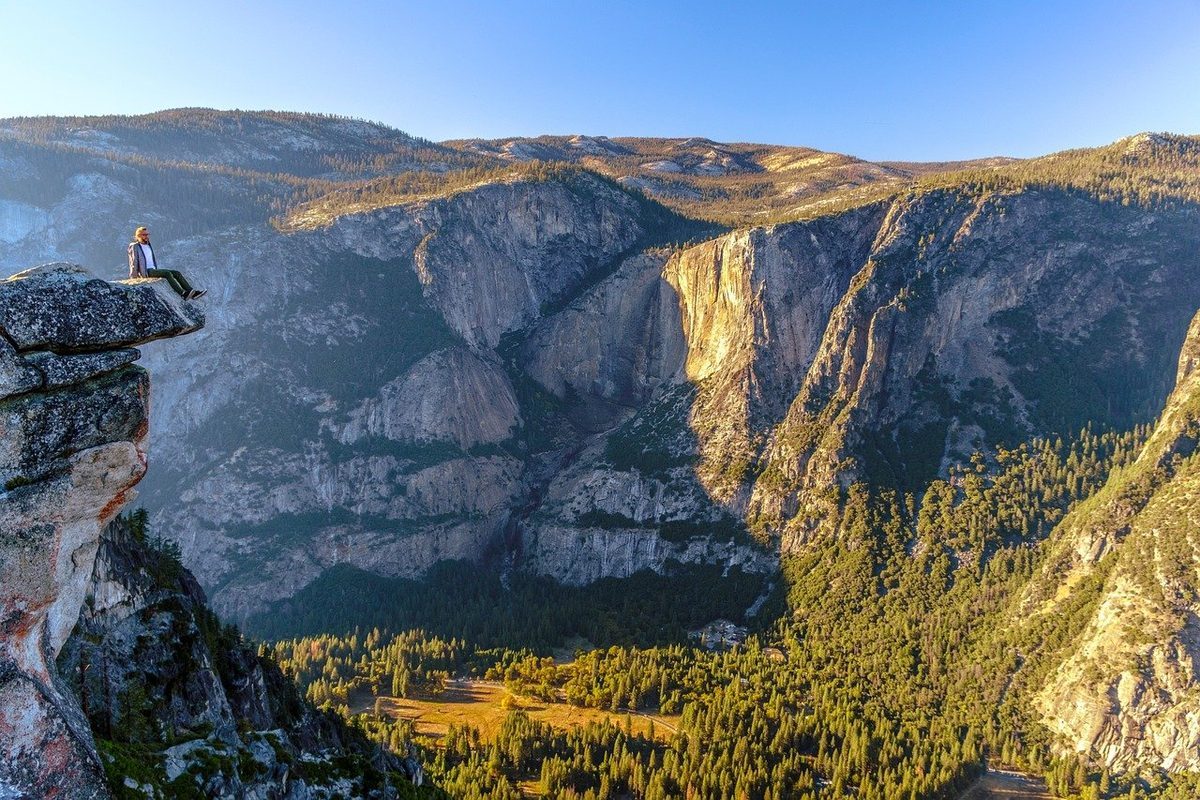
If you do nothing else at Yosemite, drive to Glacier Point. It’s about an hour from the valley floor (the road is a bit winding but fine) and the payoff is ridiculous. You’re standing 3,200 feet above the valley looking down at everything — Half Dome right at eye level, Yosemite Falls in the distance, the Merced River winding through the valley far below.
Best part for families: you drive right up to it. Walk about 200 yards from the parking lot to the viewpoint. Done. Even grandma can do this one. There’s a gift shop and a small snack bar, and the guardrails are solid enough that I didn’t have a heart attack watching my kids near the edge. Almost.
Important: Glacier Point Road is typically open late May through October or November, weather depending. It’s closed in winter. Check the NPS website before you go — don’t just assume it’s open.
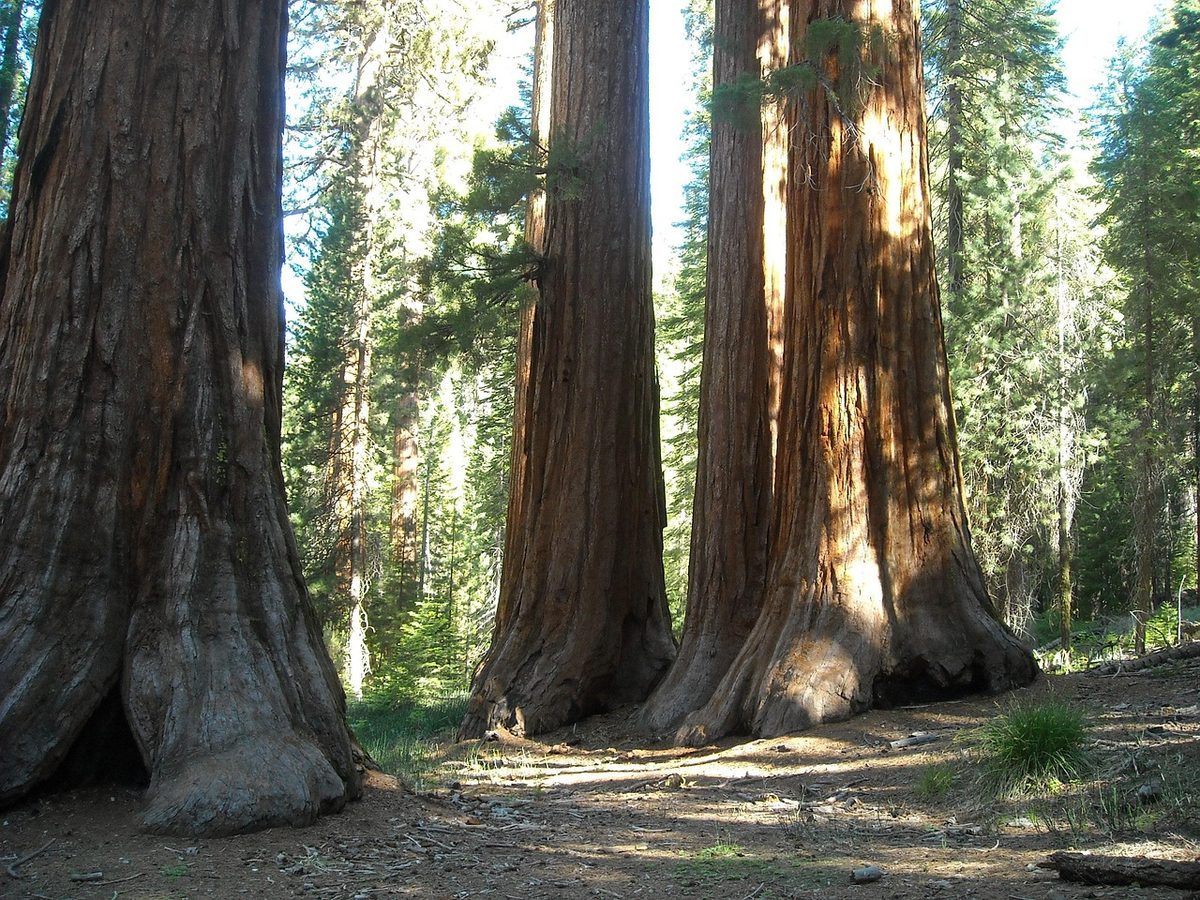
The Mariposa Grove is at the south end of the park, about an hour’s drive from the valley. It’s worth the trip. These giant sequoias are the largest trees on earth by volume, and standing next to one makes your kids feel like ants. In the best way.
The grove has paved trails and a free shuttle from the parking area. The easiest loop (about two miles) takes you past the Grizzly Giant — a 1,800-year-old tree that’s 96 feet around at its base. My kids literally could not comprehend that a tree could be that old.
If your kids are good walkers, the full loop to the upper grove is about six miles and hits the California Tunnel Tree (you can walk through it). The trail is well-maintained but has some uphill sections.
The grove can feel crowded in midday summer, but if you take the first shuttle of the morning it’s peaceful. Almost quiet. Just you and trees that were seedlings when the Roman Empire was a thing.
Pick up a Junior Ranger booklet at any visitor center (they’re free or a couple bucks — can’t remember which). Your kids complete activities as you explore the park, then a ranger swears them in and gives them a badge. My kids will skip a waterfall but will hike three miles to finish a Junior Ranger book. I don’t understand it, but I’ve learned not to question free motivation.
The program is geared toward ages 7-13 but younger kids can do it with help. The activities are actually good — they ask kids to look at wildlife, sketch things, learn about geology. It makes the whole trip more engaging for them because they have a mission.
Seriously, if you’re planning a national park trip with kids, the Junior Ranger program is your secret weapon at pretty much every park in the system.
Accommodation in Yosemite books up fast. I mean months-in-advance fast. Here’s the breakdown:
Canvas tent cabins, heated in winter, no bathroom in the room. Sounds rough. Actually kind of great with kids. They think it’s camping but you still have a real bed and a hot shower building nearby. The pizza deck and coffee shop are right there, plus bike rentals. Location is unbeatable — you’re in the heart of the valley.
Downsides: you can hear your neighbors breathe. Not exaggerating. Walls are canvas. Also, bears get into cars here all the time, so follow the food storage rules obsessively.
Actual hotel rooms with actual bathrooms. More expensive but if you need normal hotel comfort, this is it. The location is excellent — walking distance to Yosemite Falls trail and the shuttle stop. Rooms are basic but clean. My main complaint is the price — $250-350/night for a room that would be $120 anywhere else. But you’re paying for location and you can’t really argue with it.
If budget isn’t a concern, it’s gorgeous. Grand old lodge vibes, incredible dining room. But at $500+ a night and a vibe that’s more “dress nice for dinner” than “kids running around,” it’s probably not the best pick for families with young children. I’d spend that money on an extra day in the park instead.
Near the south entrance, about 45 minutes from the valley. More affordable, historic, quieter. Good option if you want to explore Mariposa Grove without driving from the valley. But the drive to the main valley attractions gets old after a couple days.
El Portal, Mariposa, and Groveland all have hotels and vacation rentals outside the park. More space, full kitchens, better prices. The trade-off is a 30-60 minute drive each way, which adds up. If you’re doing three or more days, staying in the park is worth the premium. For a shorter trip, gateway towns work fine.
Whatever you choose, book the second reservations open. For summer stays, that usually means booking in early spring at the latest. I’ve seen July dates sell out by March.
Mist Trail with young kids. I know it’s the “must-do” hike and everyone on Instagram looks amazing on those granite steps. But with kids under 8, it’s a nightmare. The steps are steep, slippery when wet (which they always are — it’s called the Mist Trail for a reason), and the drop-offs have minimal railing. I watched a dad carrying a screaming toddler down those slick steps and I could feel his regret from 50 feet away. Save it for when your kids are older, or do it without them if you can swing childcare.
The valley on peak summer weekends. I can’t stress this enough. Fourth of July weekend in Yosemite Valley is like trying to enjoy nature inside a traffic jam. The shuttle is standing-room only, every parking lot is full by 9am, and the trails are shoulder-to-shoulder. Go midweek. Or go in September. Seriously.
| Detail | Info |
|---|---|
| Entrance fee | $35 per vehicle, valid for 7 days. The America the Beautiful annual pass ($80) pays for itself in 3 parks. |
| How many days | 2-3 days minimum. You could spend a week but 2-3 hits the highlights without burning out the kids. |
| Best time to visit | May-June for peak waterfalls, September-October for fewer crowds and fall color. July-August is packed and hot in the valley. |
| Reservation system | Required for peak season entry (typically mid-April through October). Book on recreation.gov — they sell out. Plan ahead. |
| Elevation | Valley floor is ~4,000 feet. Glacier Point is ~7,200 feet. Most kids are fine but bring extra water. |
| Cell service | Spotty at best in the valley, basically nonexistent on trails. Download offline maps before you go. |
Morning: Enter the park early (before 9am if possible). Stop at Tunnel View for the iconic first look. Drive into the valley and head straight to Lower Yosemite Fall before the crowds. The one-mile loop takes about 45 minutes with kids.
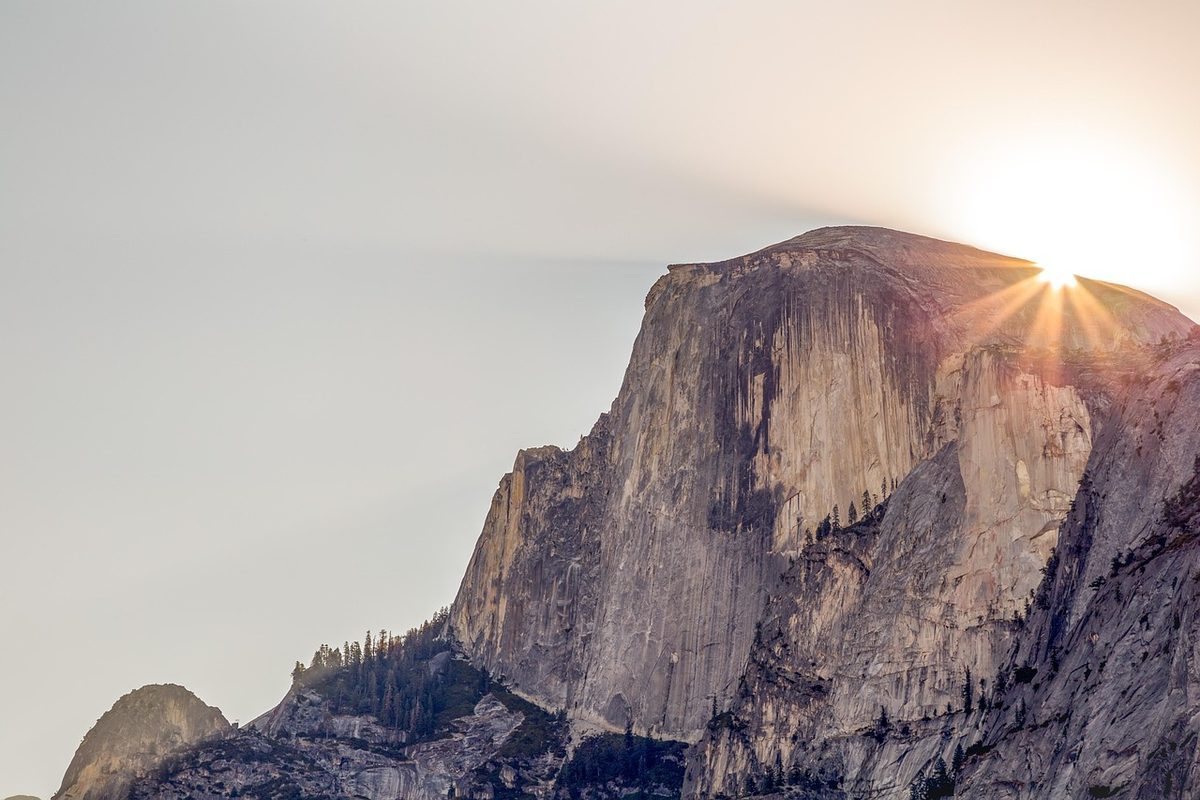
Late morning: Rent bikes at Half Dome Village and ride the valley loop toward Mirror Lake. Let the kids wade and throw rocks. Pack a picnic — eating lunch with Half Dome as your backdrop costs nothing and beats any restaurant.
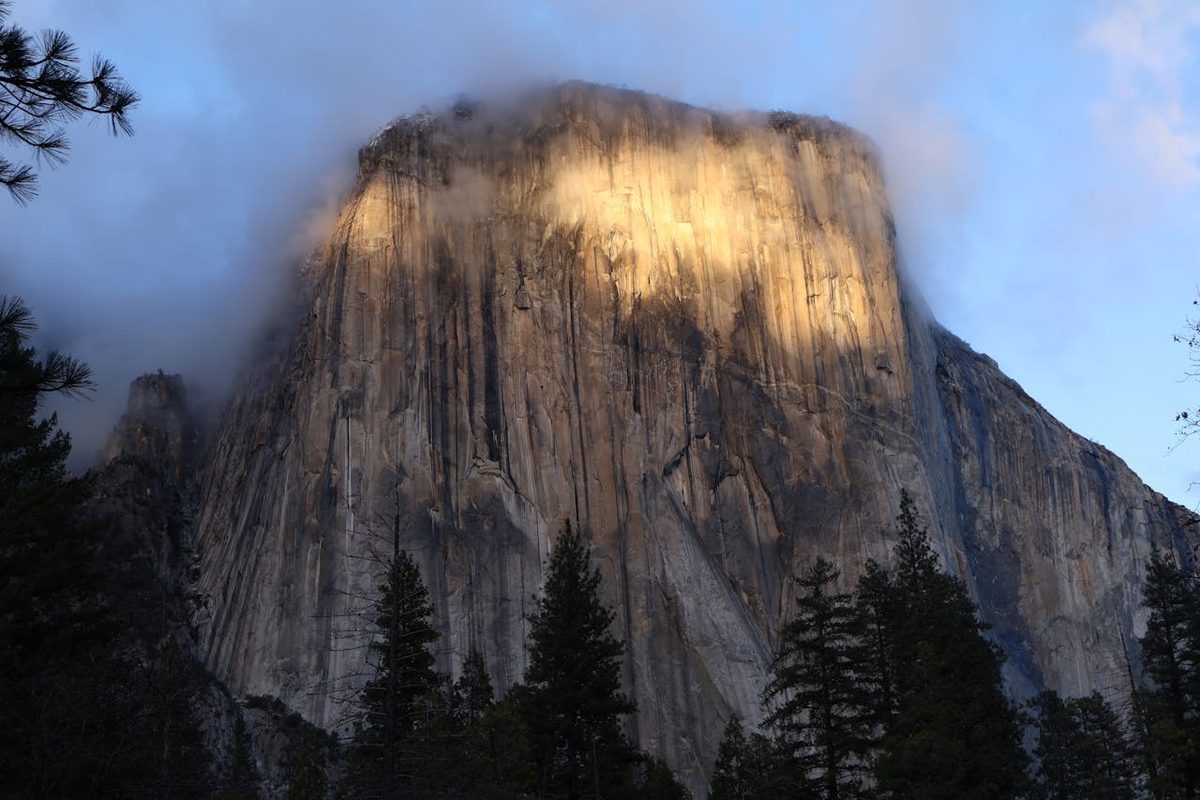
Afternoon: Drive to Bridalveil Fall (or take the shuttle). Short walk, maximum mist exposure. Then swing by El Capitan Meadow to lie in the grass and stare straight up at the biggest granite face in the world. Bring binoculars — you can sometimes spot rock climbers who look like tiny specks.
Evening: Pizza at the Half Dome Village pizza deck. It’s not gourmet but after a day of exploring, it tastes incredible. Kids eat outside while you watch the last light on the valley walls.
Morning: Drive to Glacier Point (about an hour from the valley). Spend at least an hour up there — the kids will want to take photos from every angle and the ranger talks are worth catching.
Midday: Drive down to Mariposa Grove (about 45 minutes from Glacier Point). Take the shuttle in and hike the lower loop to the Grizzly Giant. Pack lunch again — there’s nowhere to buy food near the grove.
Afternoon: Head back through the valley for one last stop — maybe the Valley View pullout or the Swinging Bridge picnic area. Let the kids run around, skip rocks in the Merced River.
Yosemite has four entrances. Most families come through the South Entrance from Fresno (about 1.5 hours) or the Big Oak Flat Entrance from the Bay Area (about 3-4 hours from San Francisco). The drive from LA is about 5 hours.
The closest major airports are Fresno (FAT) and Sacramento (SMF). Fresno is closer but Sacramento sometimes has better flight deals — it’s about an hour farther.
If you’re making a bigger road trip out of it, Yosemite pairs well with Yellowstone for a two-park adventure, though they’re about 12 hours apart by car. Some families do San Francisco to Yosemite to Lake Tahoe as a California loop — that’s a good one.
Skip the massive gear haul. Here’s what actually mattered:
Yosemite with kids takes some planning. You need reservations. You need to book lodging early. You need to get up early to beat the crowds. And yes, the drive from basically anywhere is long.
But standing in the valley floor looking up at walls of granite that are older than anything your brain can really compute, watching your kid’s face when they realize how small they are in the world — there’s nothing quite like it. This isn’t one of those “nice but overrated” national parks. It delivers. Every single time.
If you’re planning a bigger trip, check out our guides to the best national parks for families and best family vacations in the USA. And if budget is a factor (when isn’t it?), we’ve got a whole roundup of cheap family vacations that actually work.