
Family travel · FAMILY TRAVEL
Best Time to Take Kids to Japan
The honest answer to “when should we go to Japan” is: whenever your kids are out of school and you can afford the flights. Japan is good year-round. There’s no bad season — just different trade-offs between weather, crowds, cost, and what you’ll see when you get there.
That said, some months are significantly better than others for families. Here’s what each season actually looks like with kids, and which school breaks line up best.
In This Article
Spring: Cherry Blossoms and Chaos
Late March through mid-April is cherry blossom season. The trees explode into pink and white and the entire country goes outside to sit under them, eat, drink, and celebrate. It’s called hanami and it’s genuinely beautiful — parks become pink tunnels, castle moats fill with petals, and even the most temple-fatigued child will stop and look.
The problem: everyone else has the same idea. Hotels are at peak prices. Popular spots like Kyoto’s Philosopher’s Path and Tokyo’s Ueno Park are packed. Flights cost more. And the blossoms are weather-dependent — they might peak the week before you arrive or the week after.
If your spring break aligns with late March or early April, it can be magical. Just book everything months ahead and accept that you’ll be sharing the experience with a lot of other people.
May is the underrated pick. The blossoms are gone but everything is green, warm (20-25°C), and significantly less crowded than cherry blossom season. Flights are cheaper. Hotels are available. The weather is pleasant without being hot. The only catch is Golden Week — a string of Japanese national holidays from late April to early May when the entire country travels domestically. Avoid the Golden Week dates (roughly April 29 to May 5) unless you enjoy queues, sold-out trains, and triple-priced hotels.
Summer: Hot, Humid, and Honest
June through August. This is when most American families travel because school’s out. It’s also when Japan is at its most uncomfortable weather-wise.
June and early July is rainy season (tsuyu). Humid, wet, grey. Not constant rain — more like unpredictable showers throughout the day. Some people don’t mind. Some hate it. Fewer travelers than other seasons, which is a plus.
Late July through August is properly hot. 35°C with humidity that makes it feel worse. Tokyo in August is an endurance test. Kyoto in August is worse — the city sits in a basin and the heat pools. Your kids will wilt. You will wilt. Everyone wilts.
That said: summer festivals (matsuri) are incredible. Fireworks, street food stalls, everyone in yukata. Obon in mid-August brings traditional dance festivals. And if you go to Hokkaido, it’s 20-25°C while the rest of the country melts. Hokkaido in summer is legitimately one of the best family travel experiences in the world.
The mid-August Obon holiday is Japan’s other domestic travel peak. Avoid it unless your heart is set on a specific festival.
Autumn: The Sweet Spot
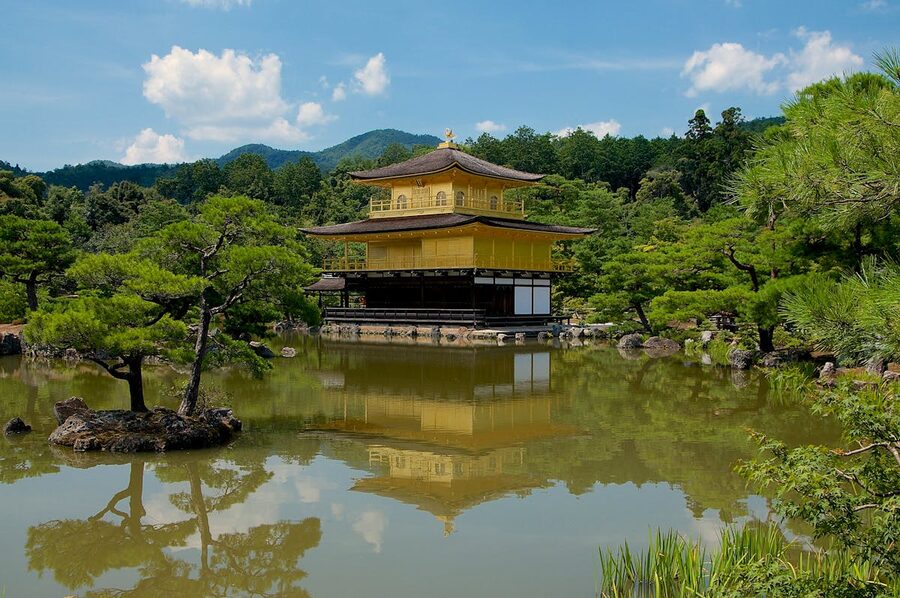
September through November. If we had to pick one season for a family trip to Japan, this is it.
September is still warm — 25-30°C in Tokyo — but the worst of the humidity is fading. Fewer travelers than spring or summer. Prices are reasonable.
October is ideal. 15-25°C, dry, clear skies, comfortable walking weather. The autumn colours start appearing in northern areas like Hokkaido and Nikko from mid-October. This is the month we’d pick every time.
November brings peak autumn colour to Tokyo and Kyoto. The temples surrounded by red and gold maples are stunning — Kinkakuji, Tofukuji, Eikando. Not as crowded as cherry blossom season but getting busier as word spreads. Book ahead for November Kyoto.
For families with school, Thanksgiving week in late November aligns well. The autumn colours are usually still going, the weather is cool but comfortable, and flights from the US are available though not cheap.
Winter: Cold, Quiet, and Surprisingly Fun

December through February. Japan in winter is underrated for families.
It’s cold — 0-10°C in Tokyo and Kyoto, colder in the mountains. But it’s manageable with layers. The crowds are at their lowest. Hotels are cheapest. And there are some winter-specific things that make it worth considering.
Christmas illuminations across Tokyo are spectacular — Roppongi Hills, Marunouchi, Omotesando. The kids care more about the lights than any temple.
Skiing in Japan — Hokkaido and Nagano have world-class powder snow from December through March. If your family skis, this is a legitimate reason to visit in winter.
Snow monkeys in Nagano — the iconic image of macaques bathing in hot springs surrounded by snow. Best from December to March.
New Year (December 28 to January 3) is a major domestic holiday. Many businesses close. Temples are packed with worshippers on January 1-3. Not the best time for sightseeing but the atmosphere is festive if you don’t mind limited restaurant options.
February is the quietest month of all. If you have a February school break, Japan is uncrowded, affordable, and just cold enough to make the onsen feel extra good.
Matching US School Calendars
Spring break (March/April): Can coincide with cherry blossoms — amazing if the timing works, expensive and crowded either way. Book 4-5 months ahead.
Summer break (June-August): The obvious window. Hot and humid but the longest block of time available. Consider Hokkaido to escape the heat, or accept the sweat and enjoy the festivals.
Thanksgiving (late November): A strong option. Autumn colours, comfortable weather, a week is enough for a focused trip. Flights aren’t cheap but availability is usually fine.
Christmas/New Year (December-January): Illuminations, skiing, snow monkeys. Cold but festive. New Year closures can be limiting — check before planning.
February break (if your school has one): Cheapest flights, emptiest attractions, cold but dry. An underrated choice.
Our Pick
Late October or early November. The weather is perfect — warm enough for comfortable walking, cool enough that nobody overheats. The autumn colours are starting. The summer crowds are gone. Prices are reasonable. And the light at that time of year makes everything look golden.
If late October doesn’t work with your schedule, May (after Golden Week) is the second choice. Green, warm, uncrowded, affordable. It lacks the visual drama of cherry blossoms or autumn colours but the practical advantages are significant.