
Family travel · FAMILY TRAVEL
What Kids Actually Eat in Japan
Japan is easier to feed kids in than most of Europe. That sounds wrong until you get there and realise that rice is in everything, noodles are everywhere, fried chicken is a staple, and convenience stores sell better food than most restaurants back home.
The real problem isn’t finding food your kids will eat. It’s stopping them eating the same thing at every meal because they discovered they like it.
In This Article
The Vending Machine Thing
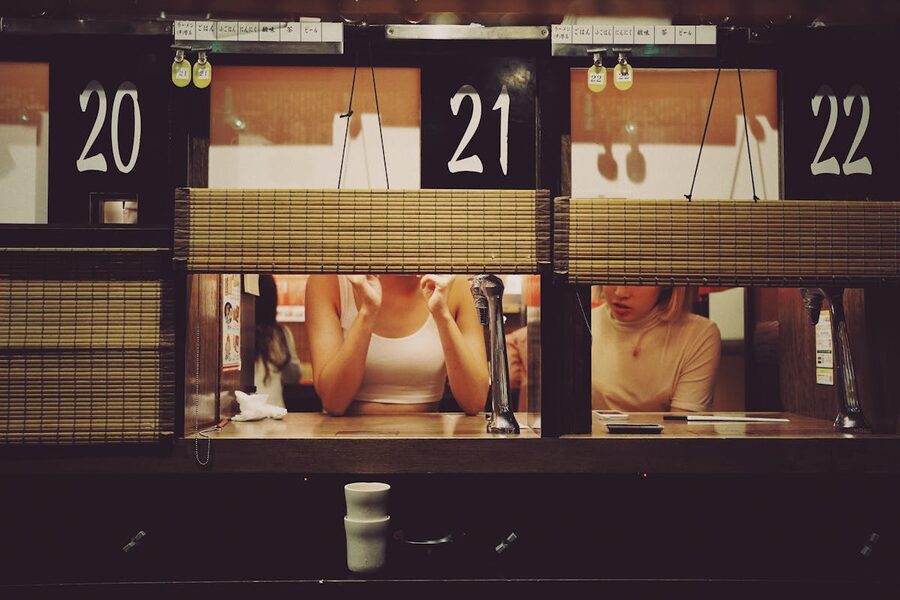
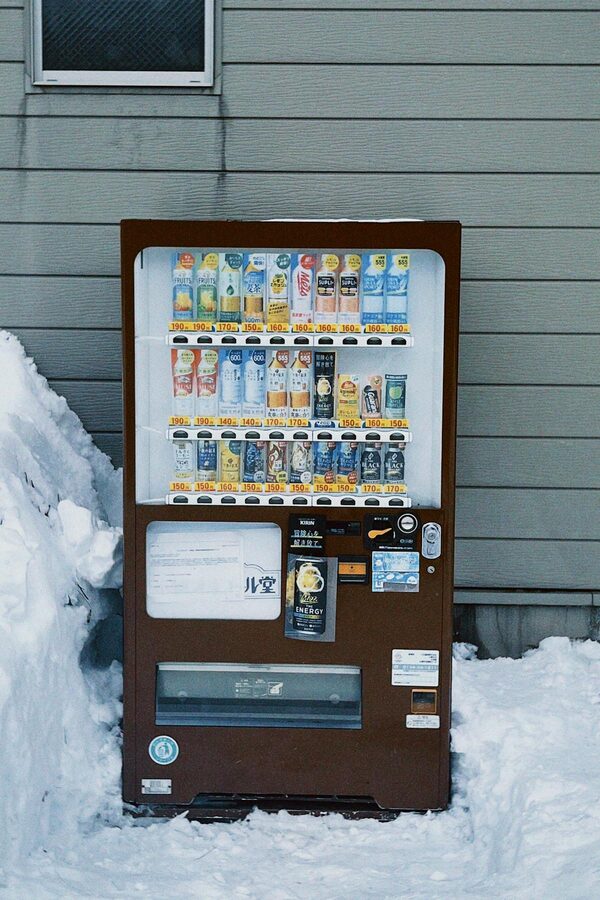
Many ramen shops and some other restaurants use ticket vending machines instead of waiters. You put money in, press the button for what you want, hand the ticket to the cook, and sit down. Food arrives. No talking required.
This panics people the first time. The machines are usually in Japanese only, sometimes with photos, sometimes not. Here’s what works: look for the top-left button — it’s usually the house special and the safest bet. Or just pick anything with a photo that looks good. Worst case you get something unexpected, which in Japan is rarely bad.
Ramen from a vending machine restaurant costs ¥800-1,200 per bowl. Most don’t have kids’ portions — order one adult bowl for small kids to share, or get two bowls for a family of four and everyone picks from both.
Conveyor Belt Sushi
Kaiten-zushi is the single best family restaurant concept in Japan. Plates of sushi circle past on a belt. You grab what you want. Each plate is ¥100-200 at the chain restaurants. Kids pick exactly what they like, there’s no waiting, and the novelty of food moving past on a conveyor keeps them interested for at least 30 minutes, which is about 25 minutes longer than most restaurants manage.
Sushiro and Kura Sushi are the big chains — locations everywhere. Most now use tablet ordering as well as the belt, so you can order specific items and they arrive on a dedicated lane. Genki Sushi in Shibuya delivers directly to your seat on a small bullet-train-style track, which kids find genuinely thrilling.
The cheaper chains aren’t serving the finest sushi. The rice is fine, the fish is fresh enough, and at ¥100 per plate nobody’s complaining. For a family of four, expect to spend ¥2,000-4,000 total — one of the cheapest proper meals you’ll have in Japan.
Japanese Curry
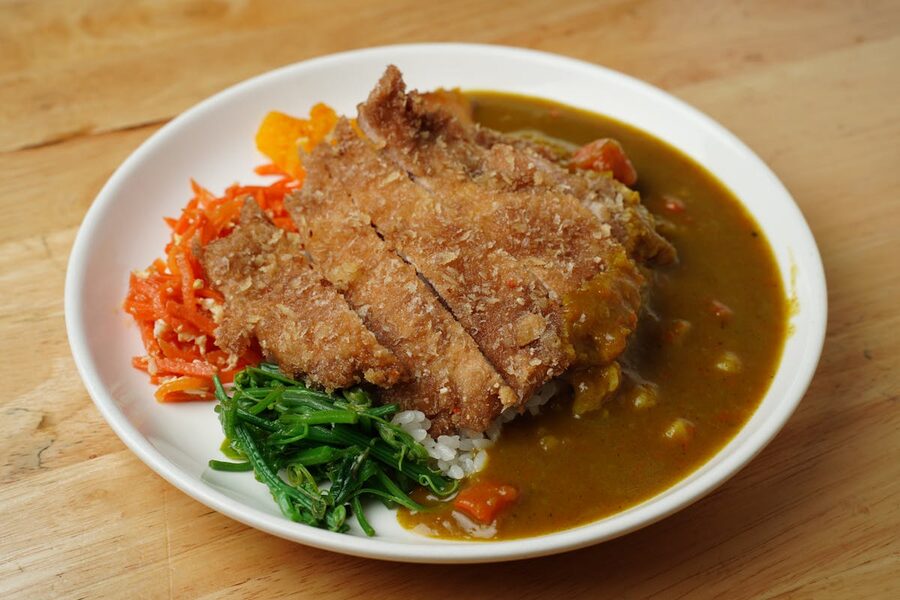
CoCo Ichibanya — CoCo Ichi to everyone who eats there — is the chain that saves families. Japanese curry is mild, sweet, and served over rice. At CoCo Ichi you choose your rice amount, spice level, and toppings. Level 1 spice is essentially zero heat. Kids’ portions are available.
¥500-800 per meal. Picture menus. High chairs. They’re everywhere — over 1,200 locations across Japan. When all else fails and your kids refuse to try anything new, CoCo Ichi will get food into them.
Japanese curry is nothing like Indian or Thai curry. It’s thick, mild, and closer to a gravy. Most kids who eat it once want it every day afterwards.
Family Restaurants
Gusto, Saizeriya, Royal Host, Denny’s Japan, and Joyfull are chain family restaurants found across the country. They all share the same essential features: picture menus, high chairs, kids’ meal sets (¥400-600), a drink bar (unlimited refills for ¥200-300), non-smoking sections, and patience with children.
The food is decent, cheap, and predictable. Saizeriya is the cheapest — Italian-style food, pasta from ¥300, pizza from ¥400. Gusto is slightly better quality. Royal Host is a step up in both price and food.
These restaurants solve the problem of not knowing what to order because every item has a photo. Point at the picture, it arrives looking like the picture. Kids’ sets usually come with a small toy or dessert.
Convenience Stores
7-Eleven, Lawson, and FamilyMart are not like convenience stores anywhere else. The food is made fresh, the quality is genuinely good, and the range is enormous. This is not emergency food — plenty of families eat at least one convenience store meal a day and are perfectly happy about it.
What works for kids:
- Onigiri (rice balls) — ¥120-200 each. Fillings range from salmon and tuna mayo to umeboshi (sour plum, skip this for kids). The wrapping keeps the nori crispy until you open it. Most kids inhale these.
- Sandwiches — soft, crustless, familiar. Egg mayo, ham and cheese, strawberry and cream. ¥200-350.
- Bento boxes — rice with chicken karaage, tonkatsu, or grilled fish. ¥400-600. A full meal.
- Nikuman — steamed meat buns, kept warm by the register. ¥150-200. Ask for “nikuman kudasai.”
- Karaage — fried chicken pieces, usually near the hot food counter. ¥200-300.
Supermarkets do the same food but cheaper, and after 7pm most discount bento and prepared food by 20-50%. If you’re on a budget, the evening supermarket run is the move.
What Kids Will Actually Eat
Forget the “try authentic Japanese cuisine” pressure. Here’s what kids consistently eat without complaint:
- Rice — it’s everywhere, it’s plain, it’s safe
- Udon — thick white noodles in broth, mild flavour, easy to eat
- Karaage — Japanese fried chicken, crispy outside, juicy inside
- Edamame — soybeans in the pod, fun to squeeze out, salty
- Tamagoyaki — sweet rolled omelette, served cold or warm
- Gyoza — pan-fried dumplings, ¥300-500 for a plate of 6
- Tonkatsu — breaded deep-fried pork cutlet, basically a schnitzel
- Japanese curry rice — mild, sweet, over rice
- Corn — Japan puts corn on everything and kids love it
- Plain ramen — ask for “kodomo ramen” (kids’ ramen) where available
When There’s No English Menu
This happens. Outside of tourist areas, many restaurants have Japanese-only menus. Options:
Google Translate camera — point your phone at the menu. It’s imperfect but gives you enough to work with.
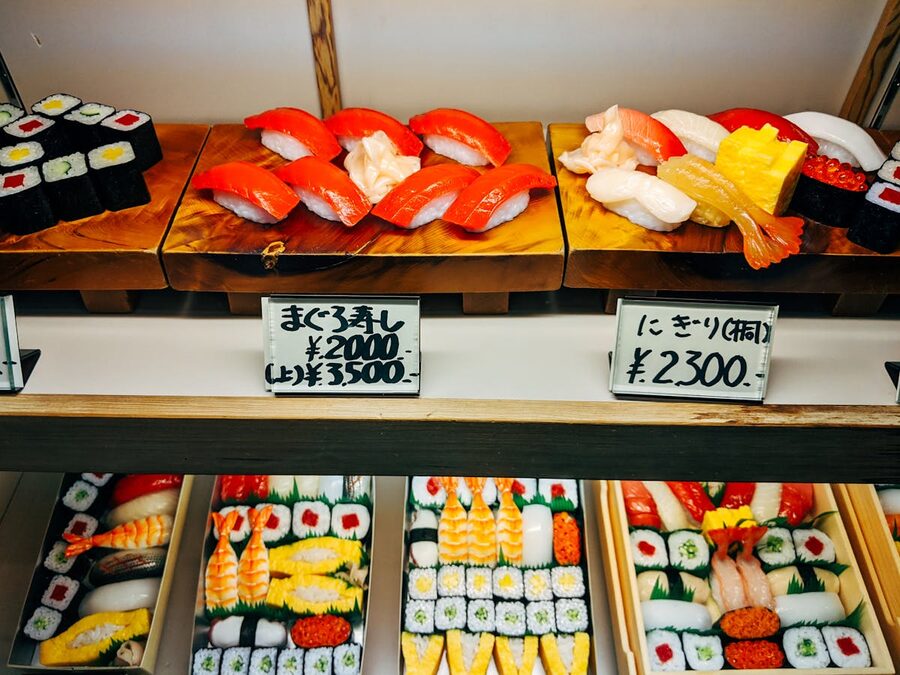
Food models in the window — many restaurants display plastic replicas of every dish in a glass case outside. Walk the family past, everyone points at what they want, then go inside and point at the same items on the menu or show the waiter your phone photo.
Say “osusume” (recommendation) — the waiter will suggest their most popular dish. Usually a safe bet.
Or just point at what someone else is eating. This is completely acceptable in Japan and nobody minds.
High Chairs and Etiquette
Chain restaurants and family restaurants always have high chairs. Independent places are hit or miss — smaller ramen shops and izakaya often don’t. If you need one, look for the word “isu” (chair) or just ask “kodomo isu arimasu ka?” (do you have a children’s chair?).
Shoes come off in some restaurants — you’ll see a raised floor or shoe shelves at the entrance. Oshibori (wet towels) arrive with your water. Use them for hands and face, not the table.
Slurping noodles is polite. Loud conversation is not. Kids don’t need to be silent but the volume expectations in Japanese restaurants are lower than Western ones. If your toddler is having a meltdown, step outside briefly — this is what Japanese parents do too.
Allergies
Harder in Japan than in most Western countries. Allergen labelling exists but is often in Japanese only. The big chains (CoCo Ichi, Sushiro, Kura Sushi) have allergen charts on their websites in English — check before you go.
For serious allergies, carry a translation card explaining the allergy in Japanese. You can print these free online — search “Japanese allergy card” before your trip. Hand it to the waiter. Most restaurants will take it seriously.
Gluten is in soy sauce, which is in almost everything. Dairy is less prevalent than in Western food. Nut allergies are manageable because Japanese cooking uses less nuts than Thai or Chinese food, but cross-contamination is always possible.
Budget
A realistic daily food spend for a family of four mixing convenience store breakfasts, a casual lunch, and a sit-down dinner: ¥6,000-10,000. That’s less than most Western cities for comparable food quality.
Breakfast: convenience store onigiri and drinks, ¥800-1,200 for four.
Lunch: conveyor belt sushi or ramen, ¥2,000-3,500.
Dinner: family restaurant or izakaya, ¥3,000-5,000.
Snacks: taiyaki, nikuman, vending machine drinks throughout the day, ¥500-1,000.
The convenience store breakfast is not a compromise. It’s a legitimate strategy that most travelling families in Japan adopt within 48 hours of arrival.