Physical Address
304 North Cardinal St.
Dorchester Center, MA 02124
Physical Address
304 North Cardinal St.
Dorchester Center, MA 02124

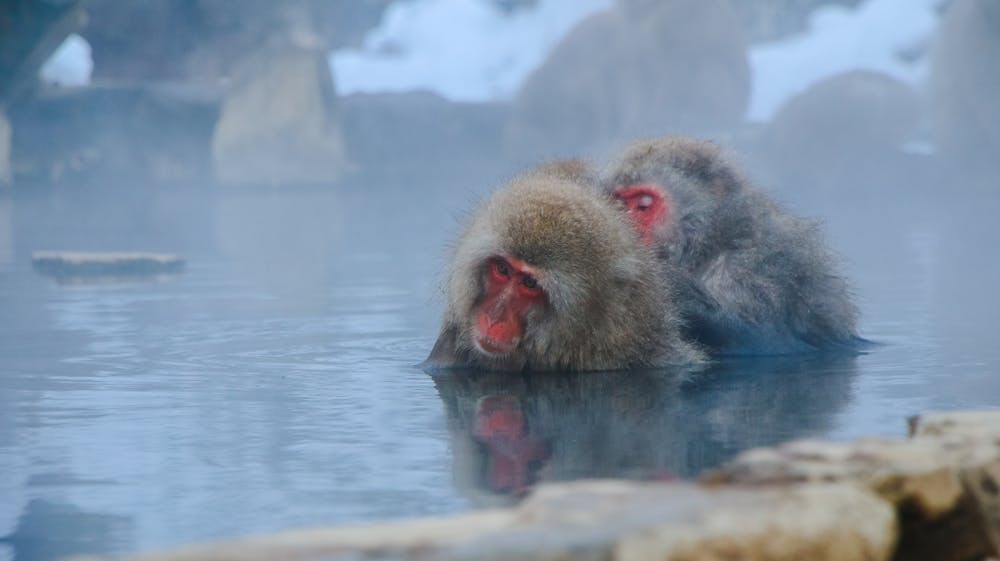
The image that sells Japan to half the families who visit: wild monkeys sitting in a steaming hot spring pool surrounded by snow, looking completely unbothered by life. It’s real, it’s in Nagano Prefecture, and getting there with kids is more of a mission than the photos suggest. But it’s worth it.
Jigokudani Monkey Park is home to a troop of about 160 Japanese macaques who’ve figured out that bathing in the natural hot spring feels good in winter. They’ve been doing it since the 1960s, and they’ve been photographed doing it roughly 10 million times since. The park stays open year-round but the snow-and-steam combination that makes the photos so dramatic only happens from December through March.
It’s not close. And it’s not simple.
Shinkansen from Tokyo to Nagano: about 1 hour 20 minutes. Covered by the JR Pass. This is the easy part.
From Nagano Station, take a bus to Kanbayashi Onsen: about 40 minutes. Buses run roughly hourly and the schedule matters — miss one and you’re waiting.
From the bus stop, walk through a forest path to the park: 1.6km, roughly 25-30 minutes. The path is mostly flat but in winter it’s icy, snowy, and sometimes slippery. Not stroller-friendly. At all. Bring a carrier for toddlers and proper winter boots with grip for everyone else.
Total from Tokyo: about 3 hours each way. As a day trip it’s a long day — leave early, get back late, most of the day is transit. Doable, but exhausting with small kids.
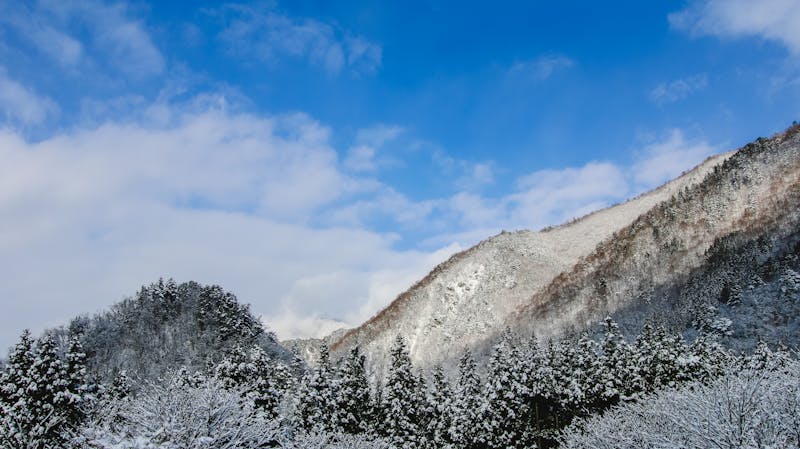
The forest path is the part people underestimate. In summer it’s a pleasant walk through cedar trees. In winter — which is when you want to be here — it can be icy, muddy, and cold. Really cold. Mountain cold. Minus 5 to minus 10°C on typical winter days.
Kids aged 5 and up manage it fine if they’re dressed properly and have boots with good soles. Under 5 in a carrier works but it’s hard going for whoever’s carrying them — the path has some ups and downs and the footing is uncertain.
There are no facilities on the path. No toilets, no warming huts, no vending machines. The nearest toilet is at the bus stop area. Plan accordingly.
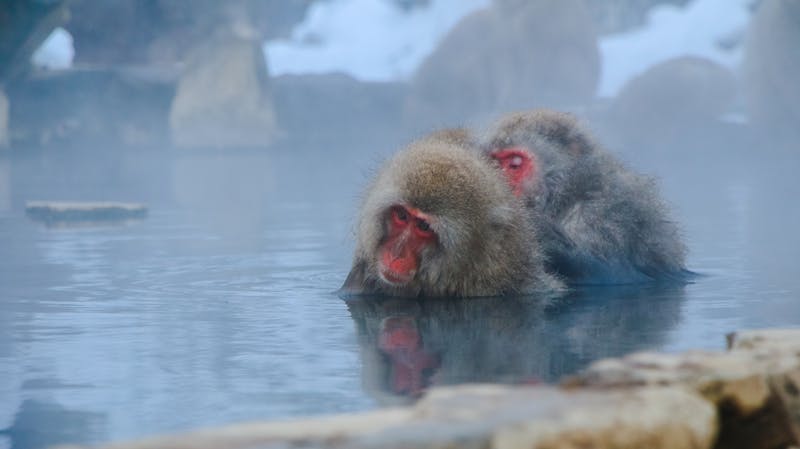
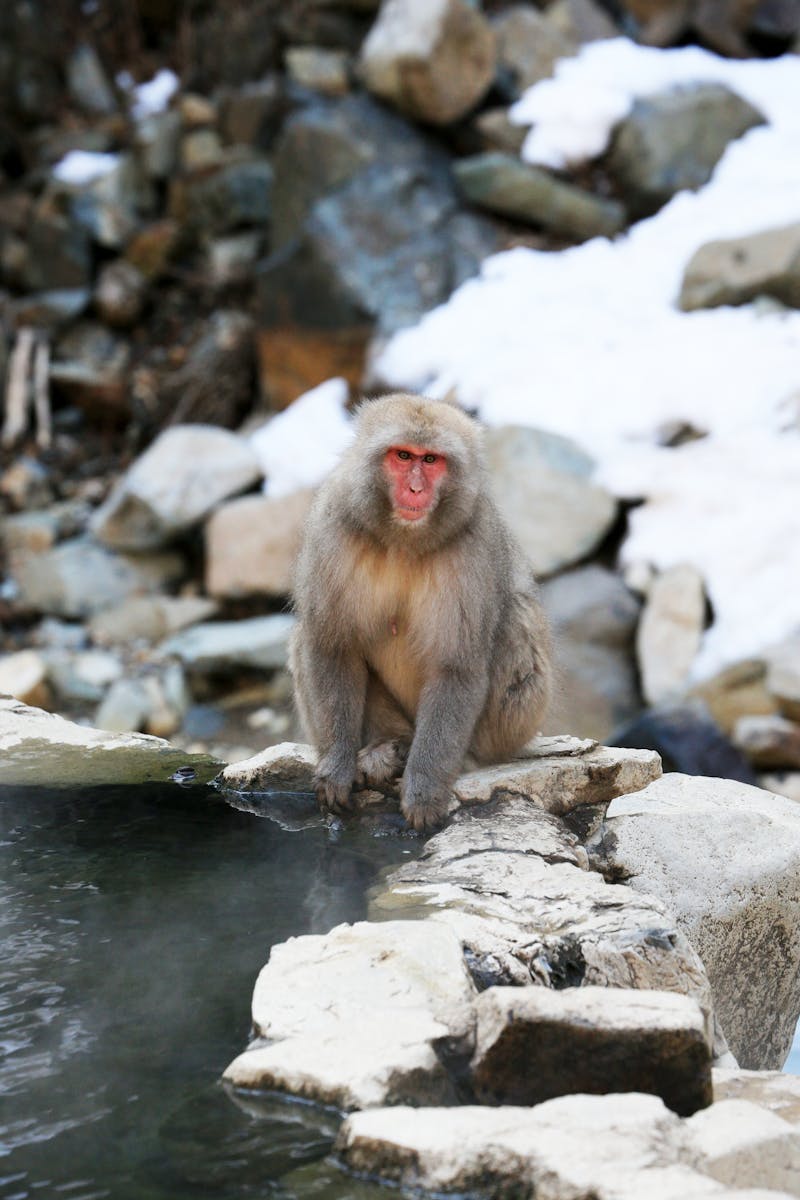
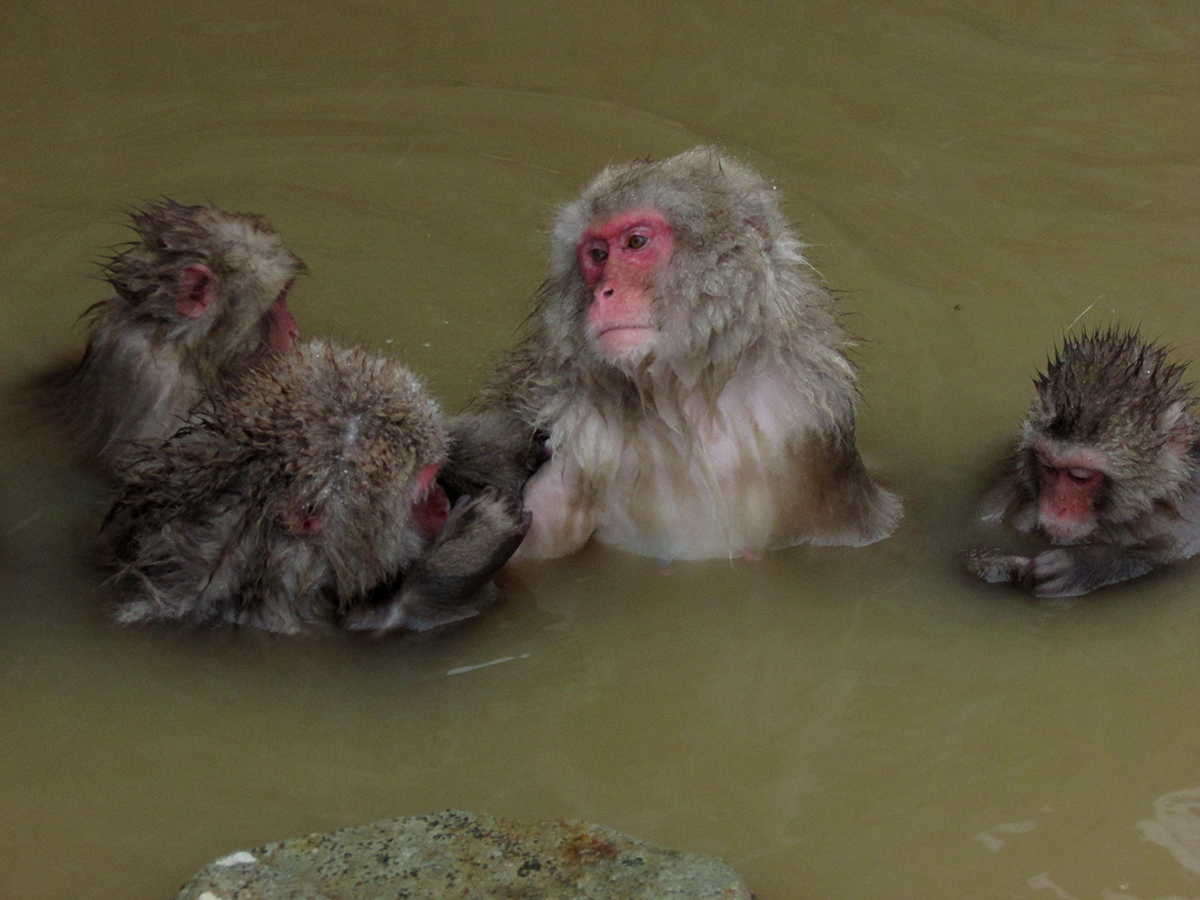
At the end of the path, the park opens up to a hot spring pool surrounded by rocks and (in winter) snow. The macaques sit in the water, groom each other, dip in and out, and generally ignore the humans standing around with cameras.
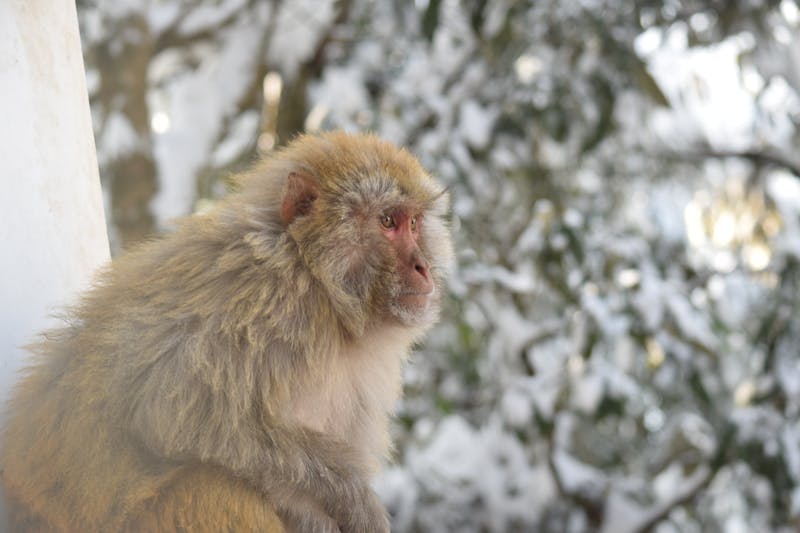
They’re wild. Not in cages, not behind glass. They wander freely around the pool area and the surrounding rocks. Most of them ignore humans completely. Some walk right past you, close enough to touch — don’t touch them.
Rules: no food near the monkeys, no direct eye contact (they see it as a challenge), no pointing cameras directly at their faces at close range, no touching. The monkeys are used to humans but they’re not domesticated. Keep small children close and calm.
Entry fee: ¥800 adults, ¥400 children.
The best time of day is morning — the monkeys tend to be in the water more frequently in the morning when it’s coldest. By afternoon some have wandered off.
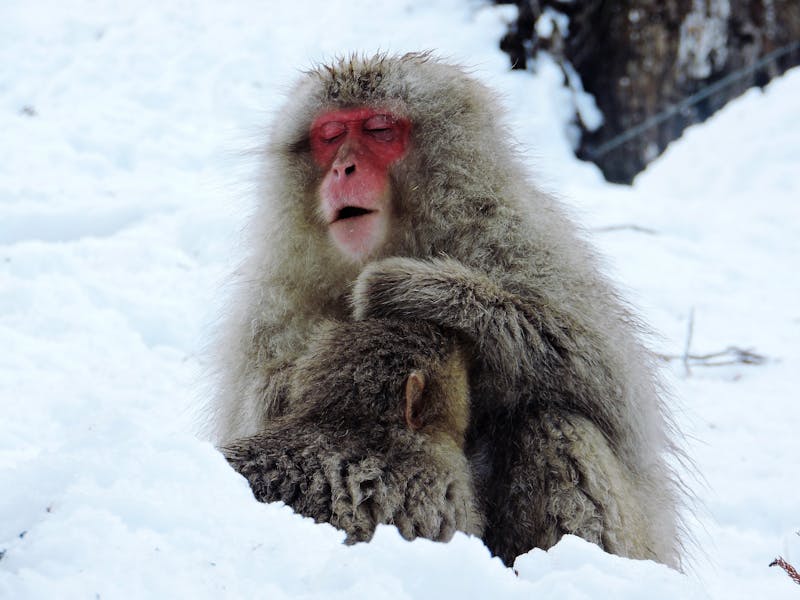
This is a mountain area in winter. Dress like you mean it.
The cold is the number one reason families have a bad experience here. If your kids are warm, they’ll enjoy it. If they’re cold, they’ll want to leave after five minutes and the three-hour journey feels pointless.
Day trip from Tokyo is possible but long. You’ll spend about 6 hours in transit for maybe 1-2 hours at the park.
Overnight in the area is much better. The towns of Yudanaka and Shibu Onsen are 10-15 minutes from the monkey park by bus. Both have ryokans with onsen — so you can soak in hot spring water yourselves after watching the monkeys do the same. There’s something deeply satisfying about this.
Staying overnight also means you can hit the monkey park first thing in the morning when the monkeys are most active and the crowds are lightest. Worth it.
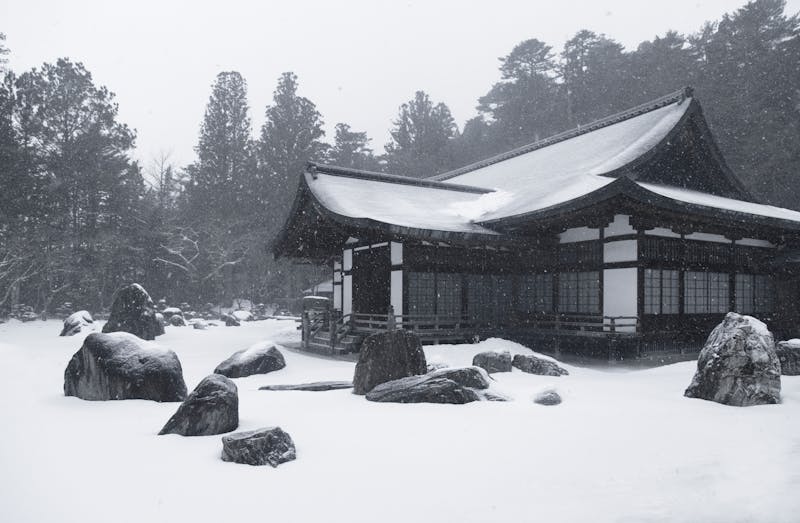
Nagano Prefecture has more than monkeys.
Nagano city has Zenko-ji temple — one of the most important in Japan, and the city hosted the 1998 Winter Olympics. A pleasant afternoon wander.
Nozawa Onsen is a traditional hot spring ski village about an hour from Nagano. If you’re visiting in winter, combining snow monkeys with a day or two of skiing makes the trip to Nagano much more worthwhile.
Hakuba — the main 1998 Olympic ski resort — is also in Nagano Prefecture. About an hour from Nagano city.
Yes, with caveats. If your children are 4 and up, comfortable walking 30 minutes in cold weather, and genuinely interested in animals — yes. The monkeys bathing in steam with snow falling around them is a memory that lasts.
If your children are under 3, or hate the cold, or are going to need carrying the whole way — think carefully about whether 6 hours of transit for a potentially short visit is the right use of a day.
The monkey park itself takes 30-60 minutes once you’re there. Some families stay longer, watching the dynamics of the troop. Others see the monkeys, take photos, and are ready to head back. With kids, set your expectations for 30-45 minutes and be pleasantly surprised if they want more.