Physical Address
304 North Cardinal St.
Dorchester Center, MA 02124
Physical Address
304 North Cardinal St.
Dorchester Center, MA 02124
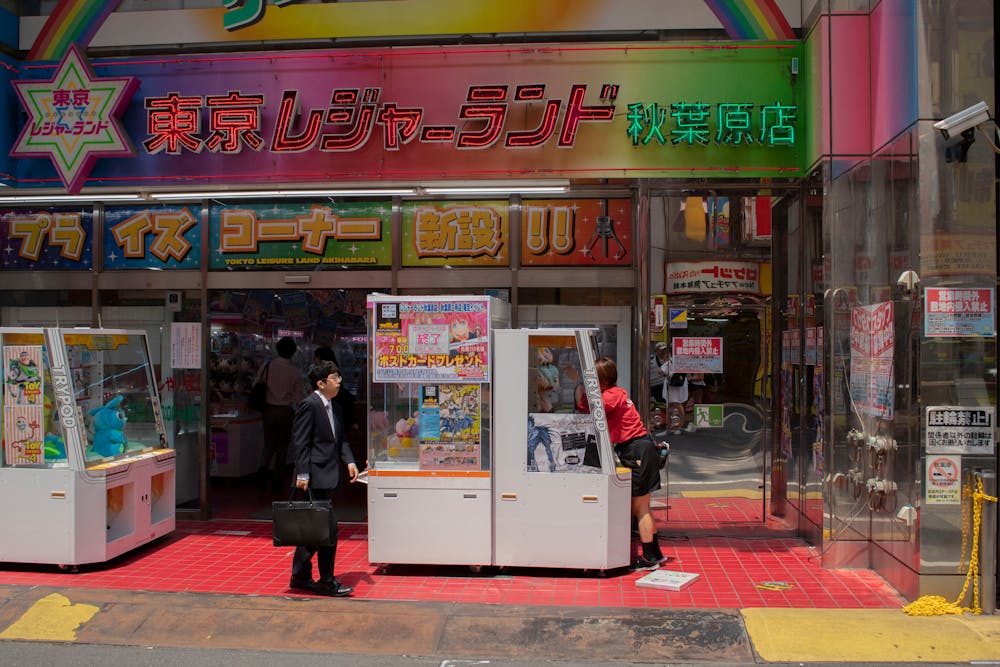
Our kids didn’t ask to visit a single temple on our Japan trip. Not one. What they asked about, repeatedly, from the moment we landed? Shopping. And honestly, we can’t blame them. Japan is a country where buying stuff is an actual experience — the packaging alone deserves its own Instagram account, and there’s something genuinely thrilling around every corner for a kid with pocket money burning a hole in their cargo shorts.
We planned our sightseeing carefully. The souvenir budget? That took even more planning. Here’s everything we learned about shopping with kids in Japan, including the spots that’ll make them lose their minds and the one strategy that saved our sanity (and our wallets).
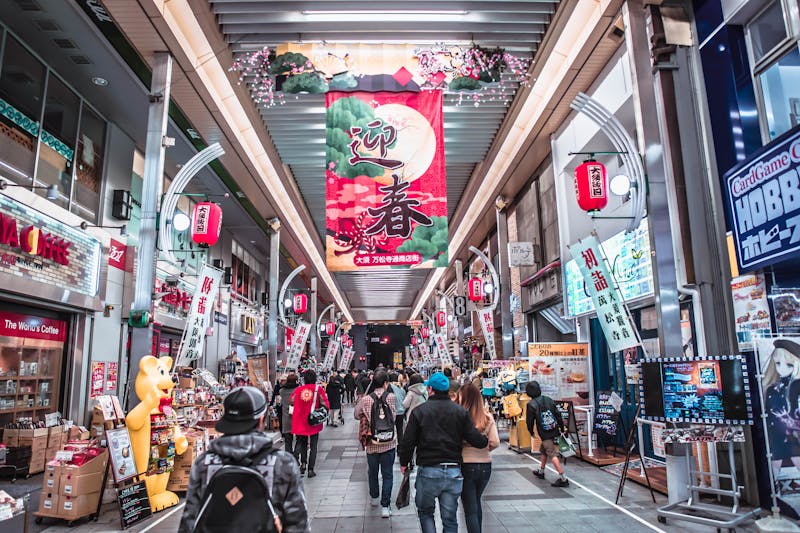
Start here. Seriously. Before you do anything else, take your kids to a 100-yen shop and let them experience the pure dopamine rush of a store where almost everything costs about $0.70. Daiso is the biggest chain, but Seria and Can Do are solid alternatives you’ll see in malls and near train stations throughout the country.
What makes these places so great for kids? Range. We’re talking cute erasers shaped like tiny desserts, notebooks covered in hilariously mistranslated English, sticker sheets in the hundreds, mini craft kits, bento accessories, toy figurines, hair clips, and kitchen gadgets that somehow actually work. Our daughter spent forty-five minutes in the stationery section alone. Forty-five minutes. In a dollar store.
The trick is ground rules. We told our kids they could pick six items each — no negotiations, no exceptions. Without that limit, you’ll walk out with three bags of random stuff and the creeping realization that ¥100 adds up real fast when you grab fifty things. A reasonable haul runs about ¥600-1,000 per kid. Some items are ¥300 or ¥500, so check the tags.
Pro move: hit a 100-yen shop on your first day. It satisfies that initial shopping itch without destroying your budget, and the kids feel like they’ve already “gotten stuff.”
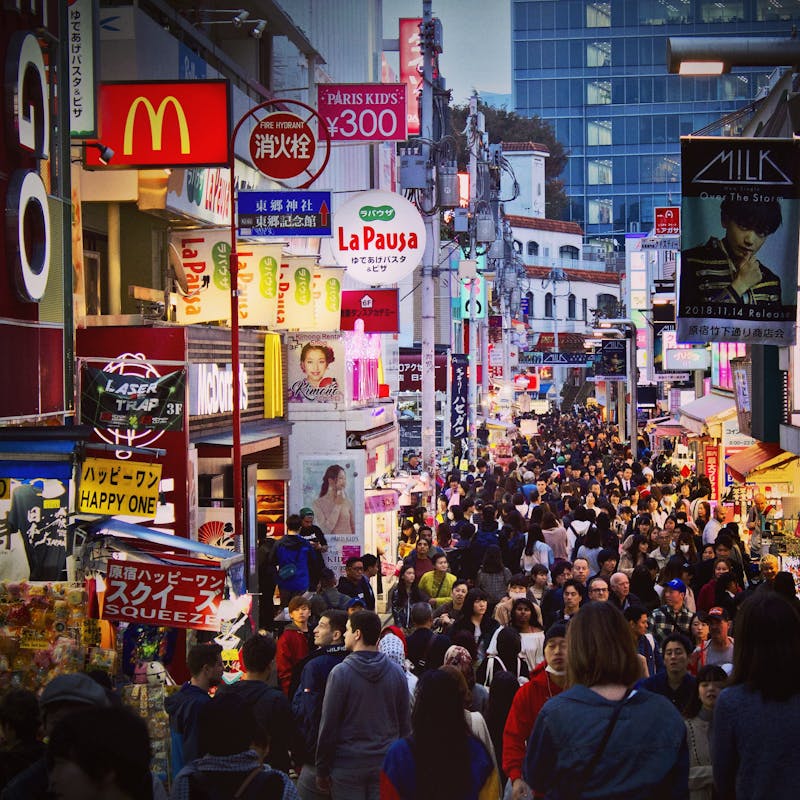
Okay. Deep breath. If your kids are into Pokemon or Mario — and statistically, they probably are — these stores will test your financial discipline in ways you haven’t experienced since Black Friday.
Pokemon Centers are scattered across Japan’s major cities. Tokyo alone has several, with the Mega Center in Ikebukuro being the crown jewel. Floor-to-ceiling plushies, trading cards, apparel, backpacks, candy, keychains, and limited-edition merchandise you literally can’t get anywhere else on Earth. Our son stood in the doorway with his mouth hanging open for a solid ten seconds. Dramatic kid? Sure. But we kind of felt the same way.
The Nintendo Store in Shibuya Parco is a different vibe — sleeker, more curated, heavy on Mario and Zelda and Animal Crossing. Less overwhelming than a Pokemon Center, but equally dangerous for your credit card. A single plushie runs ¥1,500-3,000. Apparel is ¥2,500-5,000. Trading card packs are cheaper at ¥165-550 and make solid filler gifts.
Budget ¥3,000-8,000 per child for character store shopping and accept that you might go over. We did. No regrets, though — those plushies are still on their beds a year later.
Don Quijote — shortened to Donki by everyone in Japan — is impossible to describe accurately. Picture a discount mega-store crossed with a fever dream. Narrow aisles stacked floor to ceiling with snacks, cosmetics, electronics, costumes, novelty items, kitchen gadgets, and things that defy categorization. The music is loud. The lights are bright. It’s open until stupid o’clock at night. Your kids will love it.
We treated Donki like a family treasure hunt. Each kid got a basket and a budget (¥1,500 / about $10) and had to find their best haul. They came back with Japanese candy, gummy kits where you mix powders to make tiny fake sushi, face masks with anime characters on them, and chopstick helpers shaped like cartoon dogs. All of it absurd. All of it perfect.
Important detail: if you spend over ¥5,000 in a single transaction and show your passport, you can get tax-free pricing. That’s an 8-10% discount. Worth remembering if you’re stocking up on snacks and gifts for people back home.
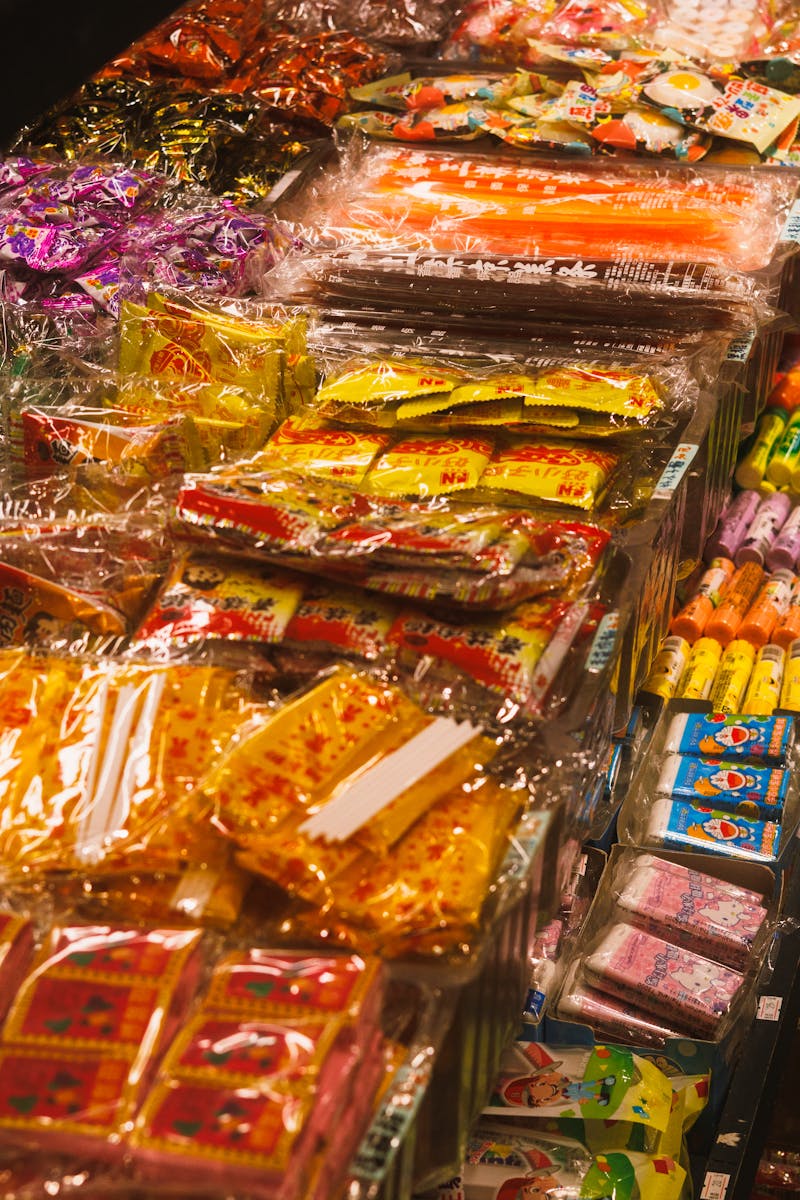
There are over forty regional and seasonal Kit-Kat flavors in Japan. Forty. Matcha green tea is the famous one, but we also found strawberry cheesecake, purple sweet potato, sake (not for the kids, obviously), roasted soybean, melon, and a Tokyo Banana collaboration that our daughter declared “the best thing I’ve ever eaten.” She says that a lot. This time she might’ve been right.
Prices are laughably reasonable. A bag of mini Kit-Kats runs ¥200-500 depending on size and flavor. They’re individually wrapped inside beautifully designed packaging, which makes them ideal gifts. We bought Kit-Kats for teachers, neighbors, grandparents, cousins, the babysitter, and ourselves. Lots for ourselves.
Find them at convenience stores (7-Eleven, FamilyMart, Lawson), Don Quijote, supermarkets, souvenir shops, and airports. Don’t panic-buy on day one. They’re literally everywhere, and the airport selection is massive.
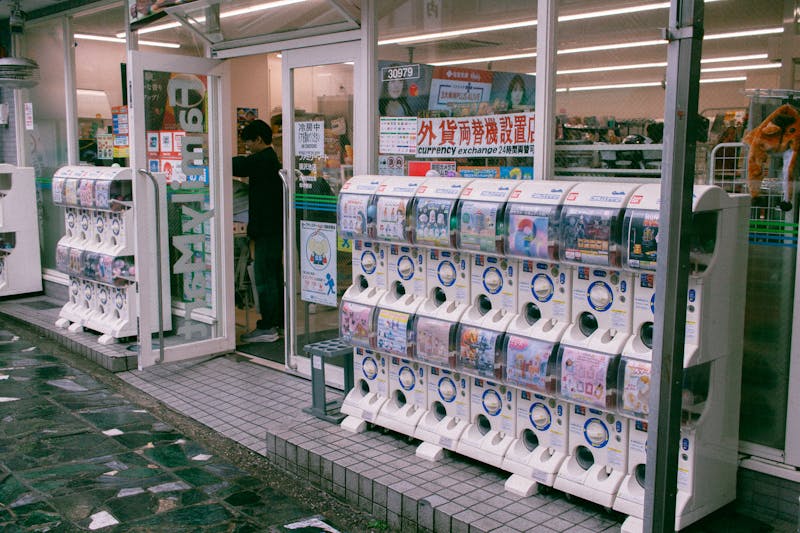
These are those coin-operated capsule toy machines, and Japan has them on practically every street corner. Train stations, shopping arcades, outside convenience stores, inside dedicated gashapon halls with hundreds of machines lined up. Each turn costs ¥200-500 and spits out a small plastic capsule containing a miniature toy.
The toys are shockingly good. Miniature food replicas. Tiny animals in hats. Pokemon figures. Cats sitting in cups. Cats doing literally anything. Our kids zeroed in on these machines like heat-seeking missiles every single time we walked past. Every. Time.
Here’s the thing — ¥200 feels like nothing. But twenty turns later you’ve dropped ¥4,000 on tiny cats and you’re wondering where your afternoon went. We gave each kid ¥500 per day specifically for gashapon. Non-negotiable ceiling. It forced them to be selective, which turned a mindless coin-dump into an actual decision. “Should I use both turns here or save one for later?” Financial literacy in action.
Japanese stationery is on another level. This isn’t hyperbole. The pens are smoother, the paper is better, the design is smarter, and the variety is staggering. If you’ve got a kid who likes drawing, writing, crafting, or just collecting cool school supplies, block out at least an hour for a stationery store visit.
Loft and Hands (formerly Tokyu Hands) are the two big chains. Multi-floor stores with dedicated stationery sections that’ll make a Staples look like a gas station. Frixion erasable pens, Uni-ball Signo gel pens, Midori notebooks, washi tape in every pattern conceivable, origami paper sets, stamp kits, and mechanical pencils so well-engineered they feel like precision tools. Because they are.
Prices vary, but stationery is one of the more affordable souvenir categories. A solid pen is ¥150-400. Washi tape rolls start around ¥150. A nice notebook runs ¥300-800. Our kids assembled “stationery packs” as gifts for their friends back home — a pen, some washi tape, a small notebook — for under ¥500 each. Thoughtful, lightweight, and genuinely useful. Win-win-win.
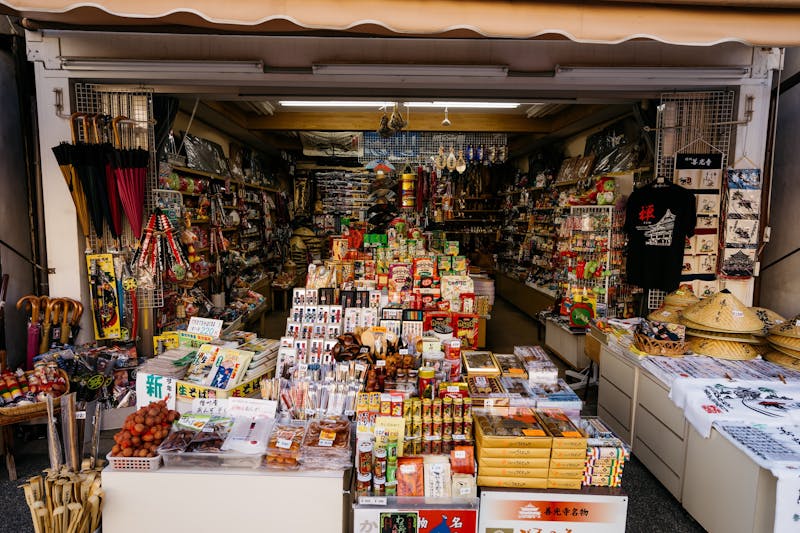
Japan has a gift-giving tradition called omiyage — you bring back beautifully packaged regional sweets from wherever you’ve traveled. Every city, every region has its signature treat. Tokyo Banana from Tokyo. Yatsuhashi (cinnamon rice cakes) from Kyoto. Momiji manju (maple-leaf cakes) from Hiroshima. These aren’t cheap tourist candy. They’re genuinely delicious, gorgeously boxed, and individually wrapped inside.
A box runs ¥800-1,500 and looks like it cost three times that. Train station shops are the best place to find them — look for the omiyage sections near the ticket gates. Department store basements (called depachika) carry premium versions too.
We turned omiyage shopping into a game. Each city we visited, the kids picked one box based on which packaging looked coolest. They kept a running tally in a notebook. By the end of our two-week Japan itinerary, we had a curated collection of regional sweets that made the best gift spread we’ve ever brought home from any trip.
Most countries have terrible airport shopping. Overpriced, limited selection, sad-looking magnets. Japan is the exception. Both Haneda and Narita have genuinely excellent souvenir sections after security, with prices comparable to what you’d pay in the city.
Kit-Kats, omiyage boxes, character goods, snacks, stationery — it’s all there. We deliberately saved some of our gift shopping for the airport on our second trip and it was a smart call. Less weight in our bags for two weeks, same products, same prices, and the kids got one final shopping thrill before boarding.
Haneda’s international terminal is slightly better than Narita in our experience, but both are solid. Give yourself an extra 45-60 minutes before your flight. You’ll use every minute.
This is the single most important piece of shopping advice for Japan on a budget with kids. Before you leave home, agree on a souvenir allowance per child. Ours was ¥5,000 each for personal souvenirs — separate from family gifts, snacks, and gashapon money.
We converted the cash at the airport, handed it over, and told them: this is yours, spend it however you want, but when it’s gone, it’s gone. No advances. No loans. No “but I really need this Pokemon.”
The result? They became tiny accountants. Genuinely. They tracked every purchase, calculated how much they had left, debated whether a ¥1,200 plushie was worth half their remaining budget. They passed on things they would’ve begged for otherwise because they were protecting their funds for something better. It was — and we don’t say this lightly — the most educational part of the entire trip.
Japan makes spending easy. The items are cute, the prices feel small, and the shops are everywhere. Without a clear limit, you’ll hemorrhage money in ¥200 increments and wonder where it all went. With a limit, shopping becomes a highlight instead of a headache. Your kids get agency, you get peace. Everybody wins.
And if they blow it all at the Pokemon Center on day two? That’s a lesson too. A painful one. But a lesson.