Physical Address
304 North Cardinal St.
Dorchester Center, MA 02124
Physical Address
304 North Cardinal St.
Dorchester Center, MA 02124

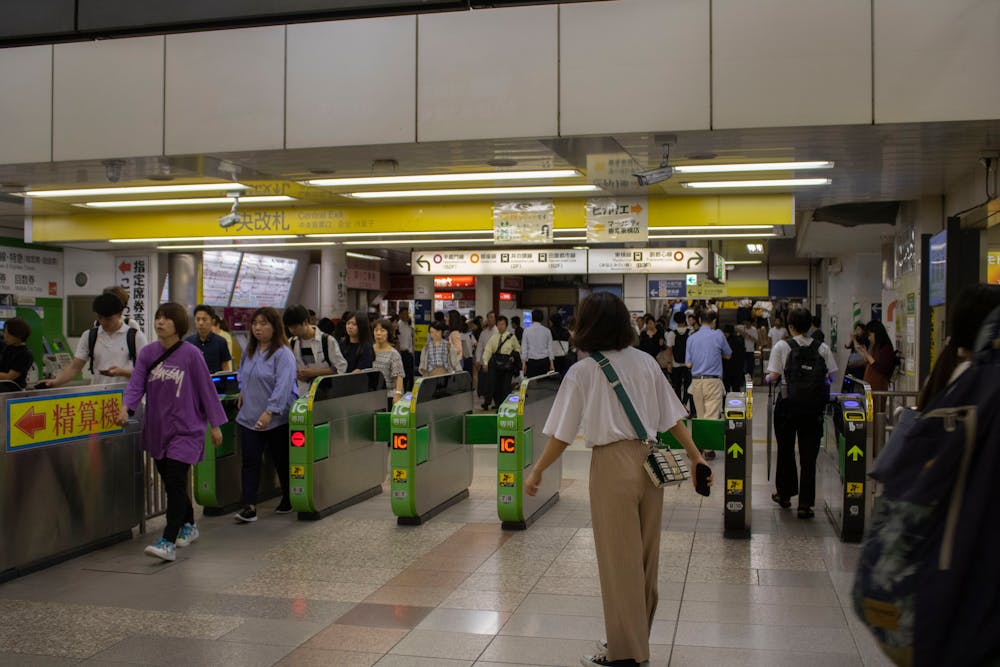
Japan’s transportation system is, without exaggeration, the best in the world for families. Trains run on time to the second. Stations are clean enough to eat off the floor. Everything is color-coded, numbered, and signed in English. And the whole country seems to have been designed by someone who actually thought about what it’s like to travel with small humans.
That said, it’s also a system with a lot of moving parts. JR lines, private lines, metro lines, IC cards, bullet trains, highway buses, taxis with doors that open themselves — it can feel overwhelming before you’ve even landed. We’ve taken our kids across Japan on pretty much every form of transport available, and the learning curve is real. But it’s short. By day two, your seven-year-old will be tapping through ticket gates like a local.
Here’s everything we’ve learned about getting around Japan with kids. The stuff that works, the stuff that doesn’t, and the tricks that made our trips dramatically smoother.
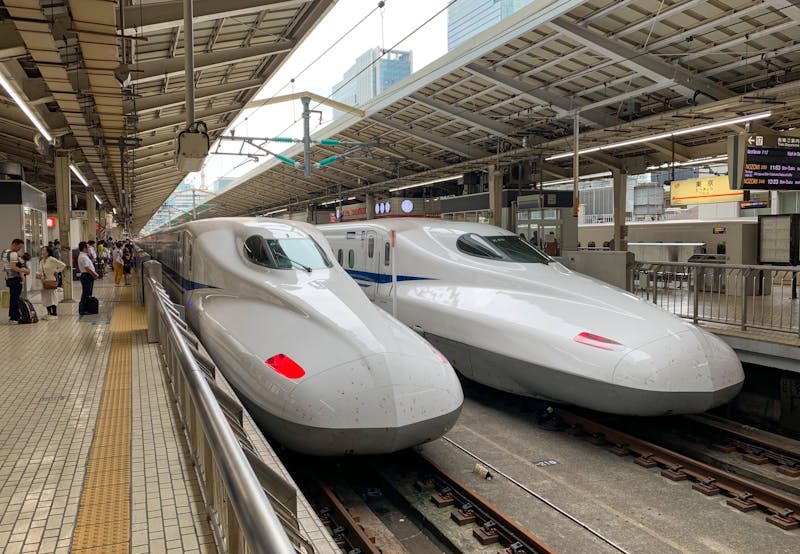
The bullet train is the backbone of family travel in Japan, and it deserves every ounce of hype it gets. Tokyo to Kyoto in two hours and fifteen minutes. Tokyo to Hiroshima in about four. Smooth, quiet, spotlessly clean, and so punctual that a 30-second delay makes national news. Our kids genuinely look forward to shinkansen days. That never happens on a plane.
If you’ve got a JR Pass, you can reserve seats for free at any JR ticket office or through the SmartEX app. Do this. Unreserved cars work fine for solo travelers willing to stand, but with kids and bags you want guaranteed seats together. Reserved cars are quieter, less crowded, and you can pick seats near the luggage storage area at the end of each carriage — that’s where strollers go.
Speaking of strollers: the overhead racks won’t fit them, but the space behind the last row of seats in each car is designed for large luggage and strollers. Reserve the last-row seats and you’re right next to your stuff. Easy.
Toilets on board. That alone makes the shinkansen superior to driving. Clean, Western-style toilets with actual sinks and soap, available whenever your three-year-old announces they need to go RIGHT NOW. No pulling over. No gas station bathroom. Just walk down the aisle.
And then there’s the food. Station bento boxes — ekiben — are a genuine highlight of train travel in Japan. Every major station has vendors selling beautiful boxed lunches for ¥800-1,500, and they’re miles beyond anything you’d find at a train station back home. Grilled eel over rice. Wagyu beef boxes. Cute character bentos that convinced our picky eater to try things she’d never touch at a restaurant. Grab them on the platform before you board, crack them open once the train starts moving, and watch the countryside blur past. It’s one of our favorite family travel memories, full stop.
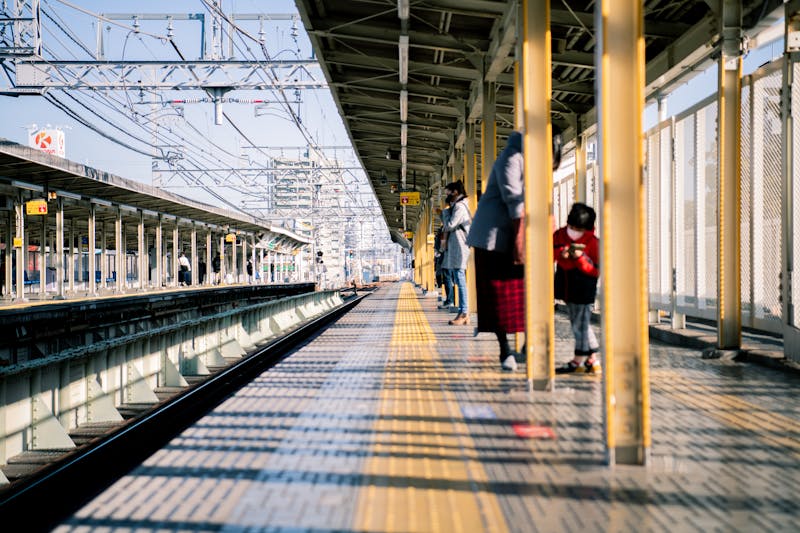
Outside the shinkansen, you’ll spend a lot of time on local trains. JR lines, Tokyo Metro, Toei Subway, and a patchwork of private railways that varies by city. It sounds complicated. It isn’t, mostly because of IC cards.
Suica and Pasmo are rechargeable smart cards that work on virtually every train, bus, and subway in Japan. Tap on at the gate when you enter, tap off when you exit, and the correct fare is deducted automatically. No figuring out zone maps. No buying individual tickets from machines with forty buttons. Just tap and go. They also work at convenience stores and vending machines, which is a nice bonus.
Buy them at the airport the moment you land. Narita, Haneda, Kansai — they all have IC card machines near the train platforms. Load up ¥3,000-5,000 each and you’re set for the first few days. When the balance runs low, reload at any station machine or any convenience store (7-Eleven, Lawson, FamilyMart). The machines have English menus. It takes about 20 seconds.
Kid pricing on local trains is straightforward. Under 6 rides free. Ages 6-11 pay half fare, and you can get a child IC card at a staffed ticket window (you’ll need to show their passport). Age 12 and up pays full adult fare. The free-under-6 policy means toddlers and preschoolers add zero to your transport budget. That’s a big deal over two weeks of travel.
One tip we wish we’d known earlier: Google Maps is absurdly accurate for Japanese train routing. It shows you which platform, which car to board for the fastest transfer, real-time delays, and exact costs. We stopped trying to read paper route maps after day one and just followed Google Maps everywhere. It never let us down once.
Big Japanese train stations — Shinjuku, Tokyo, Osaka, Kyoto — are cities unto themselves. Shinjuku Station handles over 3.5 million passengers daily. It has 200+ exits. The first time you walk in, you will feel lost. That’s normal.
The trick is following the color-coded signs. JR lines are green. Tokyo Metro lines each have their own color. Private lines have different colors. Every line has a letter-and-number code for each station (like M-08 for Shinjuku on the Marunouchi Line), so even if you can’t read any Japanese at all, you can match codes. Our kids actually got good at this — give them the station code and let them play navigator.
One thing that catches families off guard: JR, Metro, and private lines often share a station name but have completely separate ticket gates. You might need to exit one gate system and enter another to transfer. Google Maps flags these transfers clearly, including walking time between gates. Trust it.
Elevators exist at most stations, but finding them can be an adventure. They’re often tucked around corners, at the far end of platforms, or require going a roundabout way. Station staff will help if you ask — just point at the stroller and say “erebeta” (elevator). They’ll literally walk you there. We’ve had station attendants escort us through staff-only corridors to reach an elevator. That kind of thing doesn’t happen anywhere else.
One firm rule: avoid rush hour. In Tokyo especially, trains between 7:30 and 9:30 AM are packed to a degree that’s hard to fathom until you’ve experienced it. We’re talking bodies pressed against glass, no personal space, people being physically pushed into carriages by station attendants. This is not a situation you want to be in with a stroller, a toddler, and a day bag full of snacks. Wait until 10 AM. The difference is dramatic.
Buses in Japan are a mixed bag for families.
In Kyoto, buses are the primary way to reach many temples and shrines. The bus network is extensive and your IC card works on them. But here’s the honest truth: Kyoto buses are crowded, confusing, and slow. The one-loop system means you might ride 40 minutes to reach something that’s 15 minutes away by taxi. In peak season (cherry blossom time, autumn leaves), buses are so packed you’ll sometimes wait for two or three to pass before you can squeeze on. With kids, this gets old fast. We’ve switched almost entirely to combining trains and taxis in Kyoto, and our trips improved dramatically.
In most other cities, buses exist but aren’t your best option. Tokyo, Osaka, and Nagoya have such dense train networks that you rarely need a bus at all.
Highway buses — the long-distance coaches between cities — are temptingly cheap. Tokyo to Kyoto for ¥3,000-5,000 versus ¥14,000+ on the shinkansen. But they take 7-8 hours, the seats are cramped, bathroom breaks are limited, and kids who are bored after 30 minutes on a train will be absolutely done after 3 hours on a bus. We tried a highway bus once. Once. Shinkansen is worth every extra yen when you’re traveling with kids.
Taxis in Japan have a reputation for being expensive, and the meter does climb fast. Flag drop is ¥500-1,000 depending on the city, and it ticks up from there. A 15-minute ride in Tokyo can hit ¥2,000-3,000 without breaking a sweat.
But here’s what we’ve learned: split between a family of four, taxis are often reasonable. That ¥2,000 ride is ¥500 per person — less than four train tickets for short distances, and you go door to door. No navigating station stairs with a stroller. No transfers. No walking 10 minutes from the station to your hotel. After a long day of sightseeing with tired kids, a taxi back to the hotel is money well spent.
A few things to know. The rear passenger doors open and close automatically. Do not grab the door handle — just stand there and let it swing open. And definitely don’t slam it shut when you get out. Let the driver operate it. Slamming a taxi door is one of the few things that will genuinely annoy a Japanese taxi driver.
No tipping. Not expected, not wanted, not appreciated. Just pay the meter amount and say “arigatou gozaimasu.” Done.
Car seats are not required by law for children riding in taxis in Japan. This feels strange if you’re coming from the US or UK where car seat laws are strict, but it’s the norm here. Taxis don’t carry them and nobody expects you to bring one.
For hailing taxis, you have two options. The old-fashioned way works fine — stand at a curb and raise your hand when you see a vacant cab (look for the red light on the dashboard, which means available). Or download the GO app before your trip. It’s basically Uber for Japanese taxis, works in all major cities, and shows you a fare estimate upfront. We used it constantly in Kyoto and Osaka. Much easier than trying to flag down a cab outside a temple at 5 PM.
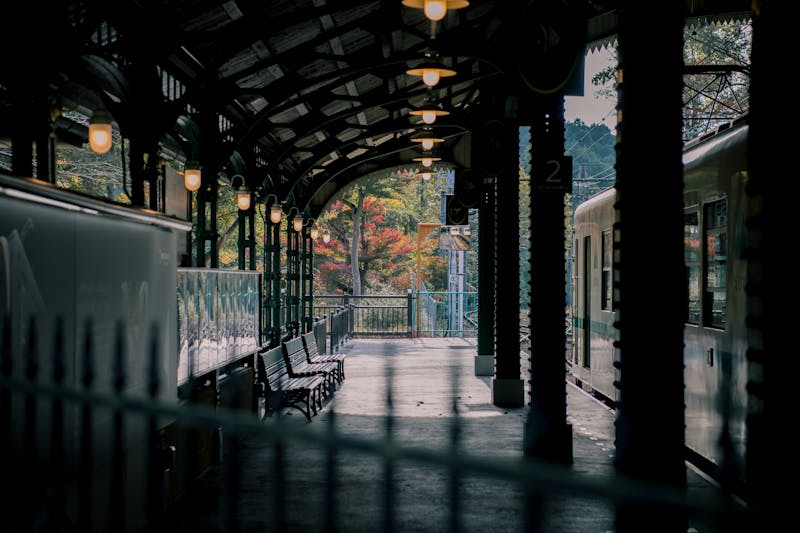
For most Japan itineraries focused on Tokyo, Kyoto, and Osaka, you don’t need a car. Trains are faster, parking is expensive, and driving in Tokyo is genuinely stressful. We wouldn’t recommend it for a first trip hitting the big cities.
But. If you’re heading to Hokkaido, Okinawa, or rural areas like the Izu Peninsula, Shimane Prefecture, or the Noto Peninsula, a rental car changes everything. Public transport in rural Japan exists but runs infrequently — sometimes a bus every two hours — and having your own car lets you actually explore at your family’s pace. Stop when someone needs the bathroom. Pull over at that roadside mochi shop. Take the scenic coast road because why not.
Japan drives on the left (like the UK). If you’re American, this takes adjustment. Not just the driving — the turn signals and windshield wipers are swapped too. You’ll accidentally turn on the wipers instead of signaling about forty times on day one. It’s funny the first time and annoying the tenth.
You need an International Driving Permit (IDP) to rent a car. Get this from AAA before you leave the US — it costs about $20 and takes 15 minutes. You cannot get one in Japan. Bring it along with your regular driver’s license.
Rental cars run ¥5,000-10,000 per day for a compact car, which is reasonable. The catch is highway tolls. Japan’s expressways are expensive — a Tokyo-to-Kyoto drive can rack up ¥10,000+ in tolls alone. There’s a Tohoku Expressway Pass and a Hokkaido Expressway Pass for travelers that offer unlimited tolls for a flat rate, which helps. Ask at the rental counter.
Most rental agencies (Toyota Rent-a-Car, Nippon Rent-a-Car, Times Car Rental) offer GPS navigation units with English. Request one when booking. Japanese addresses are notoriously confusing — even locals rely on GPS — so this isn’t optional. Some newer cars have it built in. Child seats are available for an extra daily fee, usually ¥500-1,000 per day. Reserve ahead — not every location has them in stock.
Takkyubin. If you learn one Japanese word for your trip, make it this one.
Luggage forwarding services let you ship your suitcases from one hotel to the next, so you travel between cities carrying nothing but a day bag. You drop your bags at the hotel front desk or a convenience store, fill out a simple form, pay about ¥2,000 per bag, and your luggage arrives at your next hotel the following day. Sometimes same day, depending on the route.
This is a game changer with kids. Dragging suitcases through train stations, up stairs, through ticket gates, onto crowded trains, and then back out again — with children who need both your hands? Awful. The first time we tried takkyubin, we couldn’t believe we’d ever done it the hard way. We showed up at Tokyo Station with just backpacks, breezed through the gates, settled into our shinkansen seats, and our bags were waiting at the Kyoto hotel when we checked in that evening.
Yamato Transport (look for the black cat logo) and Sagawa Express are the two big services. Your hotel front desk will handle everything — just ask the night before your travel day. You can also drop bags at any convenience store that displays the Yamato or Sagawa sign, though the hotel desk is easier when you’ve got kids in tow.
Plan your Japan itinerary around this. On travel days, pack a change of clothes and essentials in your day bag, ship everything else ahead, and enjoy actually moving through the country without dragging your life behind you. Once you’ve done it once, you’ll never go back.
Bringing a stroller to Japan is absolutely fine. We did it with our youngest and survived. But it requires some awareness of the environment.
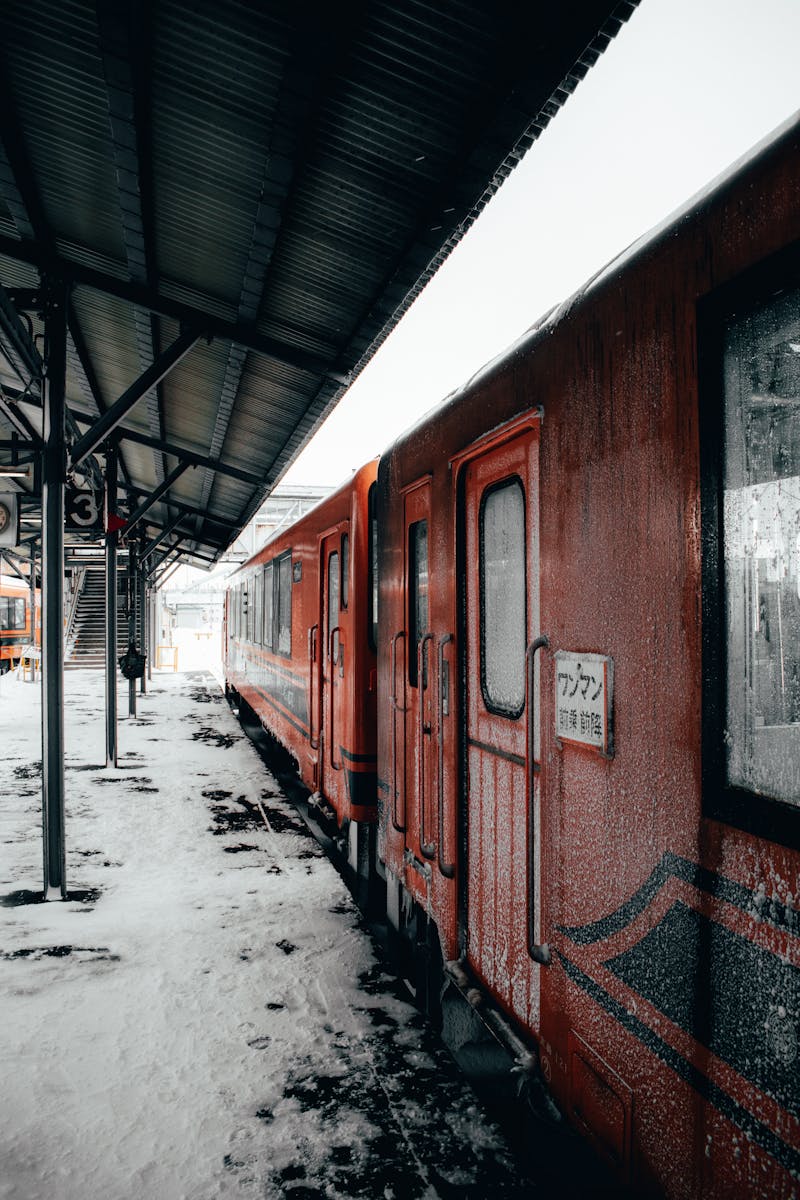
Most trains have priority spaces near the doors where strollers and wheelchairs go. On the shinkansen, that last-row luggage area works perfectly. On local trains, fold the stroller during rush hour (or better yet, just don’t travel during rush hour — see above). Outside peak times, nobody will give you grief about an unfolded stroller on a train. Japanese commuters are patient and polite about it.
Elevators are your lifeline. Escalators are everywhere but maneuvering a stroller onto a Japanese escalator with a kid in it is not something we’d recommend. Every major station has elevators, but they’re not always obvious. Look for the elevator symbol on station maps — it’s usually marked. Sometimes the elevator is at the far end of the platform, sometimes it’s outside the station requiring you to take a different exit. Budget an extra 5-10 minutes for each station if you’re stroller-dependent.
A lightweight, compact stroller wins here. Our full-size jogger stroller was a nightmare at Shinjuku Station. A travel stroller that folds with one hand and weighs under 15 pounds is infinitely better for Japan. We switched mid-trip on our first visit and the difference was night and day.
Here’s what a typical travel day looks like for us now, after several trips.
Morning: pack a day bag, send suitcases ahead via takkyubin. Head to the train station with nothing but backpacks and a stroller. Tap through the IC card gates, board the shinkansen with reserved seats and ekiben station bentos. Kids watch the countryside from their window seats while eating rice balls. Arrive in the next city, take the elevator to the main concourse, follow color-coded signs to the local line or grab a taxi via the GO app to the hotel. Check in, find luggage already there. Done.
No dragging bags. No confusing transfers. No screaming toddler in a packed bus. Just a smooth, calm travel day that the kids actually enjoy.
The practical stuff: get IC cards at the airport, download Google Maps and the GO taxi app, research the JR Pass to see if it makes financial sense for your route, and book a hotel in Tokyo near a major train station for easy onward connections. That’s really all the preparation you need.
Japan’s transport system looks intimidating on paper. In practice, it’s the most family-friendly way to travel we’ve ever experienced. Better than renting a car in Europe. Better than domestic flights in the US. Better than anything. Your kids will figure it out faster than you will, and by the end of the trip, they’ll be navigating station transfers and tapping IC cards without a second thought. That’s not a parenting win — that’s just Japan being Japan.