
Family travel · FAMILY TRAVEL
Surviving the Flight to Japan With Kids
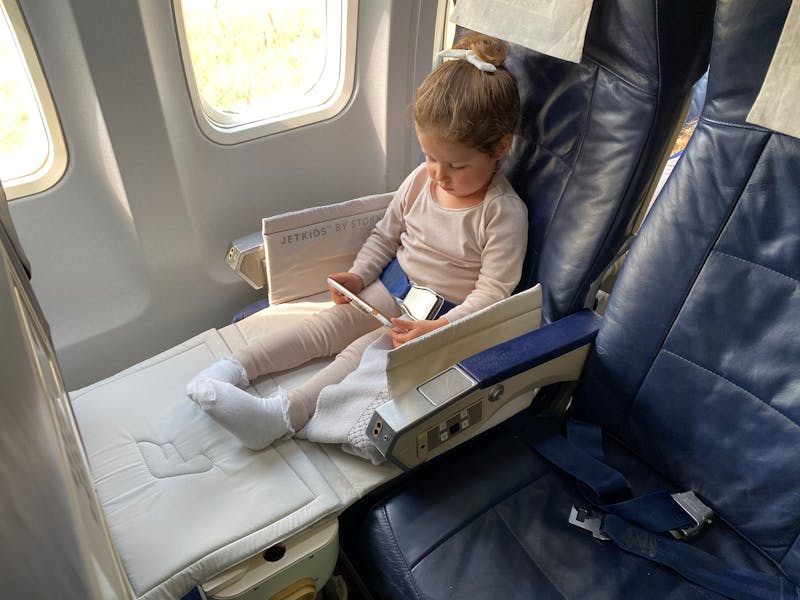
The flight to Japan from the US is long. There’s no getting around it. Ten to twelve hours from the West Coast, thirteen to fourteen from the East Coast, and every single one of those hours is felt when you’re traveling with children who’ve been asking “are we there yet” since the gate.
But here’s the thing we wish someone had told us before our first trip: the flight is the hardest part. Once you land, Japan is the easiest country we’ve ever traveled in with kids. So the flight is the toll you pay, and it’s worth paying.
In This Article
How Long You’re Actually in the Air
From the West Coast — Los Angeles, San Francisco, Seattle — direct flights to Tokyo run 10-12 hours. The way back is shorter because of tailwinds, usually 9-10 hours.
From the East Coast — New York, Boston, Washington DC — you’re looking at 13-14 hours direct. Some routes go over the Pacific, some over the Arctic. The route doesn’t matter much to the kids but the hour difference does.
From the middle of the country, you’ll connect somewhere — usually in LA, San Francisco, or one of the Asian hubs like Seoul or Taipei. Connections add 4-6 hours to the total travel time. With kids, a single long flight is generally better than two shorter ones with a layover, unless you specifically want to break the journey.
Which Airline
We’ve done this flight on ANA, JAL, and United. The difference was significant.
ANA and JAL are in a different league for family travel. The food is better — actual Japanese meals, not reheated pasta. The entertainment systems have more kids’ content, including Japanese animation that occupied our four-year-old for three hours straight. The crew notice when you’re struggling and actually help — one flight attendant held our baby while we ate dinner, without us asking. Bassinets available for infants on request (book early, limited supply). The planes are cleaner. The whole experience is calmer.
They cost a bit more than US carriers. Worth it. On a 12-hour flight with kids, the experience gap between JAL/ANA and a US airline is wide enough to justify the price difference.
United and Delta fly the route and are fine. Not special, not terrible. Standard US carrier experience. If the price is significantly cheaper, they work.
Budget option: Zipair runs LAX and SFO to Tokyo Narita for about $400-500 one way. It’s JAL’s budget subsidiary. Bare-bones — no free food, no free entertainment, no free baggage. For adults this is an incredible deal. For a family with small children on a 12-hour flight, no included meals or entertainment is a gamble. We haven’t tried it with kids. Some families swear by it if you pack tablets and snacks. Others say never again.
Hawaiian Airlines does Honolulu to Tokyo if you’re combining a Hawaii stop. Not direct from the mainland but could work as a two-destination trip.
How Much
Expect $600-900 per person round trip from the West Coast in economy. From the East Coast, $800-1,200. These are normal prices — during sales you might find $500 round trip from the West Coast, which is exceptional.
Book 3-5 months ahead for the best prices. We used Google Flights price tracking and booked when we got an alert that the fare dropped. Our cheap flights guide covers the tools and timing in detail.
Lap infants: Under 2 flies free on domestic US flights. International flights charge approximately 10% of the adult fare for a lap infant — no seat, they sit on you. This works for babies. It does not work for a large, active 22-month-old for 12 hours. If your child is close to 2 and big for their age, consider buying a seat.
Over 2 must have their own seat at child fare, which is usually the same as the adult fare. Budget accordingly — four seats to Tokyo is four seats to Tokyo.
Haneda vs Narita
Tokyo has two airports. This matters.
Haneda is 30 minutes from central Tokyo by train or taxi. It’s modern, efficient, and close to everything. After a 12-hour flight with exhausted kids, 30 minutes to your hotel is a gift.
Narita is 60-90 minutes from central Tokyo by train, depending on which service you take. The Narita Express costs about ¥3,250 and takes an hour. The Skyliner to Ueno is faster (36 minutes) but only goes to Ueno.
If given the choice, pick Haneda. Even if the flight costs slightly more, the saved hour on the ground with tired children is worth it. We learned this the hard way — arrived at Narita at 4pm, didn’t get to our hotel in Shinjuku until nearly 7pm. The kids had been awake for 20 hours.
Jetlag Strategy
Japan is 13-17 hours ahead of the US depending on your timezone. The math barely matters — whatever timezone you’re coming from, you’re going to be messed up for a couple of days.
What worked for us:
Fly overnight if possible. Most flights from the US depart in the afternoon or evening and arrive the next afternoon or evening Japan time. This means you arrive tired, which is actually what you want.
Stay awake until 8pm Japan time on arrival day. This is hard. The kids will want to sleep at 3pm. Fight it. Walk around, get outside, find food. If they crash at 3pm they’ll wake at midnight and your first three days are ruined.
By day 2-3 everyone’s adjusted. Kids adapt faster than adults. By day 3 our kids were on Japan time and we were still dragging.
Don’t overplan arrival day. Get to the hotel, find food, stay awake, go to bed at a reasonable hour. Save the attractions for day 2.
What to Pack in Hand Luggage
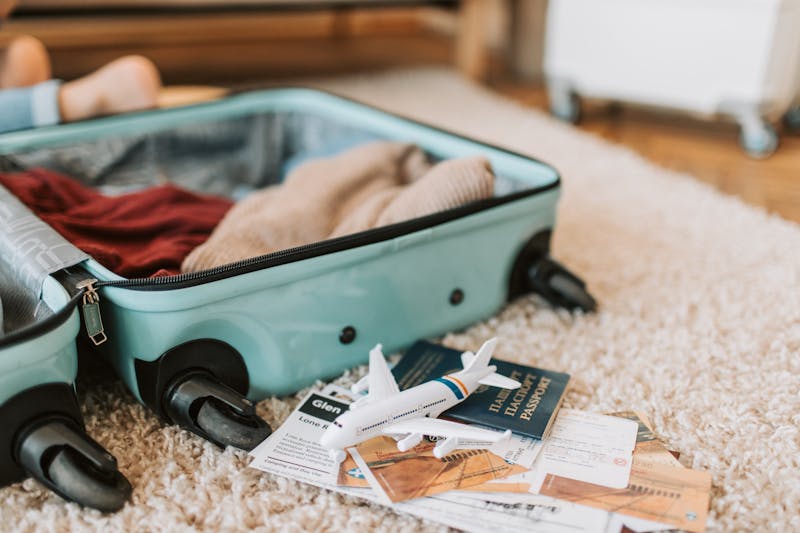
The carry-on bag is your survival kit. Everything else can go in the hold. This bag has to get you through 12+ hours in a confined space with children.
Tablets loaded with content. Download shows and movies before you leave. Don’t rely on airline wifi. Download from Netflix, Disney+, whatever your kids watch. This is the number one item. Everything else is secondary.
Headphones. Kid-sized. Bring a spare pair because one will break or get lost in the seat pocket before hour three.
Snacks from home. Familiar ones. Goldfish crackers, granola bars, fruit snacks, whatever your kids reliably eat. Airline meals arrive on the airline’s schedule, not your child’s hunger schedule.
Change of clothes for each kid. In the carry-on, not the checked bag. Spills happen. Diaper blowouts happen. Being stuck in wet clothes for 8 hours is miserable.
Empty water bottle. Fill after security. Planes are dry and kids dehydrate faster than adults.
One small toy or activity per child. Sticker books, coloring, a favourite small figure. Not the whole toy box — just enough for when the tablet needs a break.
Diapers and wipes if relevant, more than you think you’ll need. Changing a baby in an airplane lavatory is its own special experience but it’s doable.
Car Seats and Strollers
Car seats: You don’t need one in Japan. Taxis are legally exempt from car seat requirements. Trains don’t use them. If you’re renting a car in Hokkaido or Okinawa, the rental company provides them. Don’t bring one from home — it’s heavy, bulky, and unnecessary.
Strollers: Airlines gate-check strollers for free. Bring a lightweight umbrella stroller and gate-check it. You’ll use it at the other end — Japan is walkable but there’s a lot of walking, and a stroller gives you somewhere to stash bags and a tired child.
If you’d rather not bring one, you can rent in Japan — some hotels loan strollers, and rental services exist in Tokyo.
Arriving at the Airport
Immigration is efficient at both Haneda and Narita. English signage is good. Expect 30-60 minutes from landing to exiting the airport including immigration and baggage claim.
Get a Suica or Pasmo IC card at the airport — they work on all trains, buses, and convenience stores. Load ¥2,000-3,000 per person to start. You can add more at any station. This saves you buying individual tickets for every journey.
If you bought a JR Pass, exchange the voucher at the JR ticket office in the airport. Both airports have one. There may be a queue but it’s worth doing now rather than later when you’re more tired.
Pocket wifi or eSIM — sort this before you arrive. You’ll need data for Google Maps, translation, and keeping the kids entertained while waiting for things. Most pocket wifi services can be picked up at the airport.
The Return Flight
Somehow worse than the outbound because you’re flying east and losing time. You leave Tokyo in the evening and arrive on the US West Coast the same morning. Your body thinks it’s 3am. The kids will be wired from the excitement of the flight and crash hard about four hours after landing.
Buy souvenirs before the airport. Both Haneda and Narita have excellent shops after security, but browsing with overtired kids is not how you want to spend your last hour.
Is the Flight Worth It
Yes. The flight is long and tiring and nobody enjoys hour eleven with a toddler who’s discovered that kicking the seat in front of them is entertaining. But it’s one bad day on each end of a trip that will be one of the best things you do as a family. Tokyo is waiting at the other end, and Tokyo with kids is extraordinary.