
Family travel · FAMILY TRAVEL
Deer and Giant Buddhas in Nara for Kids
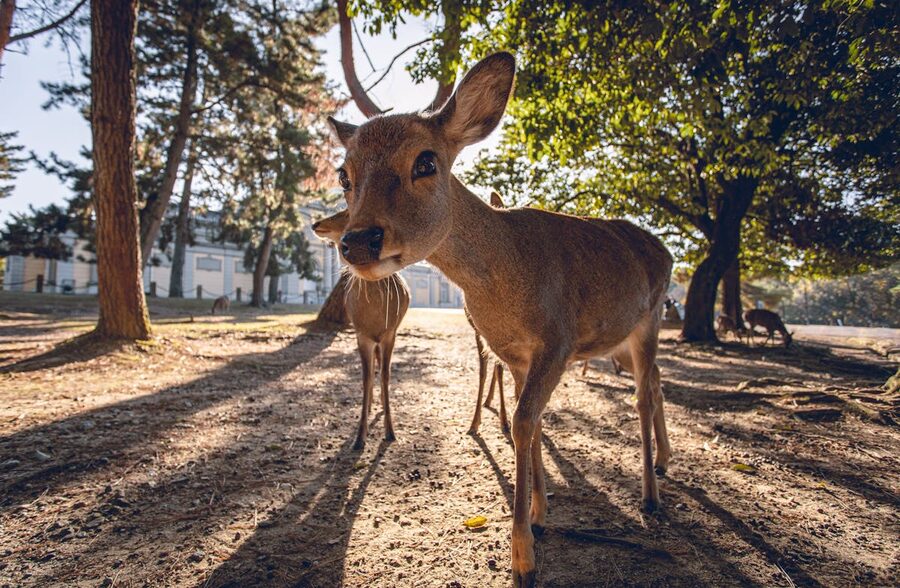
Our kids met their first Nara deer thirty seconds after stepping off the train. It bowed. They bowed back. Then it tried to eat our map. That pretty much set the tone for the day — charming, slightly chaotic, and completely unforgettable.
Nara is the easiest day trip from either Kyoto (35 minutes by train) or Osaka (45 minutes). It’s compact, walkable, and the main attractions cluster together in one large park area. A full day is enough to see everything. Half a day works if you’re tight on time. Either way, do not skip Nara. The deer and the giant Buddha alone justify the train fare.
In This Article
The Deer
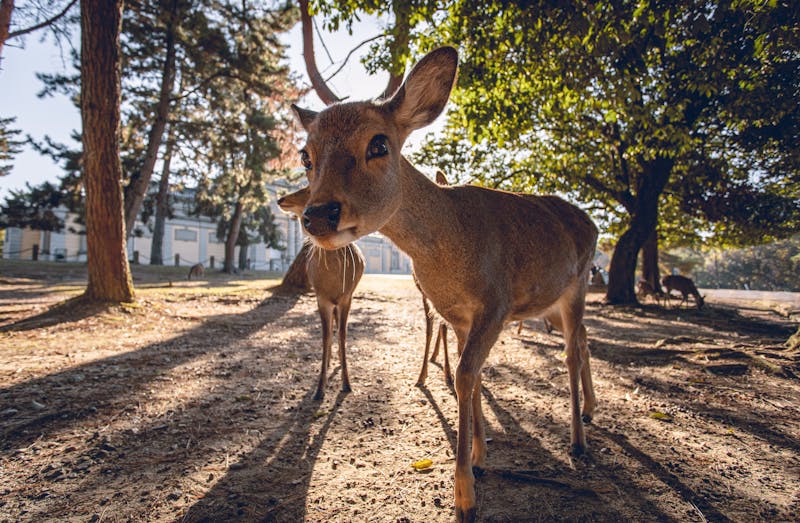
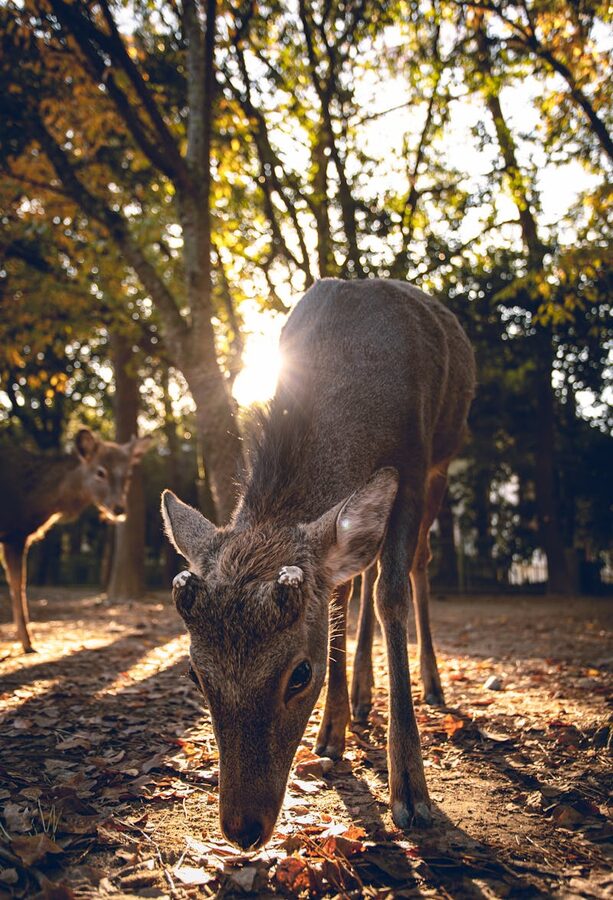
Over 1,000 sika deer roam freely through Nara Park. They’ve been protected as sacred since the eighth century, and they’ve figured out that travelers carry food. They’re bold. Some are gentle. Some are pushy. A few are downright demanding.
Deer crackers (shika senbei) are sold by vendors throughout the park for ¥200 per bundle. The moment you pick up a bundle, every deer within eyeshot will notice. Some will bow — they’ve learned that bowing gets them crackers faster. This delights children to an unreasonable degree. Our four-year-old bowed at every deer for the rest of the trip. Including stuffed ones in shops.
Tips for feeding deer with kids: hold the crackers high if the deer gets too enthusiastic. Break crackers into smaller pieces to make them last. Keep bags zipped — deer will investigate anything that rustles. Young fawns (spring/early summer) are gentler and less pushy than adults. The deer near Todaiji temple are the most aggressive because they get the most travelers. Walk further into the park for calmer encounters.
The deer are wild animals despite their familiarity with humans. They can bite, headbutt, and kick. Keep toddlers close and supervise feeding. That said, we’ve visited three times with kids ranging from two to ten and never had an incident beyond a persistent nudge.
Todaiji Temple and the Giant Buddha
Todaiji houses the largest bronze Buddha in Japan — 15 metres tall, seated inside the largest wooden building in the world. The scale hits you the moment you walk through the gate. Kids who’ve been indifferent to every temple on the trip suddenly pay attention because the Buddha is genuinely enormous.
Entry: ¥600 adults, ¥300 children.
Inside, there’s a wooden pillar with a rectangular hole at its base — the same dimensions as the Buddha’s nostril. Crawling through it is said to grant enlightenment. The queue of kids (and adults) waiting to squeeze through is half the entertainment. Our seven-year-old made it easily. Our ten-year-old got stuck momentarily and we all pretended not to laugh.
The Nandaimon Gate at the entrance holds two massive guardian statues (Nio) that are genuinely impressive and slightly terrifying for smaller children. Worth pausing to appreciate.
Walking the Park
Nara Park is large, green, and dotted with deer, ponds, and minor temples. After Todaiji, just walking through the park is the activity. Kids run on the grass. Deer wander past. Old trees provide shade in summer. It’s the kind of unstructured time that families need between the big-ticket sights.
The path from Todaiji south toward Kasuga Taisha takes about 20 minutes on foot and passes through increasingly quiet forest. The atmosphere shifts noticeably — from tourist bustle to genuine peace.
Kasuga Taisha Shrine
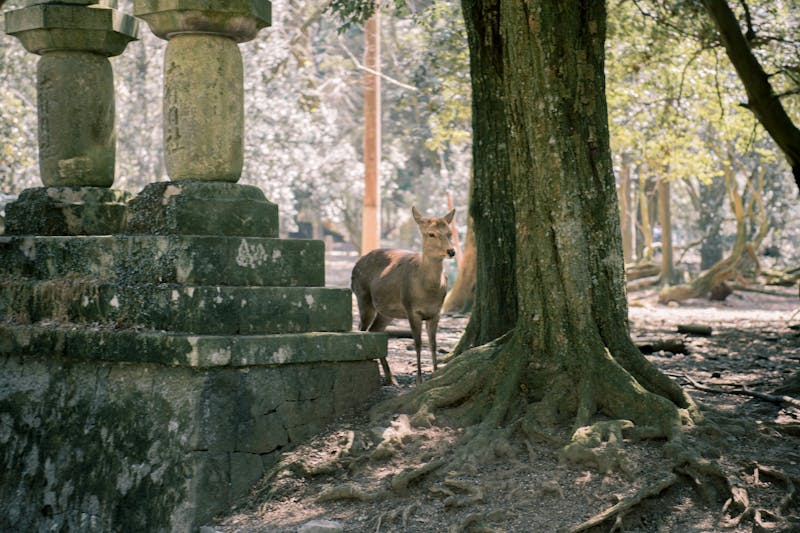
Thousands of stone lanterns line the approach to this ancient Shinto shrine, draped in moss and shade. The visual is stunning and kids find the repetition of lanterns mesmerizing — counting them becomes a game.
The shrine grounds are free to enter. The inner sanctuary costs ¥500. The lanterns are lit during special festivals (early February and mid-August) and the entire approach transforms into something magical. If your visit coincides, don’t miss it.
Practical Details
Getting there: JR Nara Line from Kyoto (45 minutes, covered by JR Pass) or Kintetsu Railway from Osaka-Namba (35 minutes, not covered by JR Pass but faster). From either station, the park is a 15-minute walk or a short bus ride.
Strollers: Work fine through the park but skip them for Todaiji interior and the hillier paths toward Kasuga Taisha. Bring a carrier for toddlers.
Food: Nara has fewer restaurant options than Kyoto or Osaka. Eat before you come or pack a convenience store lunch. There are a few cafes near Todaiji but they’re tourist-priced and mediocre. The mochi shops along the main approach are an exception — fresh mochi costs ¥200-400 and makes an excellent snack.
Time needed: 4-5 hours covers Todaiji, the park, and Kasuga Taisha comfortably. Add another hour if your kids get attached to the deer feeding (they will).
Combine with: Nara works as a half-day trip, leaving the afternoon for Osaka street food or returning to Kyoto for dinner. We did Nara in the morning and spent the evening in Dotonbori — perfect combination.