
Family travel · FAMILY TRAVEL
Kyoto With Kids
Kyoto did something to our kids that no amount of screen time or theme parks ever managed. Our seven-year-old came home and drew torii gates for three weeks straight. Our four-year-old still calls every shrine we pass “a Kyoto.” We didn’t plan for that. We just showed up and walked around.
Two days minimum. Three is better. Four if you can swing it. Don’t try to see everything — Kyoto has over 2,000 temples and shrines and the quickest way to ruin the trip is to treat it like a checklist. Pick a few things each day, build in long lunches and ice cream breaks, and let the city work its magic at a pace your kids can handle.
In This Article
Getting There From Tokyo
Shinkansen from Tokyo to Kyoto: 2 hours 15 minutes on the Nozomi, covered by the JR Pass on Hikari services (about 2 hours 40 minutes). The ride is part of the experience — Mount Fuji appears on the right side about 40 minutes in, weather permitting. Claim window seats on the right (seats D and E) when heading west.
Kyoto Station itself is enormous and initially disorienting. Don’t panic. The bus terminal is directly outside the north exit, taxis line up on the south side, and the subway entrance is well-signposted inside. Get your bearings on the first visit and it becomes second nature.
Where to Base Yourself
Location matters in Kyoto more than most cities because the sights are spread across a wide area with limited subway coverage.
Near Kyoto Station is the practical choice for families. Easy train and bus access, restaurants everywhere, and close to the shinkansen for day trips. MIMARU has a property here with family apartments — kitchen, washing machine, space to spread out.
Gion/Higashiyama puts you within walking distance of the most photogenic temples and traditional streets. Narrow lanes, wooden machiya houses, geisha sightings at dusk. More atmospheric but fewer food options for picky eaters.
Arashiyama works if you want a slower, more nature-focused experience. The bamboo grove and monkey park are on your doorstep, but getting to eastern Kyoto temples takes 30-40 minutes by bus.
The Temples Kids Actually Enjoy
Not all temples are created equal when you’re travelling with children. Some are contemplative spaces designed for silent meditation — beautiful for adults, torture for a five-year-old. Others have enough visual drama and interactive elements to hold a child’s attention. Here are the winners.
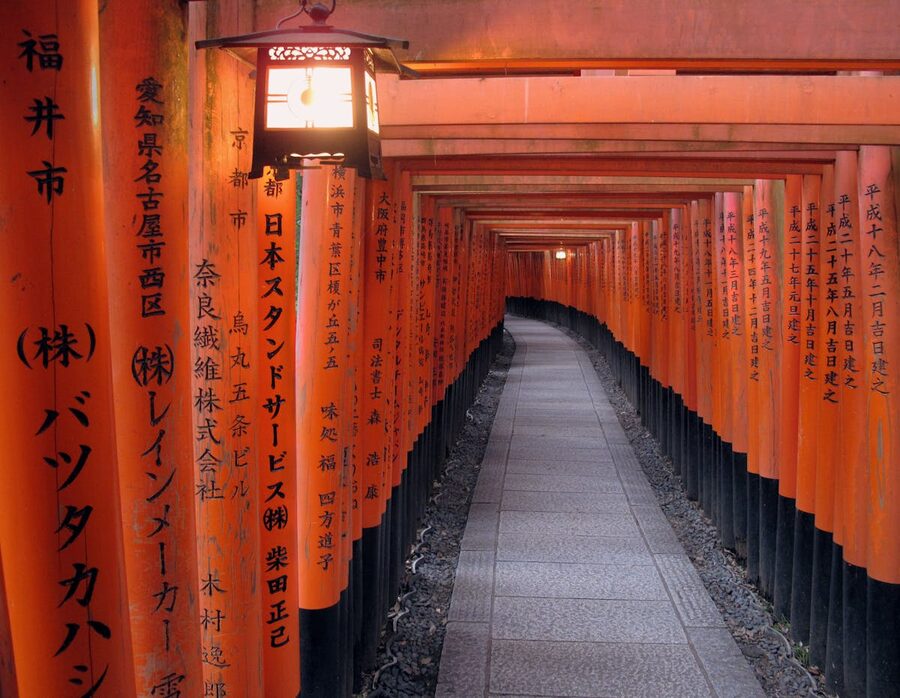
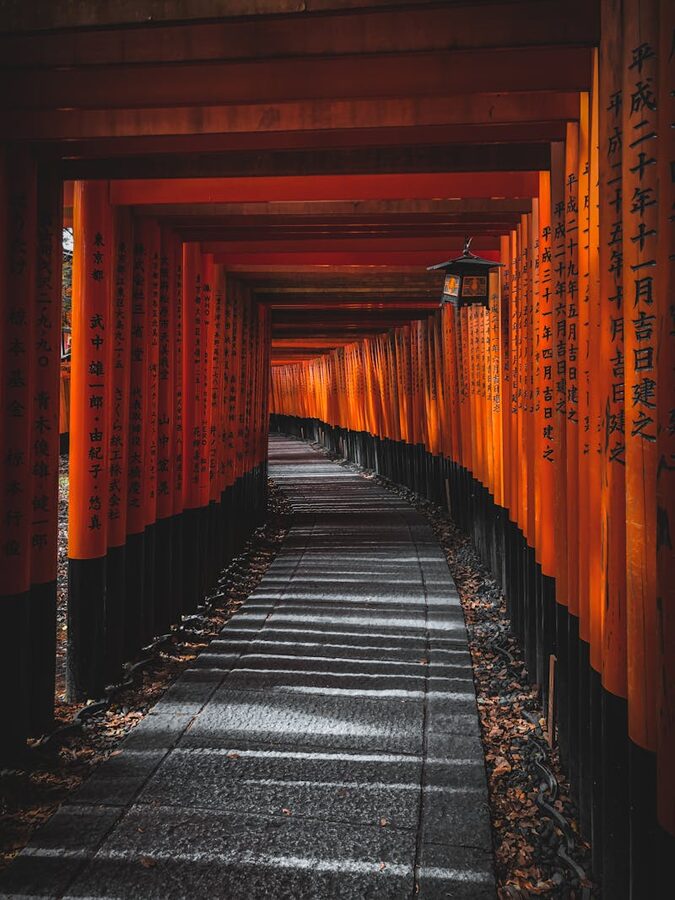
Fushimi Inari is the one with thousands of vermillion torii gates winding up a mountain. It’s free, it’s open 24 hours, and kids treat it like the world’s most photogenic obstacle course. The full hike to the top takes 2-3 hours but you don’t need to do the whole thing — the first 20 minutes gets you the dense tunnel of gates that makes all the photos. Turn back when the kids flag. Go early morning to avoid crowds.
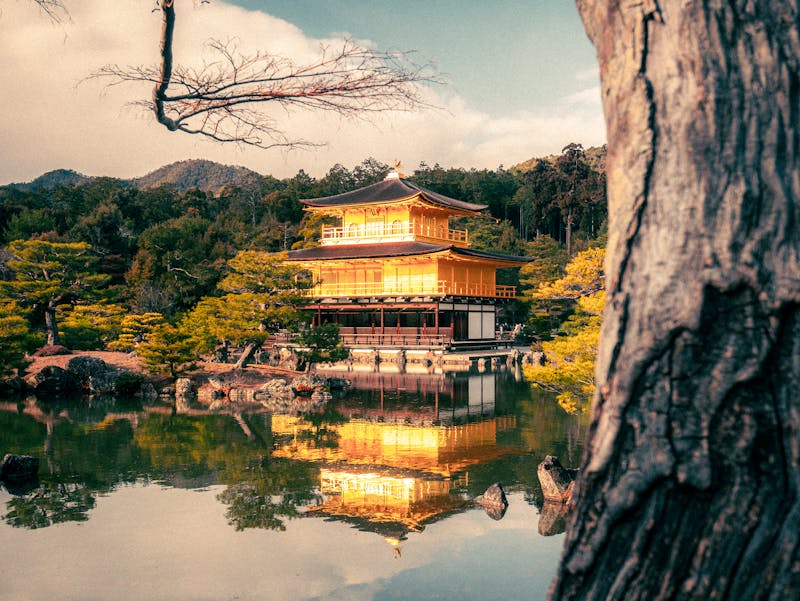
Kinkakuji (Golden Pavilion) delivers instant impact. It’s a temple covered in actual gold leaf sitting on a mirror-still pond. Even toddlers point and stare. The visit itself takes 30-45 minutes along a set path. Entry ¥500 adults, ¥300 children. Quick, stunning, done. Perfect for kids with short attention spans.
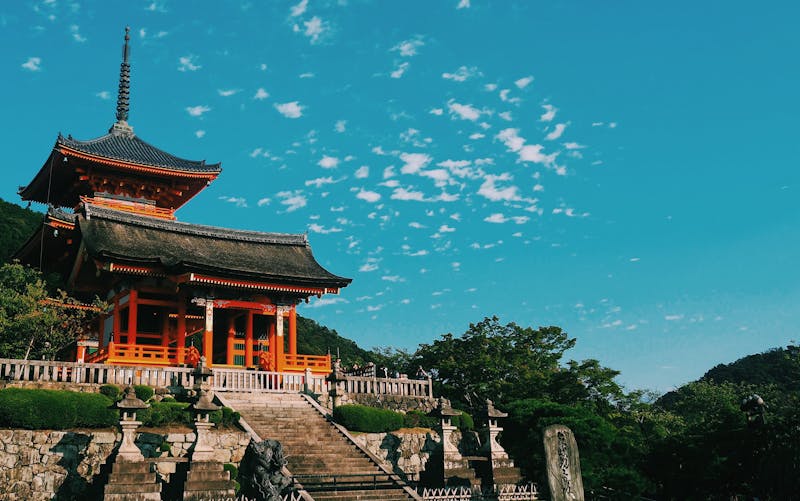
Kiyomizu-dera is built into a hillside with a massive wooden terrace that juts out over the valley. The views are spectacular and the surrounding streets (Ninenzaka and Sannenzaka) are lined with shops selling snacks, souvenirs, and ice cream. Kids enjoy the walk up through the shopping streets as much as the temple itself. Entry ¥400.
Ryoanji is the famous zen rock garden — fifteen rocks on raked white gravel. Some kids find it mesmerizing. Others last about ninety seconds. Read the room before committing to the detour.
Arashiyama: Half-Day Minimum
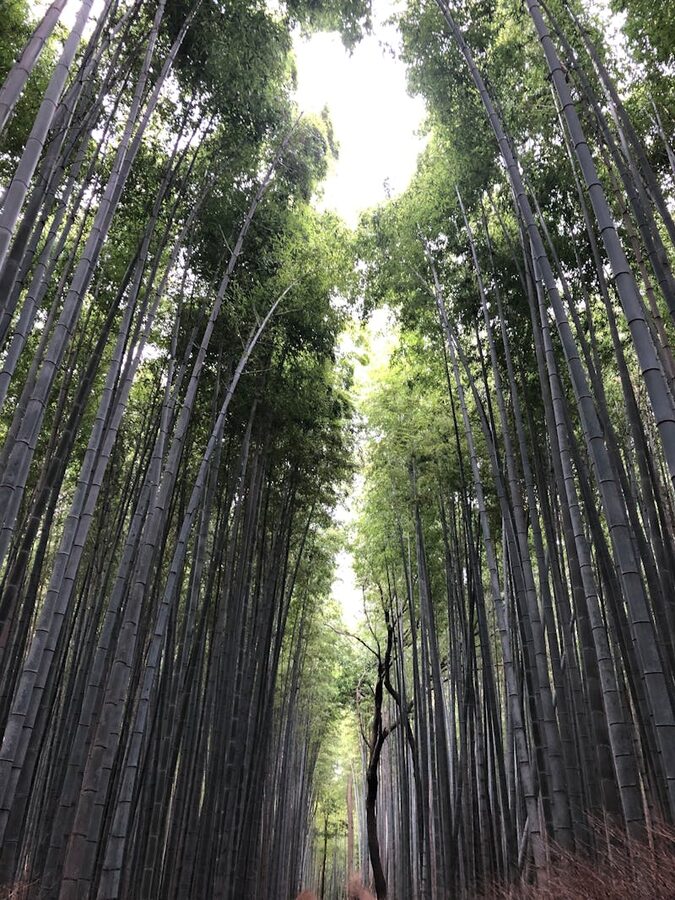
The bamboo grove is the headline act, and it genuinely delivers. Walking through towering bamboo that blocks the sky is otherworldly for adults and makes kids feel like they’ve entered a movie set. Go at opening time (the path fills up fast) and walk slowly — rushing through defeats the purpose.
The Iwatayama Monkey Park is a 20-minute uphill walk from the bamboo grove. At the top: wild macaques and a panoramic view of Kyoto. Kids can feed the monkeys from inside a netted shelter (¥100 for a bag of food). The climb is steep and not stroller-friendly — carrier only for toddlers. Entry ¥550 adults, ¥250 children.
The Togetsukyo Bridge at the base of the area is a good starting point. Rent bikes if your kids are old enough — the riverside path is flat and scenic and cycling lets you cover more ground without exhausting little legs.
Nishiki Market
Kyoto’s kitchen. A narrow covered shopping street packed with food stalls selling everything from fresh tofu to grilled octopus on a stick. It’s the kind of place where kids point at things, you buy them, and everyone discovers something new.
Best hits for kids: tamagoyaki (sweet rolled omelette) on a stick, mochi in every flavour, fresh fruit skewers, and soy milk doughnuts. Most items cost ¥200-500. The market gets crowded by late morning so aim for an early visit.
Warning: it’s not wide. Strollers technically fit but you’ll spend more time navigating around people than looking at food. Carrier is better here.
Geisha Spotting in Gion
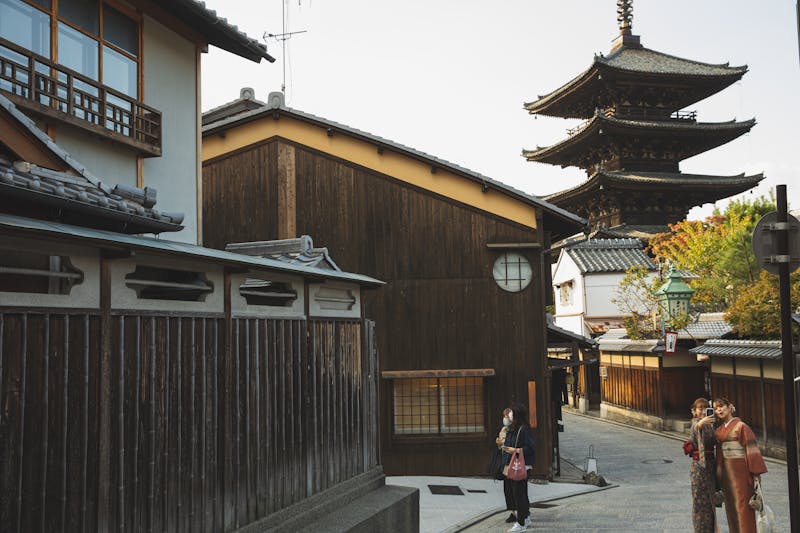
Gion is Kyoto’s traditional entertainment district, and in the early evening the narrow streets come alive with the possibility of spotting a maiko (apprentice geisha) heading to an appointment. The kids found this far more exciting than we expected — it became a genuine game, watching for the white makeup and elaborate kimono.
Hanamikoji Street is the main strip. Respectful distance is important — don’t chase, don’t photograph up close, don’t block their path. The district has posted rules and photographers who ignore them give travelers a bad reputation.
Even without a sighting, Gion at dusk is atmospheric enough to justify the walk. Wooden tea houses, paper lanterns, stone paths. Our kids called it “the old Japan part” and they weren’t wrong.
Day Trips From Kyoto
Nara is 45 minutes by train and the deer alone make it worth the trip. Over 1,000 wild deer roam freely in Nara Park and you can buy crackers to feed them. They bow. Your kids will lose their minds. The Great Buddha inside Todaiji temple is genuinely massive — 15 metres tall — and there’s a pillar with a hole the same size as the Buddha’s nostril that kids can crawl through for good luck.
Osaka is 15 minutes by shinkansen or 30 minutes by local train. The food scene is unbeatable and Osaka Castle gives kids something to climb. Full Osaka guide here.
Uji is 20 minutes from Kyoto and is Japan’s matcha capital. The Byodoin temple (the one on the ¥10 coin) is here, and the main street is lined with matcha shops where kids can try matcha ice cream, matcha mochi, and matcha everything else.
What to Eat in Kyoto
Kyoto cuisine tends toward the refined and subtle, which can be code for “my kid won’t eat it.” But there’s plenty that works for families.
Ramen: Kyoto has its own style — rich, creamy chicken broth (tori paitan) that’s less intense than Hakata-style tonkotsu. Ichiran and Ippudo are reliable chains with kid-friendly ordering systems.
Okonomiyaki: Savoury pancakes cooked on a griddle at your table. Kids love watching the process and most places let you add whatever toppings you want. Budget ¥800-1,200 per pancake.
Conveyor belt sushi: Kura Sushi and Sushiro have branches across the city. Cheap, fun, and even picky eaters find something on the belt they’ll try.
Matcha everything: Kyoto takes matcha seriously. Matcha soft serve, matcha parfaits, matcha lattes. The Nishiki Market and the streets near Kiyomizu-dera have stalls on every corner. Even kids who don’t like green tea tend to like matcha ice cream.
For family restaurants and convenience store strategies, check our full eating guide.
Getting Around Kyoto
Kyoto’s subway has two lines. Two. It covers the city centre and Kyoto Station but doesn’t reach most of the popular temples.
Buses fill the gaps but they’re crowded, slow, and confusing for first-timers. The one-day bus pass was discontinued in 2024, so you pay per ride (¥230 adults, ¥120 children) via IC card.
Our recommendation for families: use a combination of subway, buses, and taxis. Taxis in Kyoto are reasonable — ¥1,500-2,500 will get you across town. When you have a stroller, tired kids, or it’s raining, a taxi saves your sanity. They’re everywhere and the drivers are unfailingly polite.
Walking is the best way to experience many areas. Higashiyama (Kiyomizu to Gion) is a beautiful walk. Arashiyama is walkable once you’re there. Just don’t try to walk between districts — distances are deceptive.
Practical Kyoto Tips
- Kyoto is hotter than Tokyo in summer and colder in winter — the city sits in a basin that traps heat and cold
- Autumn (mid-November) is peak season — temples with red maples are stunning but crowded and expensive
- Cherry blossom season (late March to mid-April) is the other peak — Maruyama Park is the classic hanami spot
- Most temples close by 5pm — plan accordingly
- Coin lockers at Kyoto Station let you dump bags before exploring if you’re arriving from another city
- The station building itself has a massive staircase that lights up at night and a rooftop with views — worth 15 minutes
How Many Days in Kyoto
Two days covers the highlights: one day for eastern Kyoto (Fushimi Inari, Kiyomizu-dera, Gion), one day for Arashiyama and Kinkakuji. It’s tight but doable.
Three days adds a day trip to Nara and breathing room. This is what we recommend for most families.
Four days means you can add Uji, explore Nishiki Market properly, revisit a favourite spot, or just have a slow morning where nobody has to be anywhere. With kids, those unscheduled mornings are often the best days.
For a complete two-week Japan itinerary with kids, we give Kyoto three full days and don’t regret a single one.