
Family travel · FAMILY TRAVEL
Why Kids Love Osaka
If Tokyo is the serious older sibling, Osaka is the loud, funny one who makes you eat too much. Our kids preferred Osaka to every other city in Japan. Not because of any specific attraction — because of the energy. The street food. The noise. The giant mechanical crab on the building.
Osaka is Japan with its guard down. The people are louder, the food is bigger, and nobody judges you for eating while walking. For families, that’s liberating. You can let kids be messy, be noisy, be kids. Osaka doesn’t just tolerate it — it encourages it.
In This Article
Getting There
Shinkansen from Tokyo: about 2 hours 30 minutes, covered by the JR Pass on Hikari services. From Kyoto: 15 minutes by shinkansen or 30 minutes by local JR train. Most families combine Osaka with Kyoto — they’re so close that you could day trip, but staying at least two nights gives you breathing room.
Kansai International Airport (KIX) is Osaka’s international airport and a possible entry point if you’re flying from the US. The Haruka Express runs directly to Shin-Osaka and Kyoto.
Dotonbori: The Main Event
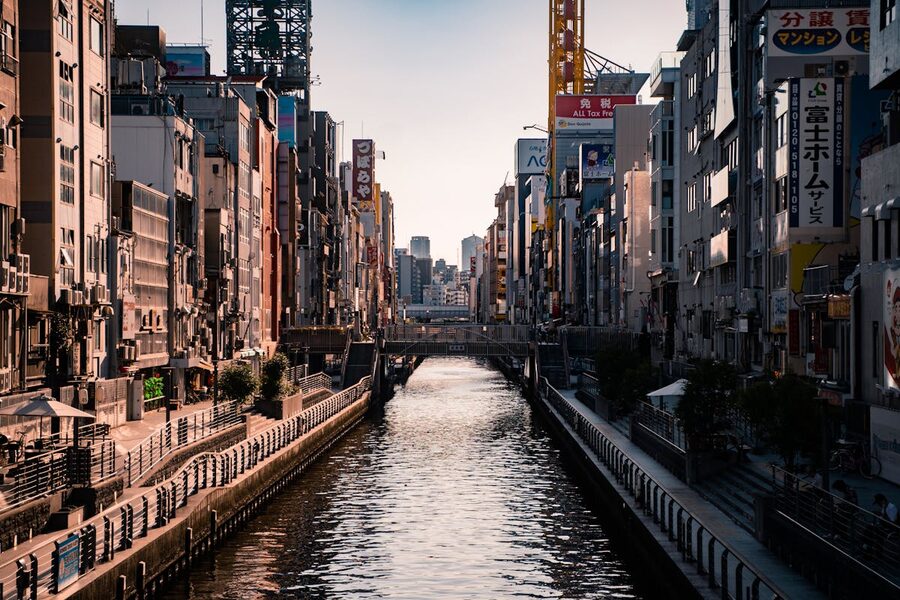
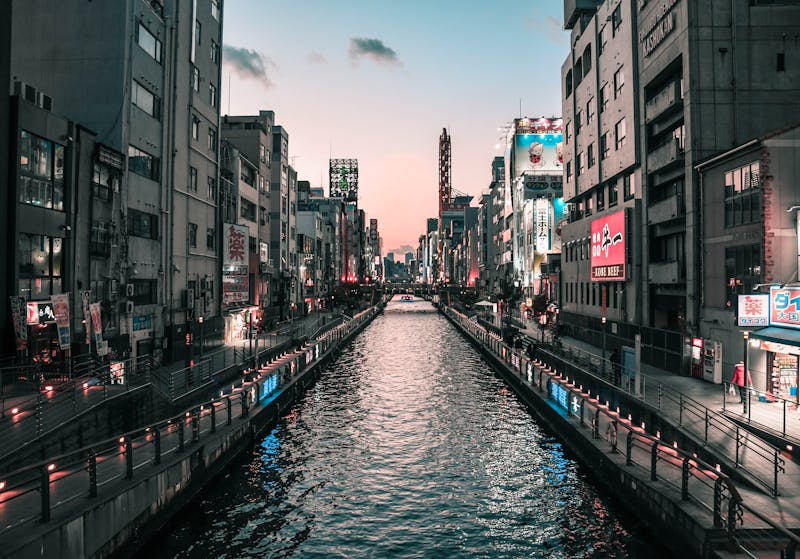
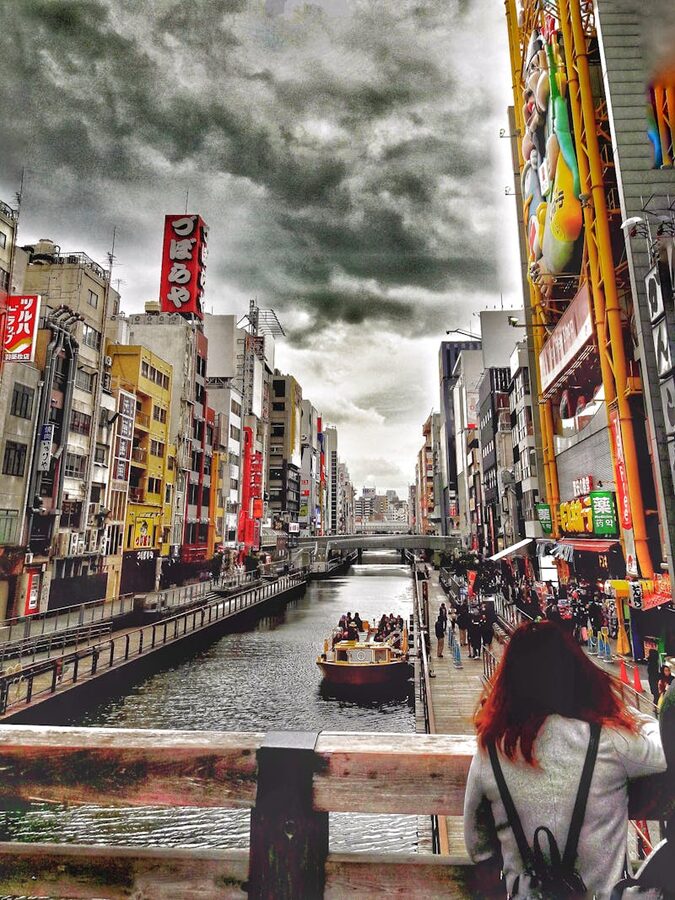
This is Osaka’s famous entertainment district and it’s as overwhelming as the photos suggest. Giant neon signs. A canal lined with restaurants. The Glico Running Man sign. Enormous 3D crab sculptures, octopus sculptures, and gyoza sculptures hanging off buildings. Your kids will stand on the bridge and stare.
The food here is the reason you came. Takoyaki — fried octopus balls — from a street stall costs ¥500-600 for a serving and watching them being made in the specialised pan is half the fun. The queue at the famous spots moves fast. Get them hot and eat them walking along the canal.
Okonomiyaki is Osaka’s other signature. A savoury pancake stuffed with cabbage, pork, shrimp, whatever you want, cooked on a griddle. Some places cook it for you, some let you do it yourself. Kids love the DIY version. Budget ¥800-1,200 per pancake.
Kushikatsu — deep-fried skewered everything — lines up along the streets near Shinsekai. Prawns, cheese, lotus root, mushrooms, all on sticks, all fried. The cardinal rule: never double-dip in the communal sauce. Your kids will remember this rule long after they’ve forgotten every temple.
Visit Dotonbori in the evening when the neon lights up. It’s safe, it’s walkable, and kids find the sensory overload genuinely exciting rather than stressful.
Osaka Castle
The castle sits in a large park and the grounds are free. The main tower has been reconstructed but it’s still impressive from the outside, surrounded by stone walls and a moat. Entry to the museum inside is ¥600 adults, free for children under 15.
The museum covers Osaka’s history through Toyotomi Hideyoshi and the Edo period. It’s spread across eight floors with an observation deck at the top offering views across the city. Kids care less about the history and more about the elevators, the armour displays, and standing on top of a castle. That’s fine.
The park surrounding the castle is the real family attraction. Massive open spaces, playgrounds, a moat with boat rentals, cherry blossom trees in spring, and room to run. Pack a convenience store lunch and spend the afternoon. In summer, look out for the splash pad and water play areas.
Universal Studios Japan
USJ deserves its own guide — and we wrote one. The short version: it’s excellent for families. The Nintendo World area is genuinely impressive, the Harry Potter section rivals Orlando’s, and ride capacity has improved over the years.
Buy Express Passes if your budget allows. The queues without them are punishing, especially with children. One full day is enough to hit the highlights. Two days if you want to be thorough and your kids are theme park enthusiasts.
Shinsekai and Tsutenkaku Tower
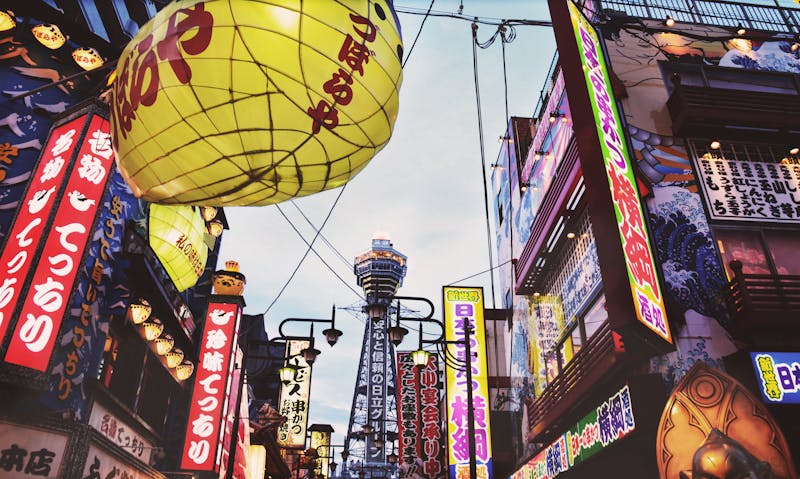
Shinsekai is the old entertainment district south of the city centre. It has a retro, slightly chaotic feel — neon signs, kushikatsu restaurants stacked on top of each other, and Tsutenkaku Tower rising above it all like a budget Eiffel Tower.
The tower observation deck (¥900 adults, ¥400 children) has views and a lucky Billiken statue you rub for good fortune. Kids find the ritual fun. The area around the tower has game centres and old-school takoyaki stands.
Shinsekai feels different from the polished tourist areas. It’s grittier, louder, more real. Some families love it, some find it a bit much. Worth an hour or two, especially combined with kushikatsu for lunch.
Osaka Aquarium Kaiyukan
One of the best aquariums in Asia. The central tank holds a whale shark — an actual whale shark — circling in a massive deep-water exhibit that you spiral around from top to bottom. The scale is staggering and even teenagers who’ve been performing boredom all trip will press their faces against the glass.
Jellyfish halls, penguin areas, sea otter exhibits, and touch pools for smaller kids. Plan 2-3 hours minimum. Entry ¥2,700 adults, ¥1,200 children 7-15, ¥700 ages 4-6.
It’s located in the Tempozan area near the harbour. Combine it with the Tempozan Ferris wheel (¥800) for harbour views and a nearby shopping mall for lunch.
Namba and Shinsaibashi
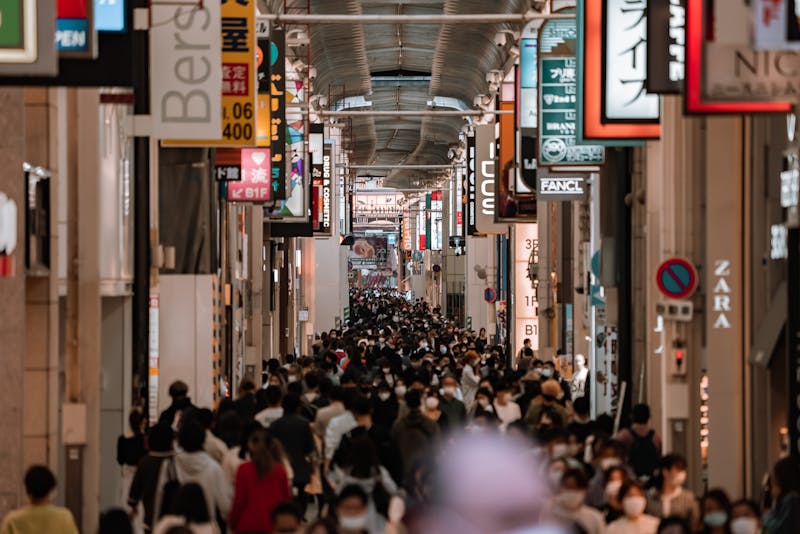
Shinsaibashi-suji is a covered shopping arcade that runs for about 600 metres and has literally everything. Fashion, character shops, drugstores, 100-yen shops, and food stalls. It feeds directly into the Dotonbori area, making it easy to combine shopping and eating.
For kids, the shopping highlights are the same as everywhere in Japan: character stores, gashapon machines on every corner, and Don Quijote (Donki) which has a massive Dotonbori location with a Ferris wheel on its facade.
Namba Parks, near Namba Station, has a rooftop garden with terraced greenery that’s unexpectedly pleasant for a city-centre shopping mall. Good for letting small kids climb and explore while parents sit with coffee.
Kid-Friendly Food Beyond Street Stalls
Conveyor belt sushi: Osaka has excellent kaiten-zushi chains. Kura Sushi and Sushiro are both cheap and reliable. ¥100 per plate base price. The gamified ordering systems where you collect plates for prizes keep kids engaged.
Ramen: Ichiran started in nearby Fukuoka and Osaka has branches everywhere. The individual booth system means even introverted kids feel comfortable, and you order from a vending machine — no menu anxiety.
Family restaurants: Gusto, Saizeriya, and Coco Ichibanya (curry house) are scattered across the city. All have picture menus, kids’ portions, and drink bars. Budget ¥500-800 per person.
Convenience store dinner: Not a failure — a strategy. Lawson, FamilyMart, and 7-Eleven all serve hot food counters, fresh bento, and excellent onigiri. A family dinner from a convenience store costs ¥2,000-3,000 total and nobody has to sit still.
Getting Around Osaka
Osaka’s subway system is comprehensive and easy. IC cards (Suica/PASMO from Tokyo work here too) make it tap-and-go. The Midosuji Line runs north-south through all the main areas: Shin-Osaka, Umeda, Namba, and Tennoji.
Walking is manageable in central areas — Dotonbori to Shinsaibashi to Namba is all walkable. Osaka Castle is a bit further but one subway ride.
Taxis are available when needed but the subway genuinely covers everything a tourist family would visit.
How Many Days in Osaka
Two days covers Dotonbori, Osaka Castle, and one major attraction (USJ or Kaiyukan). Three days adds a day trip to Nara (45 minutes by train, deer, giant Buddha — don’t miss it) and time for a slower exploration of the food scene.
If you’re choosing between Osaka and Kyoto with limited time: Kyoto for the culture, Osaka for the food and fun. Most families do both and find they complement each other perfectly. Our two-week Japan itinerary gives Osaka two nights and Kyoto three.