Physical Address
304 North Cardinal St.
Dorchester Center, MA 02124
Physical Address
304 North Cardinal St.
Dorchester Center, MA 02124

Let me be honest: before our family trip to Japan, I was worried. My six-year-old subsists primarily on chicken nuggets and plain pasta. My nine-year-old has declared war on anything green. Japan, a country famous for raw fish and fermented soybeans, seemed like a battlefield we weren’t prepared for.
I was wrong. Completely, totally wrong.
Japan turned out to be one of the easiest countries we’ve ever traveled through with kids when it comes to food. The portions are reasonable, the flavors are approachable, and there’s an entire infrastructure built around feeding people quickly, cheaply, and well. Our picky eaters found things they loved at practically every meal. Here’s everything we learned about eating in Japan with kids, with real prices and specific recommendations so you can skip the trial and error we went through.
If you only do one food experience in Japan with your kids, make it kaiten-zushi — conveyor belt sushi. This isn’t a suggestion. It’s a directive.
The concept is simple. You sit at a counter or booth. Plates of sushi roll past on a conveyor belt. You grab what looks good. At the end, your plates get counted and you pay. Most plates run about ¥100 to ¥150 (roughly $0.65 to $1.00 USD), which means even if your kid grabs six plates of just cucumber roll, you’re looking at maybe ¥600 for their entire meal. That’s cheaper than a Happy Meal back home.
What makes this work for kids is the interactivity. They’re not sitting still waiting for food to arrive. They’re watching plates go by, deciding what to grab, and feeling in control of their own choices. My nugget-obsessed six-year-old ate salmon, tamago (egg sushi), and edamame without a single complaint. The novelty factor does a lot of heavy lifting.
We tried several chains, but Genki Sushi in Shibuya was our favorite. It uses a tablet ordering system where you pick items on a screen, and they arrive on a little express lane directly to your seat. The kids treated it like a video game. Fair warning: Genki Sushi gets packed during peak lunch and dinner hours. Aim for an early lunch around 11:00 or a late dinner around 19:30 to avoid the worst of the wait. We once queued for forty minutes at the Shibuya location on a Saturday evening, and the kids’ patience was running on fumes by the time we sat down.
Other solid conveyor belt chains include Sushiro and Kura Sushi. Kura Sushi has a built-in game where every five plates you eat, you get to play a capsule-toy lottery at your table. My kids were suddenly very motivated to eat more sushi. Marketing genius, honestly.
Ramen in Japan is nothing like the instant packets you microwave at home. But here’s the thing that matters for parents: kids already love noodles. They love broth. Ramen is basically fancy soup, and the leap from what they already eat isn’t that far.
A bowl typically runs ¥800 to ¥1,200 depending on the shop and toppings. Many places offer smaller kids’ portions for ¥400 to ¥600, though not all — ask for “kodomo saizu” (kids’ size) or check the ticket machine for a smaller option.
Speaking of ticket machines: this is the part that confuses first-timers. Most ramen shops don’t have a waiter who takes your order. Instead, there’s a vending machine near the entrance. You put in your money, press the button for what you want, and a ticket pops out. You hand the ticket to the cook when you sit down. That’s it. Some machines have English labels. Many don’t. My advice: look at the pictures, pick the one that looks good, and commit. If the machine is entirely in Japanese with no pictures, the top-left button is almost always the house specialty and your safest bet.
For kids who are cautious about strong flavors, go with shio (salt-based) or shoyu (soy sauce-based) ramen rather than tonkotsu (pork bone) or miso. Shio is the mildest and usually the most approachable. You can also ask for toppings on the side — “betsu betsu de” — so your kid doesn’t panic at the sight of a soft-boiled egg floating in their bowl.
One cultural note that kids find hilarious: slurping is not just acceptable in Japan, it’s expected. Tell your children they’re supposed to slurp their noodles loudly. Watch their faces light up. This is the one time bad table manners are actually good manners, and they’ll remember it for years.
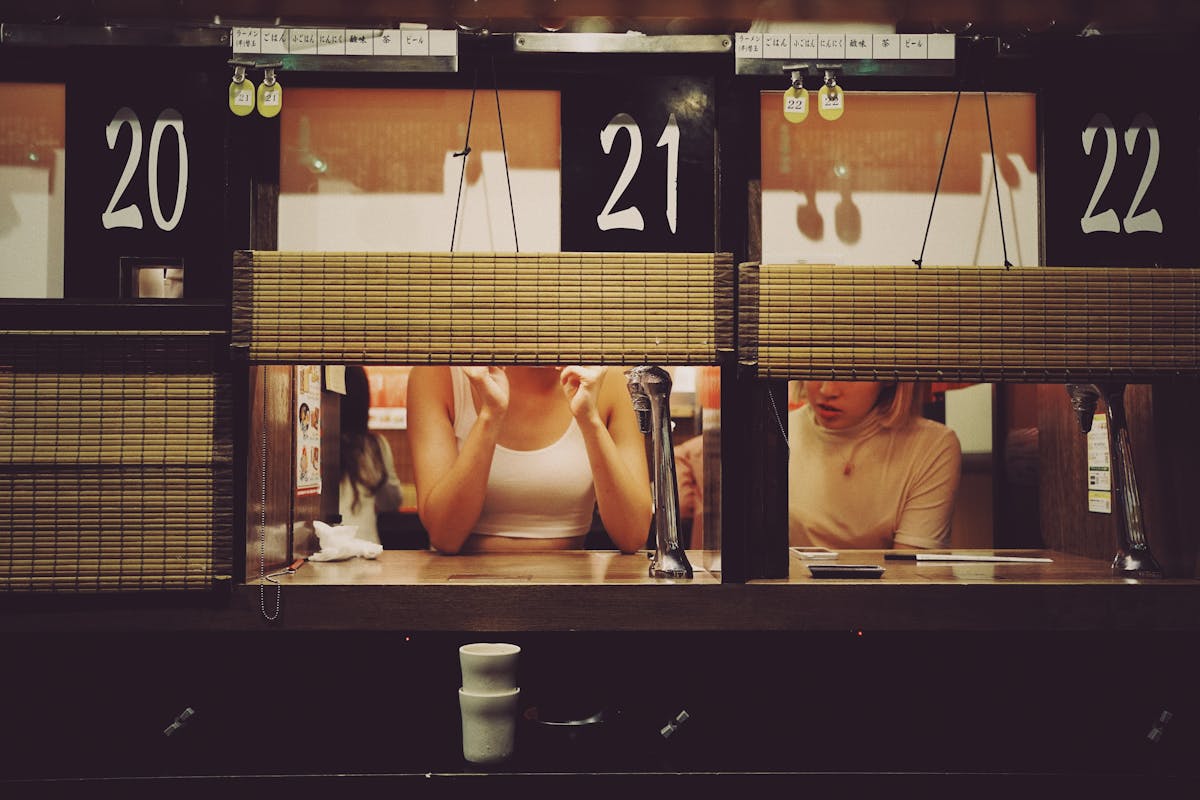
Some ramen shops, especially the famous Ichiran chain, have individual booth seating separated by small partitions. It feels like eating in a tiny cubicle. My kids thought this was the coolest thing in the world. Ichiran is pricier than average — around ¥1,000 to ¥1,200 per bowl — but the experience is worth doing once.
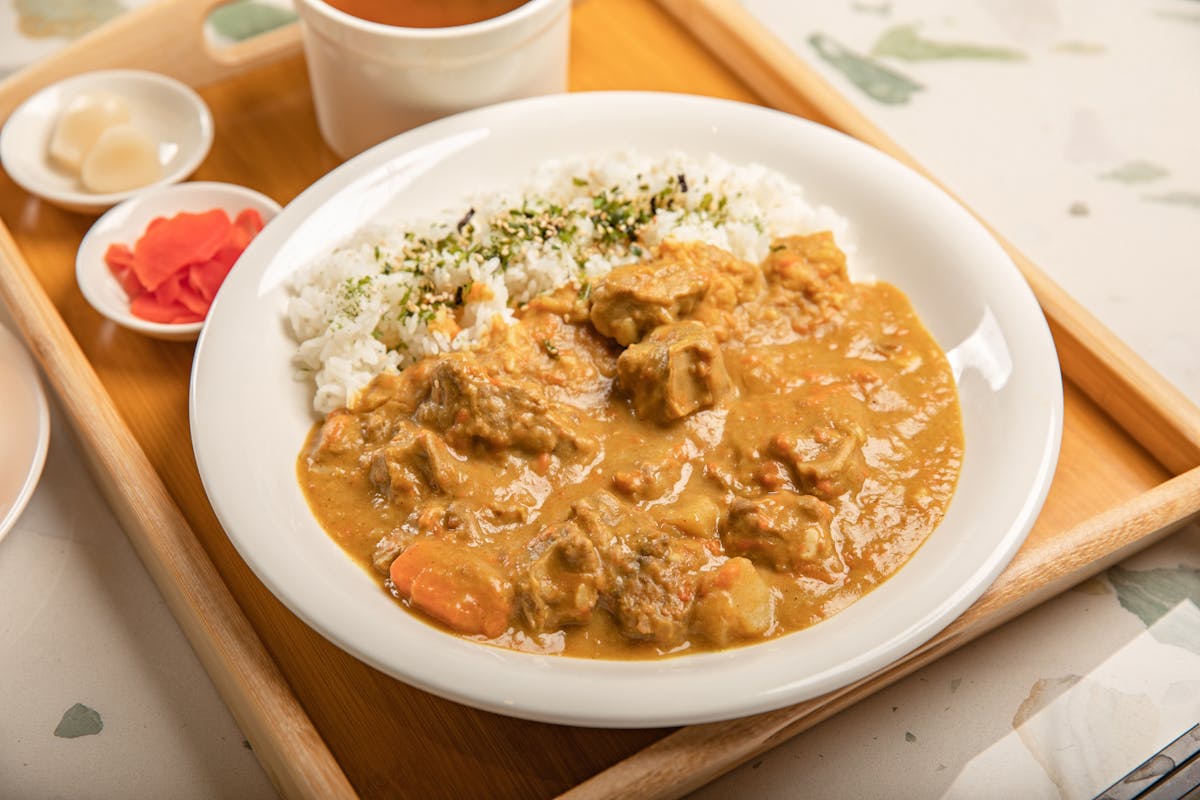
Japanese curry is not Indian curry. Not Thai curry. It’s its own thing entirely — sweeter, milder, thicker, and served over a mound of white rice. Think of it as a warm, slightly spiced gravy that even the most cautious eaters tend to accept. My six-year-old, who won’t touch curry at home, ate an entire plate of it in Osaka. Twice.
CoCo Ichibanya (often called CoCo Ichi) is the chain you want. They’re everywhere. Literally everywhere — over 1,400 locations across Japan. The menu lets you choose your spice level on a scale where level 1 is essentially zero spice. You pick your protein, your toppings, and your rice quantity. A basic kids’ curry plate starts around ¥500. An adult portion with a couple of toppings runs ¥700 to ¥900. They have English menus at most locations, and the staff are accustomed to travelers.
What I appreciate about CoCo Ichi is the customization. One kid wants plain curry with just rice? Done. The other wants chicken katsu curry with cheese on top? Also done. My husband ordered the level 5 spice because he has something to prove. He regretted it. The kids’ curry comes on a cute plate with a flag stuck in the rice, which shouldn’t matter but absolutely does when you’re feeding small humans.
Beyond CoCo Ichi, you’ll find curry rice on the menu at most family restaurants and even some convenience stores sell pre-made curry bento boxes for around ¥450 to ¥550. It became our emergency fallback meal whenever the kids were tired, cranky, or just not in the mood to try something new. No shame in that.
Japan has a category of dining that doesn’t really exist in the West: the “family restaurant,” or famiresu. These are sit-down chain restaurants specifically designed for families with kids. Gusto, Royal Host, Saizeriya, Denny’s Japan (which is nothing like American Denny’s), and Joyful are the big names. They’re everywhere, they’re open late, and they’re cheap.
Here’s why they work so well with kids. First, picture menus. Nearly every item has a photo, so even if you can’t read a word of Japanese, you can point at what you want. Second, high chairs and booster seats are standard. Third, the “drink bar” — an all-you-can-drink fountain station with tea, juice, soda, and sometimes soup for around ¥200 to ¥300 per person. Kids go absolutely feral for the drink bar.
Saizeriya deserves a special mention because it’s comically cheap. We’re talking full pasta dishes for ¥300, pizza for ¥400, and a kids’ meal plate with a main, side, drink, and dessert for under ¥500. The food is nothing extraordinary, but it’s perfectly fine. Think of it as the Olive Garden of Japan but with better value and less pretension. On nights when we’d spent all our energy at Tokyo Disneyland or DisneySea and the kids were melting down, Saizeriya saved us more than once.
Royal Host is a step up in quality and price. Expect to spend ¥800 to ¥1,500 per person. Their hamburg steak (a Japanese-style hamburger patty served with gravy and rice) is genuinely good, and my kids devoured it. If you want a more relaxed sit-down meal without the chaos of a ramen counter, Royal Host is a solid call.
One tip: many family restaurants have a call button on the table. You press it when you’re ready to order, and a server comes over. You’re not being ignored — they’re just waiting for you to buzz them. It took us an embarrassingly long time to figure this out on our first night.
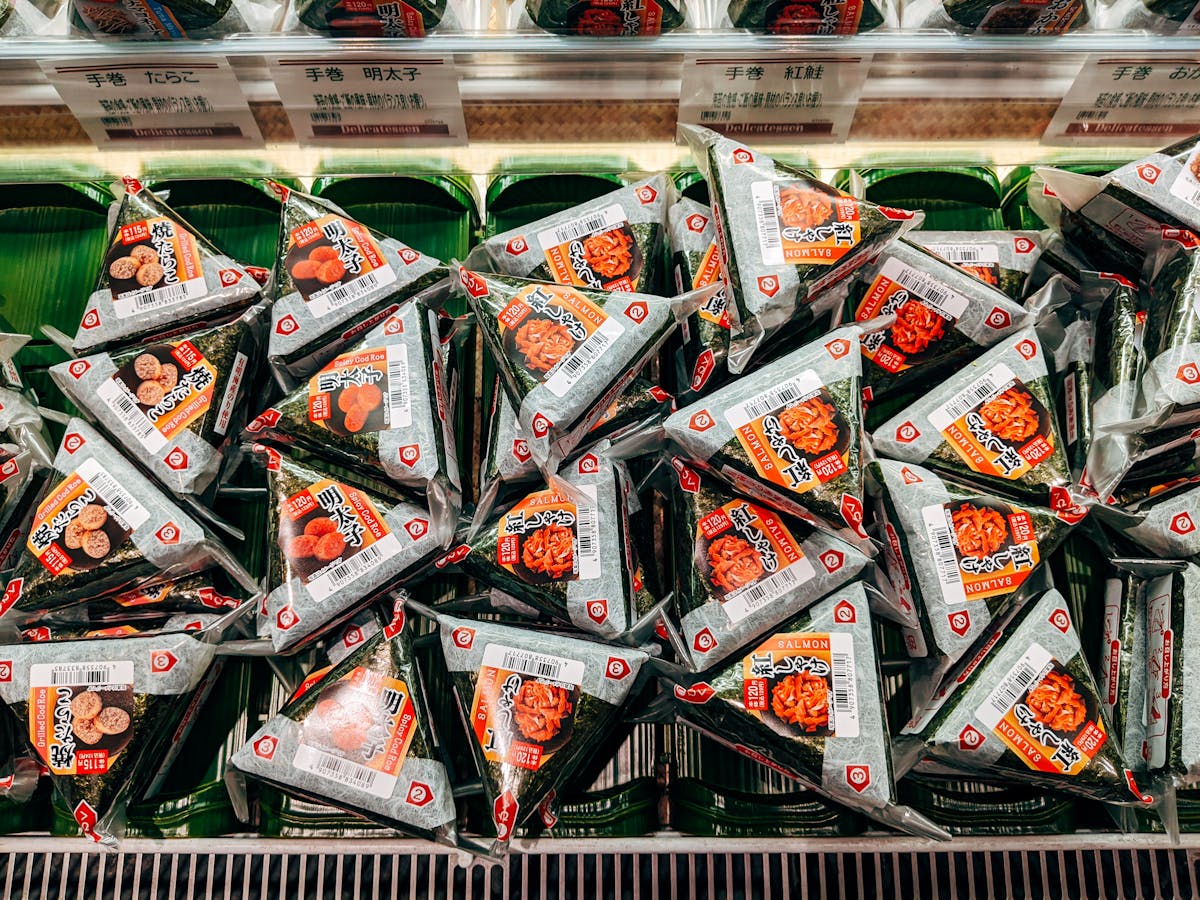
I need you to abandon every assumption you have about convenience store food. In Japan, 7-Eleven, Lawson, and FamilyMart sell food that is genuinely, honestly good. We’re talking fresh onigiri (rice balls) for ¥120 to ¥180, egg salad sandwiches on crustless milk bread for ¥200, bento boxes with rice and teriyaki chicken for ¥400 to ¥600, and steamed nikuman (meat buns) for ¥150. It’s fresh. It’s made daily. And it’s available twenty-four hours a day on practically every block in every city.
For families with picky eaters, convenience stores are a lifeline. Here’s what worked for our kids:
We made convenience stores our breakfast spot most mornings. A full family breakfast for four — coffees for the adults, onigiri and sandwiches for everyone, a couple of pastries, and some yogurts — came to roughly ¥1,500 to ¥2,000 total. Compare that to hotel breakfast buffets charging ¥2,000 to ¥3,000 per person, and the math is obvious. We put that saved money toward better dinners.
Lawson’s is my personal pick of the three chains. Their “Lawson Select” brand items are slightly better quality, and their bakery section is stronger. But honestly, you can’t go wrong with any of them. If you’re figuring out where to stay in Tokyo with kids, check that there’s a convenience store within walking distance of your hotel. There will be. There always is.
Japan has roughly 5.5 million vending machines. You will encounter them on every street, in every train station, on random mountainsides, and in places that seem physically impossible. Most sell drinks — hot and cold — for ¥100 to ¥160. Some sell ice cream, soup, or snacks.
For kids, vending machines become a daily ritual. Mine started rating the different drinks and keeping a mental catalog of favorites. The hot corn soup in a can (available in cooler months) was a surprise hit. So was Calpis Water, a milky-sweet drink that tastes a bit like yakult. Budget maybe ¥500 per day on vending machine drinks for the family. It sounds like a lot, but when a kid is melting down on a hot day in Kyoto, a ¥130 cold drink from a vending machine buys you at least thirty more minutes of cooperation.
Skip the “mystery” vending machines that sell unidentified cans unless your kids are old enough to find it funny when the drink is terrible. We learned that lesson the hard way.
Real talk: Japan is remarkably accommodating for picky kids, but it helps to go in with a strategy.
Learn three phrases. “Kodomo” means child. “Karai” means spicy (point at food and say “karai?” with a questioning tone to ask if it’s spicy). “Nashi” means without, so “[ingredient] nashi” asks for something to be left out. These three words handled about 80% of our food-related communication needs.
Carry emergency snacks from home for the first day or two. Jet lag makes everything worse, including food pickiness. Let the kids eat their comfort snacks while they adjust, and introduce Japanese food once they’ve slept properly.
Don’t force it. There will be meals where your kid eats plain rice and nothing else. That’s fine. The next meal, they might try gyoza (pan-fried dumplings, which are basically pot stickers and rarely rejected by children). The pressure-free approach worked far better for us than the “you have to try one bite” strategy.
Use food courts in department store basements. The basement floor of most Japanese department stores (called depachika) has an enormous food hall. You can walk around, see everything, and let kids point at what looks good. It’s not cheap — expect ¥500 to ¥1,000 per item — but the variety means even the pickiest child will find something acceptable.
Embrace carbs. Udon noodles. Rice. Bread from bakeries. Yakisoba (fried noodles) from festival stalls. Japan does carbohydrates extraordinarily well, and if that’s all your kid eats for two weeks, they’ll be fine. I promise.
Japanese restaurants are more kid-friendly than most Western countries in terms of infrastructure, but the etiquette expectations are different. Here’s what to know.
Highchairs are widely available at family restaurants, chain restaurants, and larger sushi places. Smaller ramen shops and izakayas generally don’t have them. If your child needs a highchair, stick to chains and family restaurants or look for places with tatami seating, where kids can sit on the floor mat — which many toddlers actually prefer anyway.
Noise levels are expected to be lower than in American restaurants. I’m not saying your kids need to be silent, but the screaming and running around that sometimes flies at a Chili’s back home won’t go over well in a Japanese restaurant. Bring quiet activities for wait times. Coloring books. A small toy. A phone with downloaded shows as a last resort. The good news is that food in Japan tends to arrive fast, so wait times are shorter than you might be used to.
Wet towels (oshibori) are provided at the start of every meal at sit-down restaurants. Use them to wipe your hands before eating. Don’t use them on your face or neck, even though you’ll want to. Kids get their own, which helps with the pre-meal hand-washing battle.
Tipping doesn’t exist in Japan. Don’t leave money on the table. It will confuse or even offend the staff. This is actually great news for your budget.
Many restaurants display plastic food models (sampuru) in their front windows showing exactly what each dish looks like. Walk your kids past the display before going in and let them pick out what they want. It’s like a preview menu, and it eliminates the anxiety of not knowing what they’re ordering.
We spent too much money on hotel breakfasts before we realized how good convenience store food was. We also waited too long to try conveyor belt sushi, saving it for our last night when it should’ve been our first meal — it set the tone for adventurous eating in a way nothing else could.
If I could do it again, I’d hit a kaiten-zushi place within hours of landing, while the kids were still riding the excitement of being in Japan. I’d skip every hotel breakfast. And I’d budget about ¥3,000 to ¥4,000 per person per day for food, which is completely doable if you mix convenience stores, family restaurants, and the occasional ramen or sushi spot.
Japan with kids and food? It’s not something to worry about. It’s something to look forward to.