Physical Address
304 North Cardinal St.
Dorchester Center, MA 02124
Physical Address
304 North Cardinal St.
Dorchester Center, MA 02124

Osaka is where Japan turns up the volume. Tokyo is precise. Kyoto is graceful. Osaka is loud, generous, and completely obsessed with food. A takoyaki vendor gave our daughter a free extra serving because she said “oishii” and he nearly fell off his stool laughing. That kind of thing happens here.
For families, Osaka is easier than Tokyo. Smaller, less complicated metro, better street food, and a friendliness that makes traveling with kids noticeably less stressful. If Tokyo overwhelmed your kids on day one, Osaka will feel like a relief.
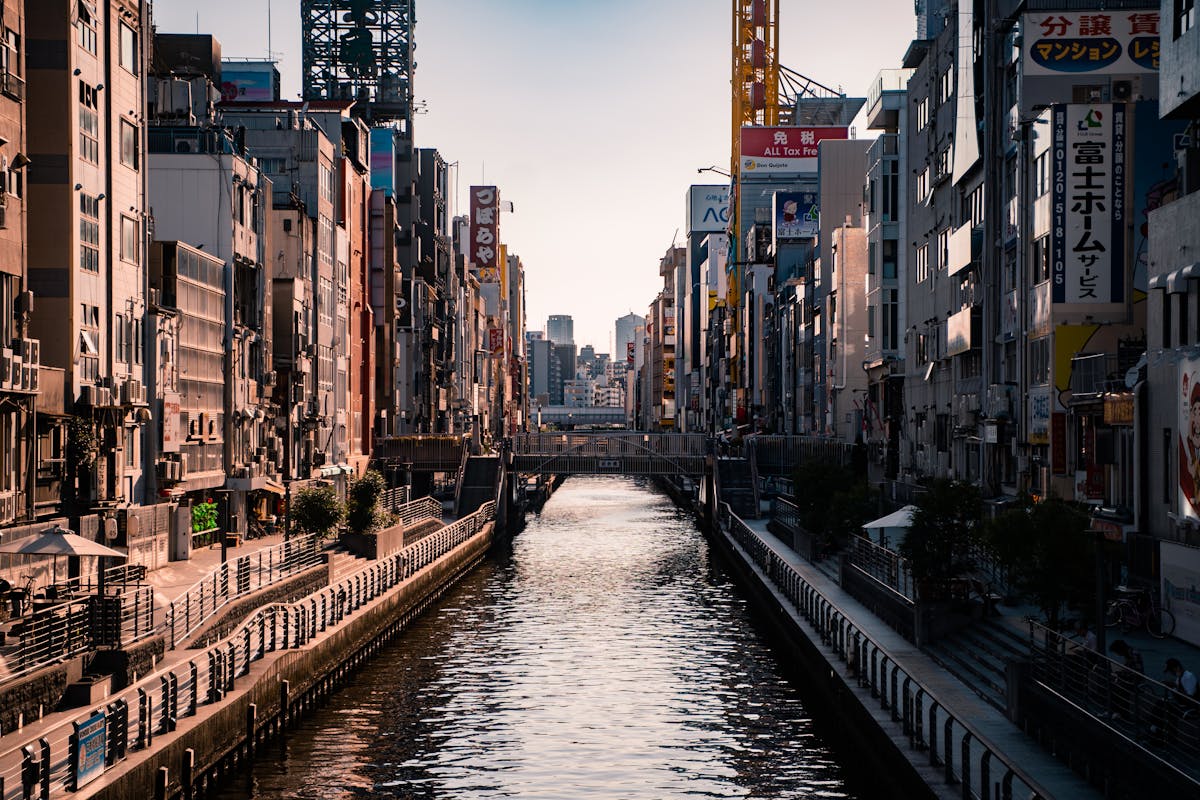
The neon-lit food street along the canal. This is where you’ll spend your first evening and probably several after that. The Glico Running Man sign is the photo everyone takes — stand on the Ebisu Bridge.
The food is why you’re here. Takoyaki (octopus balls) from any stall cost ¥500-600. Gyoza near the bridge are ¥400 for six. Okonomiyaki — the thick savory pancake Osaka does better than anywhere — runs ¥800-1,200 at the sit-down places on the side streets.
Don’t eat at restaurants directly on the canal. Walk one street back. Same food, lower prices. This is the single best money-saving tip for Dotonbori.
Go in the evening when the neon is on. During the day it’s ordinary.
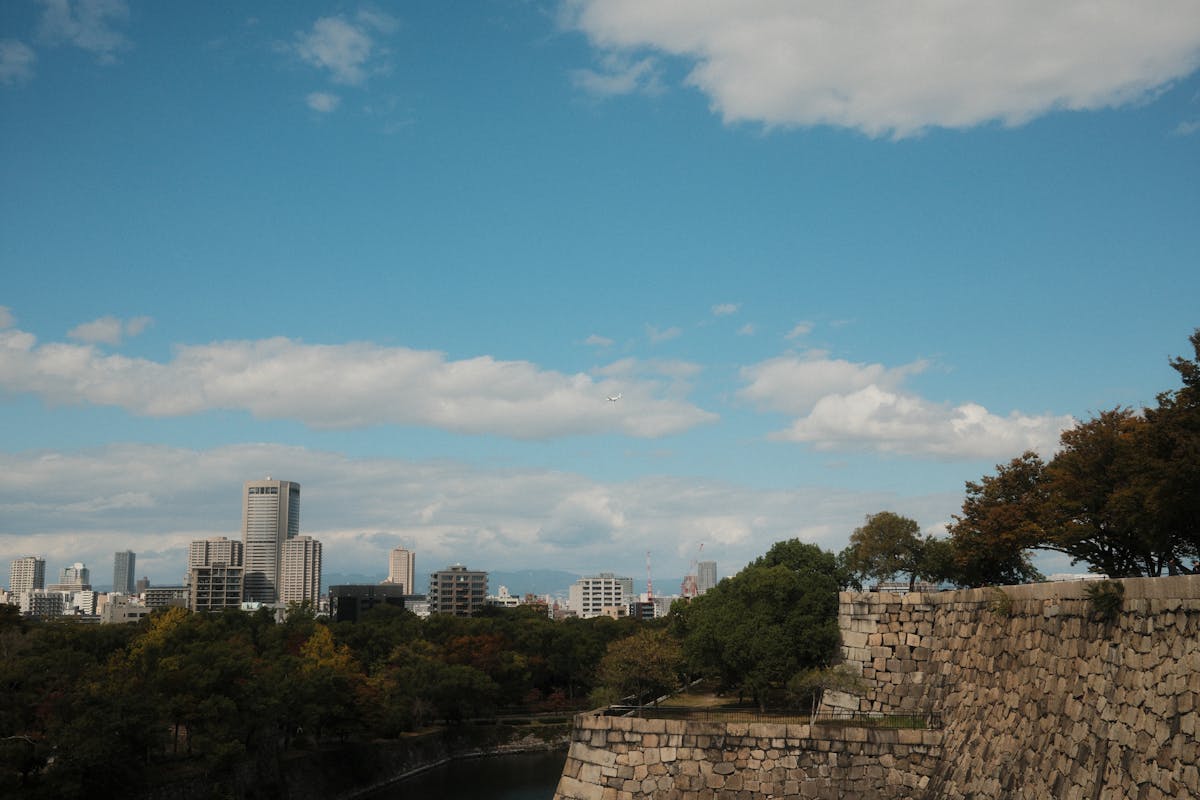
The castle grounds are free and massive. This is one of the best open spaces in central Osaka for kids to run around. Wide paths, lawns, a moat that impresses even jaded seven-year-olds.
The museum inside costs ¥600 adults, free for under 15. Eight floors of history with an observation deck at the top. The exhibits won’t thrill young kids, but the view is worth the elevator ride. Cherry blossom season turns the 3,000 trees around the moat into one of Osaka’s best hanami spots.
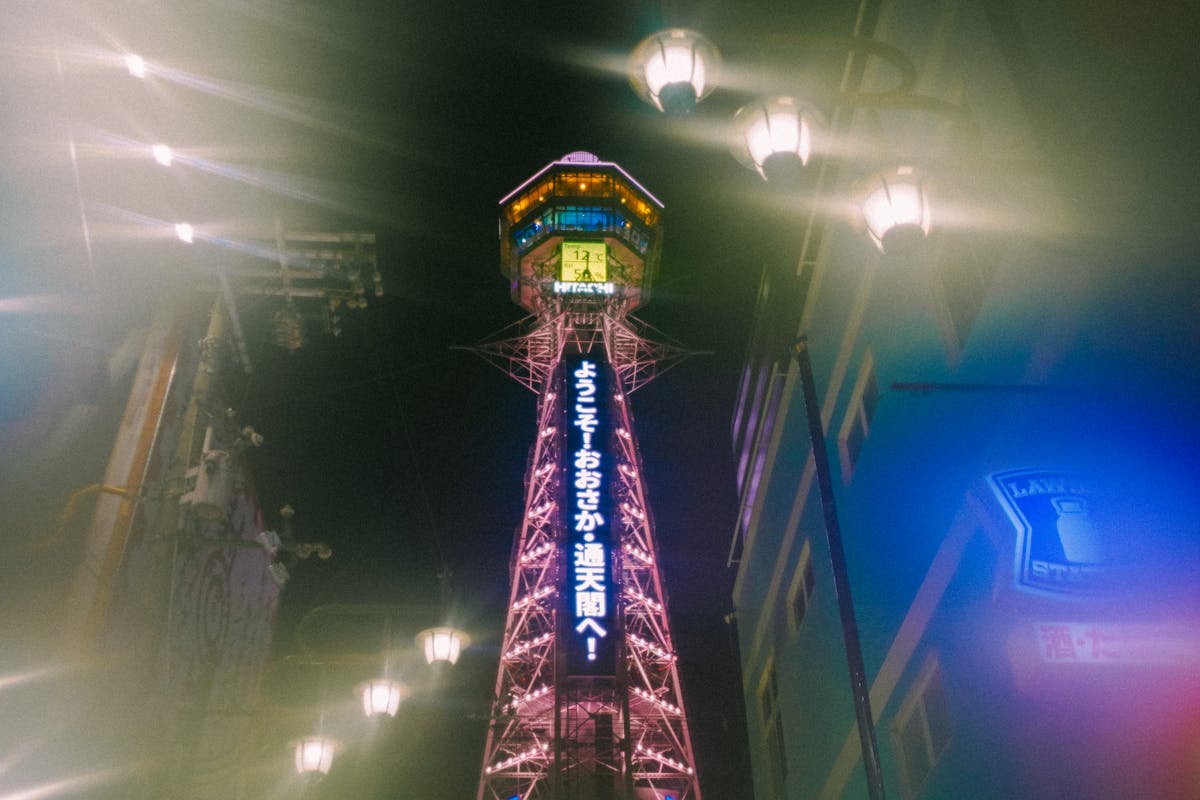
The retro district south of Namba. Tsutenkaku Tower (¥900) gives views from 87 meters. The real reason to come is kushikatsu — deep-fried skewers of meat, vegetables, and seafood. Every other shopfront is a kushikatsu restaurant.
The rule: never double-dip in the communal sauce. Signs everywhere. Kids find this hilarious and will police the table.
Kushikatsu runs ¥100-200 per skewer. A full meal costs ¥800-1,500 per person. One of the cheapest real meals in Osaka.
One of the world’s largest. ¥2,700 adults, ¥1,200 children 7-15, ¥700 ages 4-6, free under 4. The centerpiece is a whale shark tank four stories deep — you spiral down around it on a walkway. The whale sharks are massive and kids will stand at the glass for ages.
Allow two to three hours. There’s a Ferris wheel outside (¥800) if you want to extend the visit. A local Osaka mom blogger who lives here rates it as one of the city’s best family activities. We agree.
A children’s museum near Ogimachi Station. ¥1,400 adults, ¥800 children. Four floors of hands-on exhibits — a miniature city for role-playing, science with water play, costumes from different countries, creative workshops.
Designed for ages 2-12 with a dedicated soft play area for under-fives. Not well known among travelers — mostly local families. Two to three hours easily.
In the suburb of Ikeda, twenty minutes from Umeda by Hankyu train. Free museum entry. The main draw is making your own Cup Noodle — design the cup, pick your toppings, watch it get sealed. ¥500 per person. Kids love it. About an hour for the full experience. Book the factory slots ahead on weekends.
Forty-five minutes by JR train. Over 1,000 wild deer roam the park. Buy deer crackers for ¥200 and watch your kids discover that deer can be aggressively polite when food is involved. Todai-ji temple has a giant Buddha and a pillar with a hole kids line up to crawl through. Full details in our Nara guide.
Osaka calls itself “the kitchen of Japan” and earns it. The food is cheaper and arguably better than Tokyo.
What kids eat:
For breakfast near Namba, a local recommendation: West Wood Bakers, five minutes from Namba Station. Walk-in only, seats 18, expect a weekend line. Budget ¥2,000 for two adults.
Finding high chairs can be hit or miss at independent restaurants. Department store restaurants and chains always have them. Yakiniku (grill-your-own) restaurants are tricky with toddlers — hot plate on the table.
Namba/Dotonbori puts you in the food action. Namba Station connects metro, Nankai line to Kansai Airport, and JR. Loud evenings — fun or exhausting depending on your kids’ tolerance.
Umeda/Osaka Station is the transport hub. More business hotels, quieter at night, better for day trips. Less character than Namba but more practical.
Osaka Metro is simpler than Tokyo. Color-coded, English signage, manageable stations. Day pass ¥820 adults, ¥310 children. IC cards work on everything.
Most family activities cluster around Namba, the castle area, and the bay (aquarium). You can cover a lot on foot from a Namba base.
Two to three days. One for Dotonbori and street food. One for the castle, Kids Plaza, or aquarium. Third for USJ or Nara. Some families use Osaka as a base for Kyoto day trips too — thirty minutes by train.
Osaka people are funnier and friendlier than the rest of Japan. Whether that’s universally true, we can’t say. But our experience matched it completely.