Physical Address
304 North Cardinal St.
Dorchester Center, MA 02124
Physical Address
304 North Cardinal St.
Dorchester Center, MA 02124

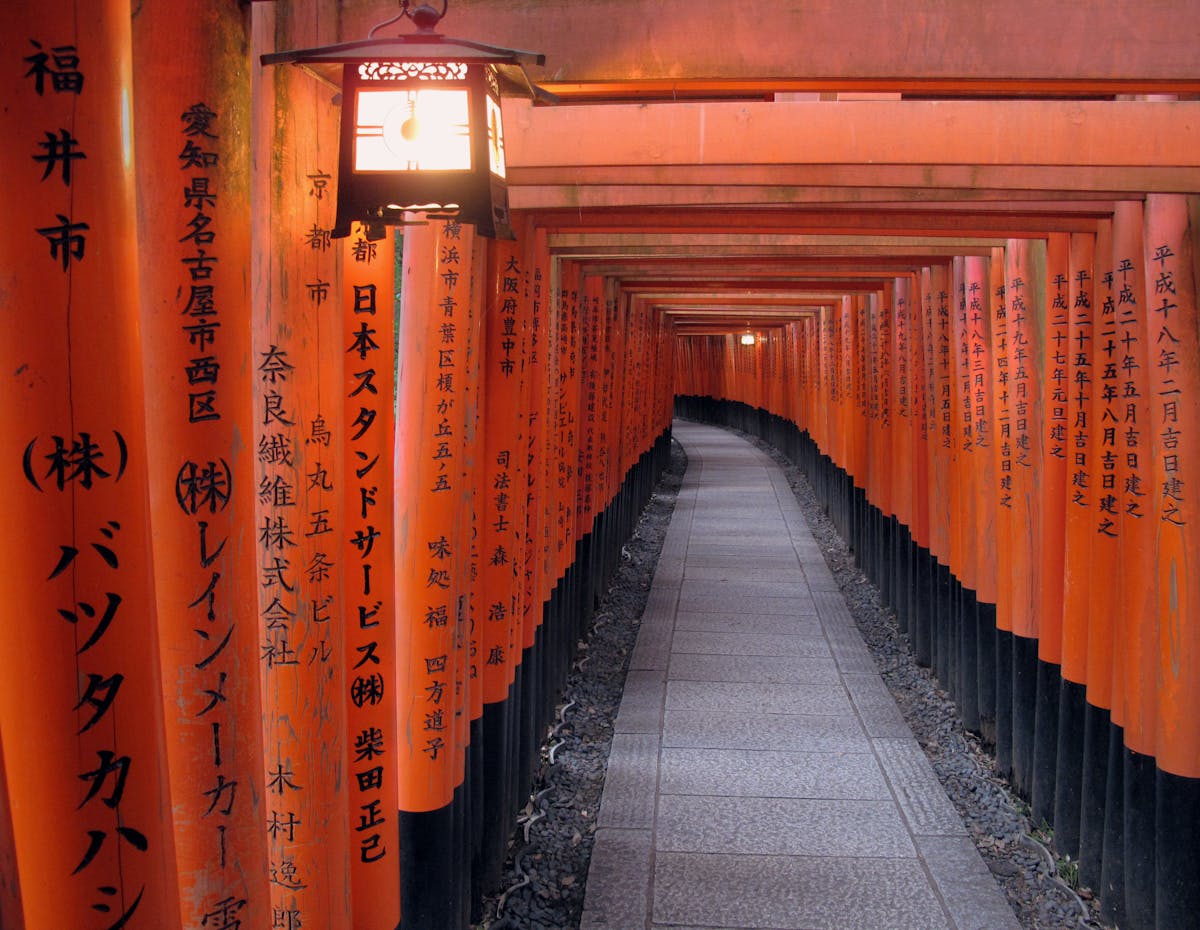
Kyoto did something to our kids that no amount of screen time or theme parks ever managed. Our seven-year-old came home and drew torii gates for three weeks straight. Our four-year-old still calls every shrine we pass “a Kyoto.” We didn’t plan for that. We just showed up and walked around.
Two days minimum. Three is better. Don’t try to see everything — Kyoto has over 2,000 temples and shrines and the quickest way to ruin the trip is to treat it like a checklist.
Hikari shinkansen from Tokyo, about two hours fifteen minutes. Covered by the JR Pass. The Nozomi is faster but not included — the Hikari is only fifteen minutes slower and saves you a separate ticket.
From Osaka it’s about thirty minutes by JR Special Rapid train. If you’re doing both cities, Osaka makes a good base for Kyoto day trips, though staying in Kyoto is worth it for at least one night to experience the city after the day-trippers leave.
Thousands of orange torii gates tunnelling up a mountainside. Free. Open around the clock. The most visited shrine in Kyoto by a wide margin, which means it gets packed by mid-morning.
Go before 8am. Seriously. The first section — the famous tunnel of gates — is about twenty minutes from the entrance. Most tour groups stop there and turn around. Keep walking another ten minutes and the crowds thin out dramatically.
The full hike to the summit takes about two hours and gets steep. With young kids, the first thirty to forty minutes gives you the best of it. There are small shrine rest stops with benches and vending machines along the way.
Kids can buy fox-face wooden wish plaques (ema) at the shrine for ¥500 and write their wish on the back. One competitor blog mentioned the love stones at Jishu shrine within the Kiyomizu-dera complex where kids walk between two stones with eyes closed — if they reach the second stone, their wish comes true. Ours insisted on trying it four times.
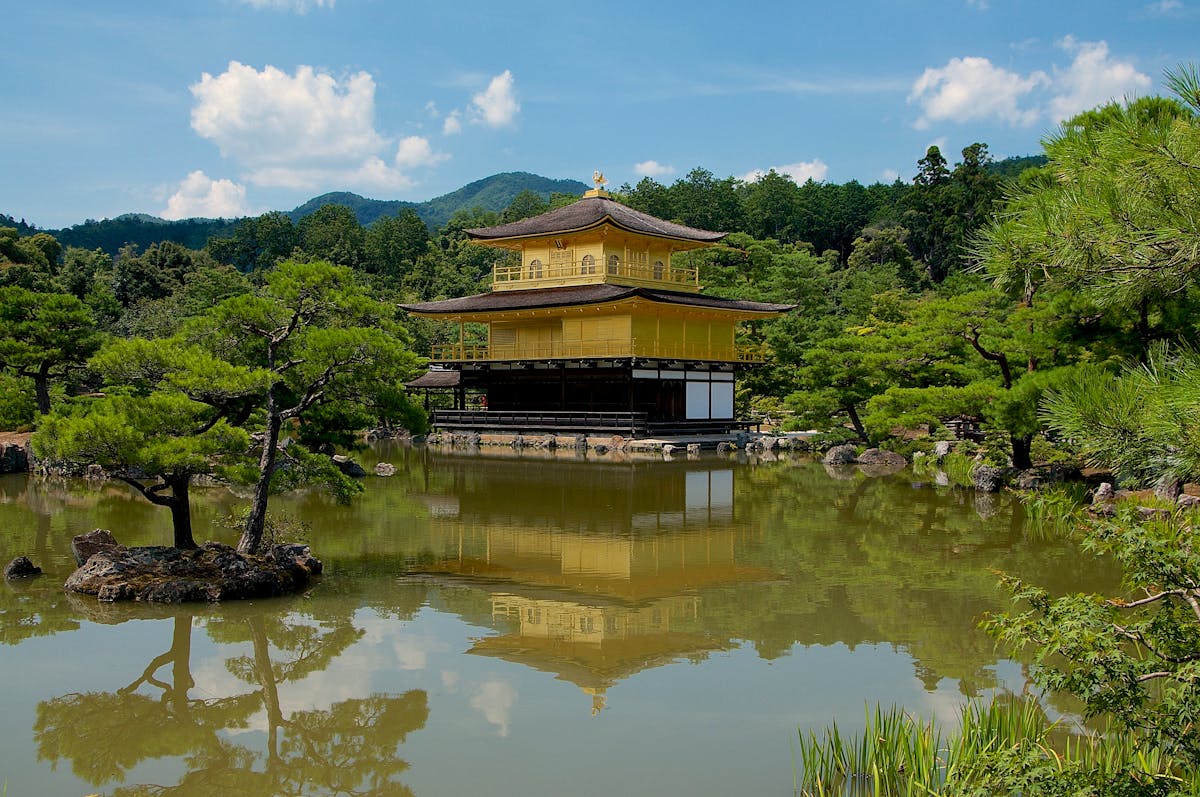
A building covered entirely in gold leaf, reflected in a mirror-still pond. ¥500 adults, ¥300 kids. The whole visit takes about twenty minutes. Worth every one of them.
Kids will say “wow.” You’ll say “wow.” You’ll take the same photo as everyone else, buy matcha ice cream from the stall near the exit for ¥400, and leave. It’s a quick stop, not a morning activity. Don’t build a half day around it.
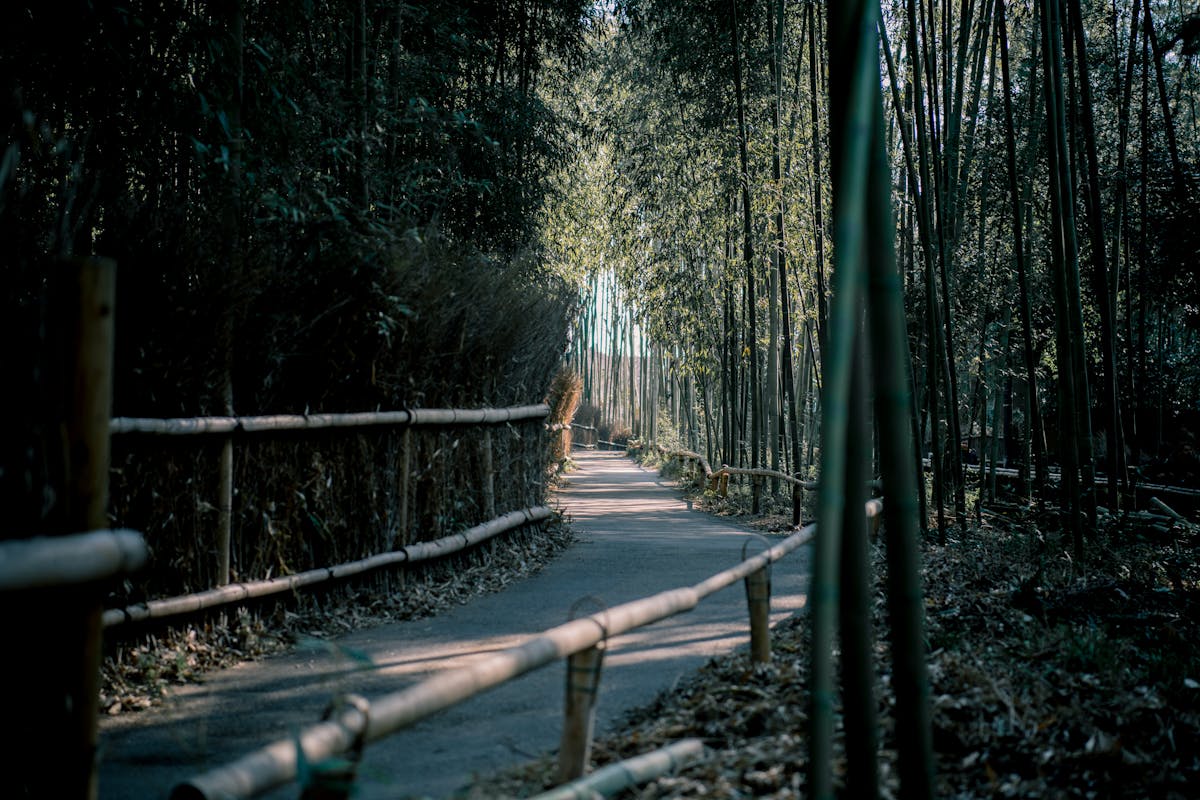
We wrote a full Arashiyama guide — the bamboo grove, Togetsukyo Bridge, the monkey park, street food, and rickshaw rides. It’s an easy twenty-minute train from Kyoto Station and works as a half-day or full-day trip.
The short version: go early for the bamboo (before 8:30am), eat your way along the main street, and consider the monkey park if your kids are five and up and comfortable around animals. Rain makes the bamboo grove more beautiful, not less.
Five blocks of covered market in central Kyoto. This is where families do best for lunch — buy tamagoyaki (sweet grilled egg on a stick, ¥200), mochi, pickles, matcha sweets, and fresh fruit cups as you walk.
Go before noon. By early afternoon the narrow aisles are shoulder to shoulder and a stroller becomes a liability. Some stalls close by 5pm.
Built in the 1600s for the local shogun. The wooden floors are designed to squeak when you walk — “nightingale floors” meant to detect ninja intruders. Kids are fascinated by this concept and will spend the entire visit testing every floorboard.
¥800 adults, ¥400 children. The gardens around the castle are extensive and good for burning energy. Allow about an hour. One family travel blog called it “the best historical sight in Japan” and after visiting, we don’t disagree.
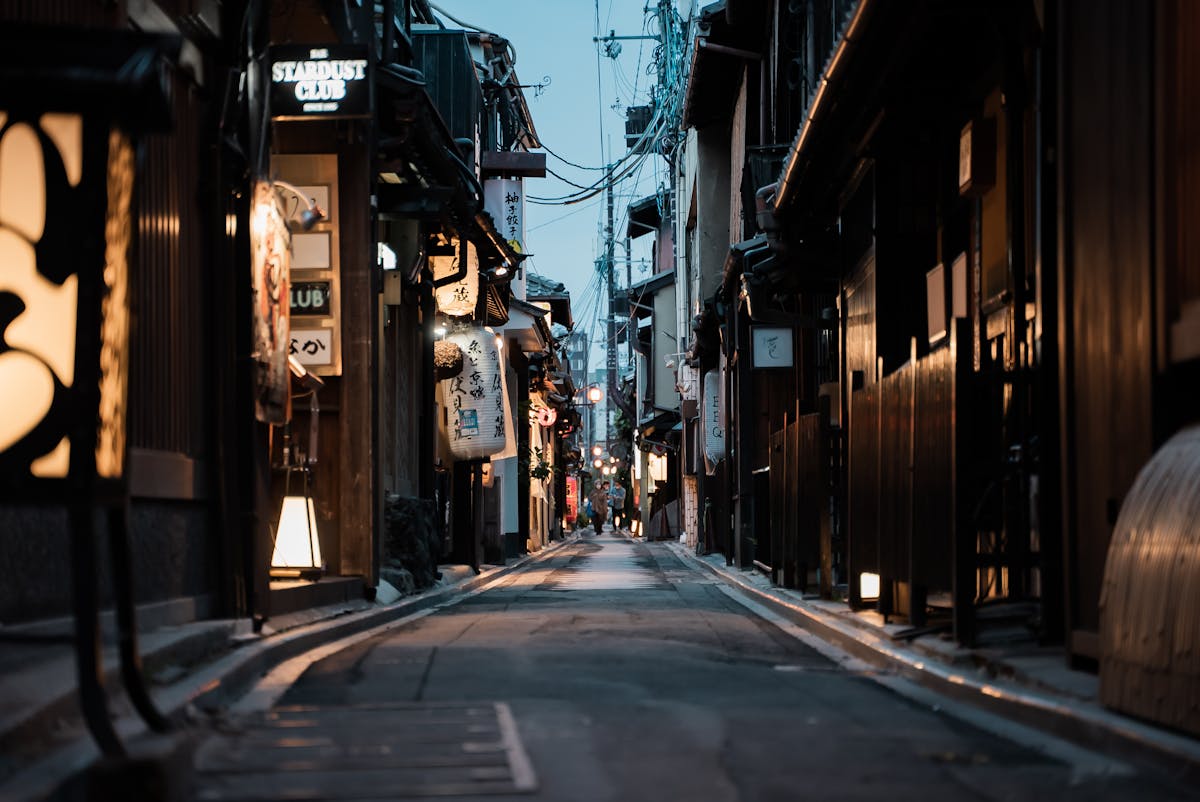
Kyoto’s preserved geisha district. The wooden machiya townhouses along Hanami-koji street look incredible at dusk with the lanterns on. You might spot a geiko or maiko heading to an evening appointment — they move fast and really don’t want photos.
For eating in Gion, Tousuiro does excellent tofu kaiseki and has a children’s menu. About ¥3,000-5,000 for adults. Conveyor belt sushi at Sushiro is cheaper at ¥120-180 per plate — they have an English menu on their website.
Kyoto food leans traditional — tofu, pickles, matcha, kaiseki. Not always an instant hit with American kids who want mac and cheese.
What works:
Kyoto buses are the main tourist transport. Flat fare ¥230 per ride. Simple idea, frustrating execution — they get packed, routes are confusing, and in peak season the queues at popular stops stretch thirty to forty minutes.
Better options for families:
Two per day. Maximum. One morning, one afternoon, with a long break between for food, parks, and whatever your kids actually want to do.
If you only see Fushimi Inari, Kinkakuji, Arashiyama’s Tenryuji, and Nijo Castle, you’ve hit the highlights. Everything beyond that is bonus, not homework.
One family blogger admitted to bribing their kids with daily vending machine sodas to keep the peace during temple visits. We used ice cream. Same principle.
Near Kyoto Station is most practical — shinkansen right there, buses outside, restaurants and shopping underground (Porta mall). MIMARU has a Kyoto location with the same apartment setup as Tokyo — kitchen, washing machine, space. About ¥20,000-30,000 per night.
Gion/Higashiyama is more atmospheric — traditional machiya townhouse rentals give you a whole house with tatami rooms. Search “machiya rental Kyoto” on Booking.com.
Cherry blossoms (late March to mid-April) are beautiful but the crowds make it tough with small kids. Autumn colours (November) are almost as stunning with slightly fewer people.
Our pick for families: May or early October. Warm, manageable, and you can actually find a seat on the bus.
Forty-five minutes by JR train. Over 1,000 wild deer in a park, a giant Buddha, and a pillar hole that grants enlightenment. Half a day covers it. Full details in our Nara guide.
Kyoto is one of those places that gets into your kids without them realizing. Ours didn’t talk about temples on the plane home. They talked about the fox shrine, the squeaky floors, and the deer that bowed before eating their crackers. The culture seeps in through the details. That’s the whole point.